


Rabbi Cary Friedman
&
the power of writing down the rule you live-by.

Phillip LeConte and Rabbi Cary Friedman
How to write a credo
By Rabbi Cary Friedman
"ChaplainUSA asked Rabbi Cary Friedman—author of Spiritual Survival for Law Enforcement and a leading authority on the real-world impact of superheroes—to explain how to write a credo."
One of the great secrets of a long, honorable career is knowing that you are more than a set of hands and a badge. You are a soul in a spiritual career.
When a young recruit enters the academy, their "spiritual account" is full. They have hope. They want to protect and serve. But after five years of seeing the worst of humanity, that account can hit zero. I call this "spiritual overdraft."
To survive the dark shifts and the long years, you need fuel. That fuel is your credo.
A credo is not a long, dusty philosophy. It is a sentence or two—a simple "operating principle"—that tells you who you are when the world forgets to be kind. Here is how to write one that works.
1. Find your "Why"
Before you touch pen to paper, ask yourself why you showed up. No one enters law enforcement to fill out paperwork or engage in altercations. You came to fight for justice, to protect the weak, or to stand for an ideal. That "Why" is the gasoline in your engine. If you don't know your "Why," the car won't move.
2. Strip away the fancy words
A credo is a tool, not a poem. If it uses big, "third-degree" words, it will fail you when you are tired. Don’t write, "I shall endeavor to facilitate communal harmony." Write, "Be helpful." or "Don't quit." The best credos are childlike in their simplicity but profound in their impact.
3. Look to your heroes
Think of the figures who inspired you as a child. Whether it was a grandfather, a legendary lawman, or even a superhero, they all had a "code." They didn't stay heroes because they were strong; they stayed heroes because they had a principle they refused to break. What was that principle? Borrow it.
4. Make it actionable
A good credo tells you what to do. "Integrity" is a fine word, but it's hard to hold in your hand. "Tell the truth, even when it hurts" is a tool you can use. Your credo should be a command you give to your future self.
5. Put it on your "Duty Belt"
Think of your credo as a piece of equipment. If your radio is at home on the dresser, it can't save you. Your credo must be immediately accessible. Write it on a card in your pocket. Tape it to your dashboard. Memorize it so it’s there when the toxins of a tough shift start to seep in.
A Tip on Jargon
Avoid "Police-Speak." Jargon is for reports; it is cold and mechanical. Your credo should sound like you talking to a friend. If you wouldn't say it over coffee, don't put it in your credo.
The "Master’s Secret"
The hardest part of your job isn't the physical danger. It is the psychic toxin of seeing evil every day. A credo is your "spiritual armor." It doesn't make the evil go away, but it ensures that when you look in the mirror at the end of twenty years, you still recognize the idealistic recruit who started the journey.
A credo is a small thing. But in a storm, a small anchor is the difference between staying the course and being swept away.
Sincerely,
Cary Friedman
"Welcome to The Credo Project.
For many in law enforcement, the word 'spirituality' can feel out of place in such a gritty profession. But we believe that your presence here isn't an accident—it’s a homecoming. By revisiting the original motivations that drew you to this uniform—the heroes and values that inspired your younger self—we uncover the noblest part of your character.
The Credo Project is dedicated to honoring those essential elements of bravery, honor, and justice, proving that the heart of policing is, and always has been, a spiritual journey."The Credo Project.
What is credo?
Every police officer ought to have one. Every young person as well.
Read on to discover what it is and why it has enormous implications for you and for every member of the law enforcement community.
Choose the words you live by
Although credos take many forms, for the purposes of this project think of CREDO as a sentence or two that conveys the operating principle that guides your daily life.
Here's a quick start guide.
Download and read Writing Your CREDO or Student Guide
Now print out MY CREDO.
Write your CREDO on the page, then sign and date it.
When you’re finished, store your CREDO with other documents left for your family in the event of your death, or alternatively, frame it on the wall of your den. It’s a personal decision. In any event, whether you share it or not, consult it every once in a while.
To really explore the subject, we have created an expanded guide below:

Strategies for putting CREDO to work in your department.
Credo: A Guide for Law Enforcement Leadership
Below Rabbi Cary Friedman (author of Spiritual Survival for Law Enforcement) provides a strategy for police leaders who wish to engage officers in their department with some of the ideas at the heart of the CREDO Project.
1.
Recognize the intrinsic spirituality of the career of policing.
There is a spiritual dimension to the ambitions, accomplishments, and challenges of the career. Officers enter the career motivated by deeply noble -- spiritual -- ambitions of “helping other people,” “making a difference,” “fighting for justice,” “standing for an ideal,” or “a desire to serve and protect.” In addition, the stressors of the career are also spiritual.
Thus, spirituality isn’t incidental to the career; in many ways, it is the career. Each shift -- even the most routine -- presents spiritual challenges that can demoralize even the hardiest officer. Policing can turn even the most idealistic cadet into a cynical, bitter, disillusioned officer waiting to get out.
Departments invest significant time and money on recruitment and training of their greatest resource -- their officers. When an officer misbehaves, burns out, or leaves the department, the loss is great. It doesn’t have to be that way. Deliberate, consistent spiritual infusions can restore an officer and nurture a spirit that longs for nourishment.

2.
Sidestep the dangers.
Discussion of religion can be tricky and can create constitutional, psychological, and political problems.
Nevertheless, officer spiritual health requires replenishment. Appropriate spiritual training provides language, substance, and framework which avoid the dangers that could undermine the success of such a program.
Spirituality isn’t some kind of New Age touchy-feely thing; it’s about addressing, openly and frankly, the very spiritual motivations and challenges that characterize and define policing in the United States.
A regimen of spiritual insights will produce stronger, more resilient, more robust officers who have greater clarity, resolve, confidence, and passion for the ethical performance of the duties of policing. There is no greater weapon that an officer can possess than clarity of purpose, uncompromising integrity, and an unshakable commitment to ethical behavior. Spiritual survival training provides this.


3.
Provide substance.
The program is simple and straightforward: Offer officers a regular infusion of insight to help them detox from the corrosion of the previous shift and fortify themselves for the next shift.
Those insights must be substantive, relevant, and honest.
And where do they come from?
Perhaps you have your own material. You’ve been in the career for a long time; you’ve probably thought through many of these issues on your own. Perhaps you have books and other sources of wisdom from which you have drawn over the years. They can serve as material for presentations. You might have a chaplain who can supply content.
I wrote the book Spiritual Survival for Law Enforcement in response to requests for exactly this kind of content. Its goal is to provide practical insights and practical tools. It can serve as the springboard for countless conversations on the topic of spirituality within policing and provide many powerful tools with which an officer can fortify his / her spirit and confront the challenges of the career.
4.
Solicit officer participation and feedback.
Only Jay Leno does monologues; you want to create a conversation.
Provide a way for your officers to express their doubts, fears, frustrations, bewilderments, and anger. That’s healthy and desirable.
Giving them the right answer is not as important as giving them the language and permission and comfort to air their questions. Acknowledging this aspect of the career and of the officers has the power to save careers and lives.
Perhaps they won’t feel comfortable to express themselves in public. That’s OK; create some way for them -- a suggestion box, e-mail account, etc. -- to give their feedback privately and anonymously.
5.
Keep it going.
You, Chief, have to support this initiative, or it will die.
Once the basic infrastructure is in place, it can’t degenerate into another rote program that runs on auto-pilot and becomes just another automatic, perfunctory chore that can be discharged without any conscious thought.
Sure, there is a template in place; but you need to keep it fresh, dynamic, open, vital, honest, and real. Otherwise, it will become just another disappointment and betrayal to your officers who saw, at the beginning of the program, the means to alleviate their pain and fortify their spirits.
It requires creative leadership to maintain this delicate balance of putting an on-going program in place and still keeping it fresh and relevant and new. Be that leader who can meet this challenge and support your officers to become their most robust and resilient.
About the Project
My name is Phillip LeConte, executive Director of ChaplinUSA .
For over a year, I had the privilege of collaborating with my good friend, Rabbi Cary Friedman on THE CREDO PROJECT, an educational initiative dedicated to helping law enforcement officers unlock the power of CREDO in daily life.
To better understand the spirit of the project, it helps to know a little bit about Rabbi Friedman. In addition to being a scholar, an accomplished police chaplain and the author of five books, including Spiritual Survival for Law Enforcement, Cary is also the go-to-guy for all-things Batman. A clip from "Legends of the Knight" will help explain.
“We also were helped along the way by the police officers who shared sometimes offbeat strategies for staying spiritually connected.”
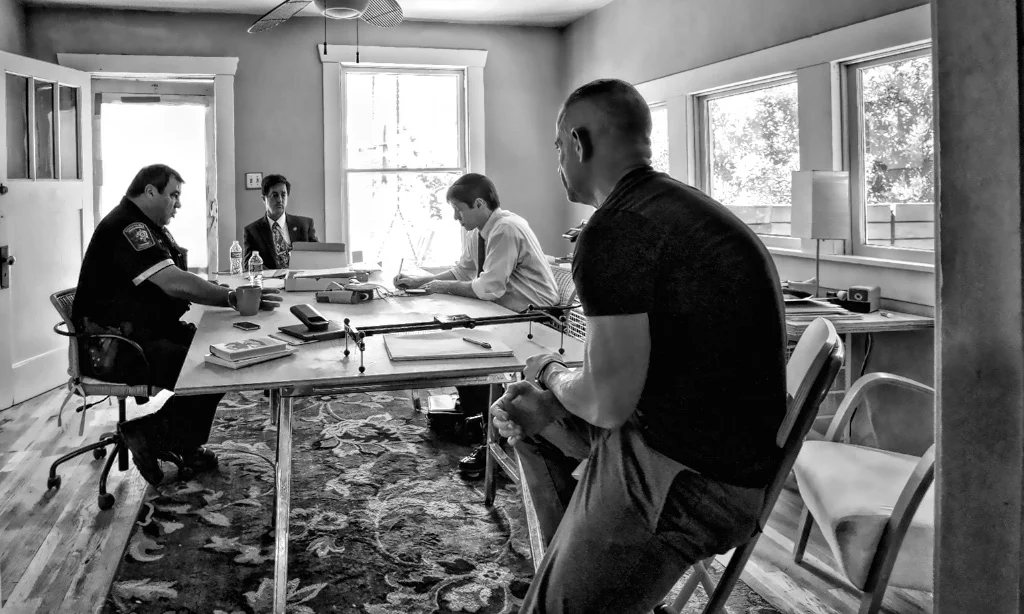
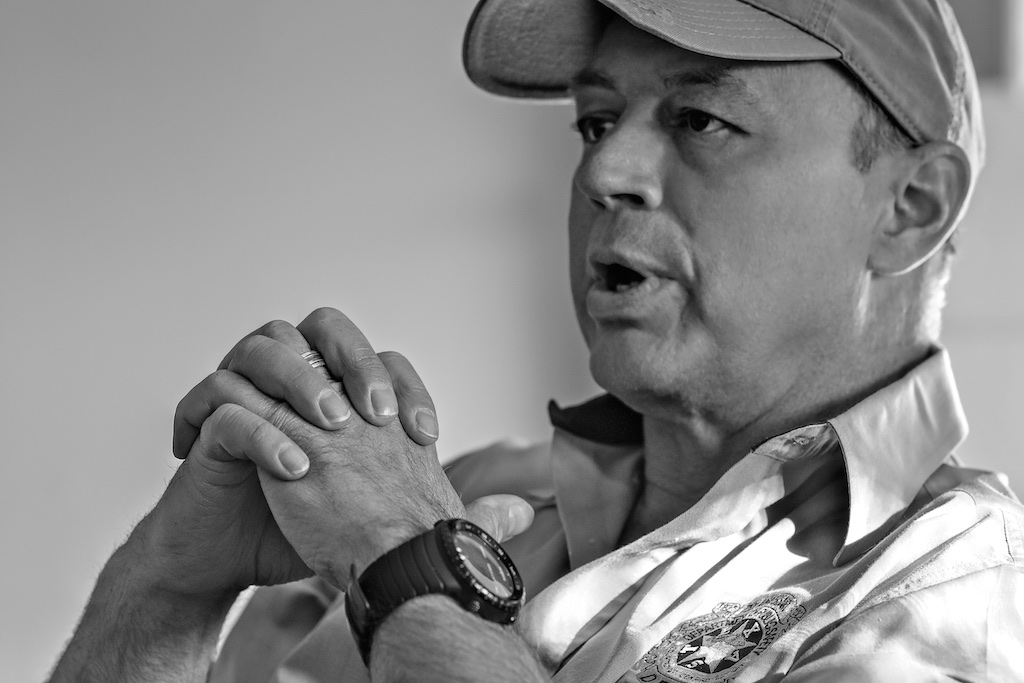
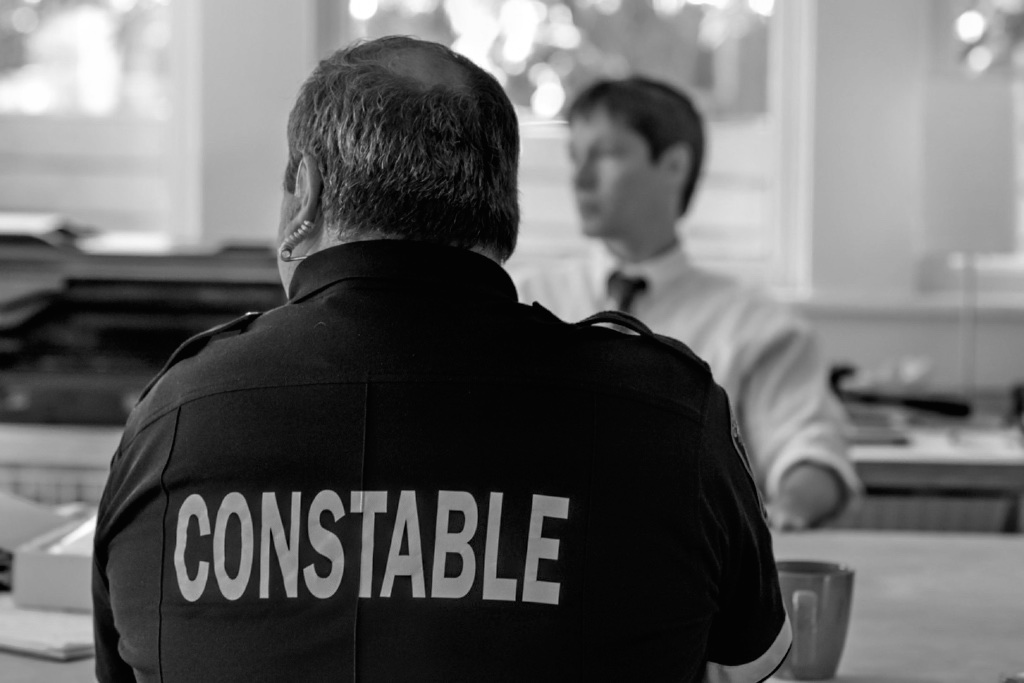
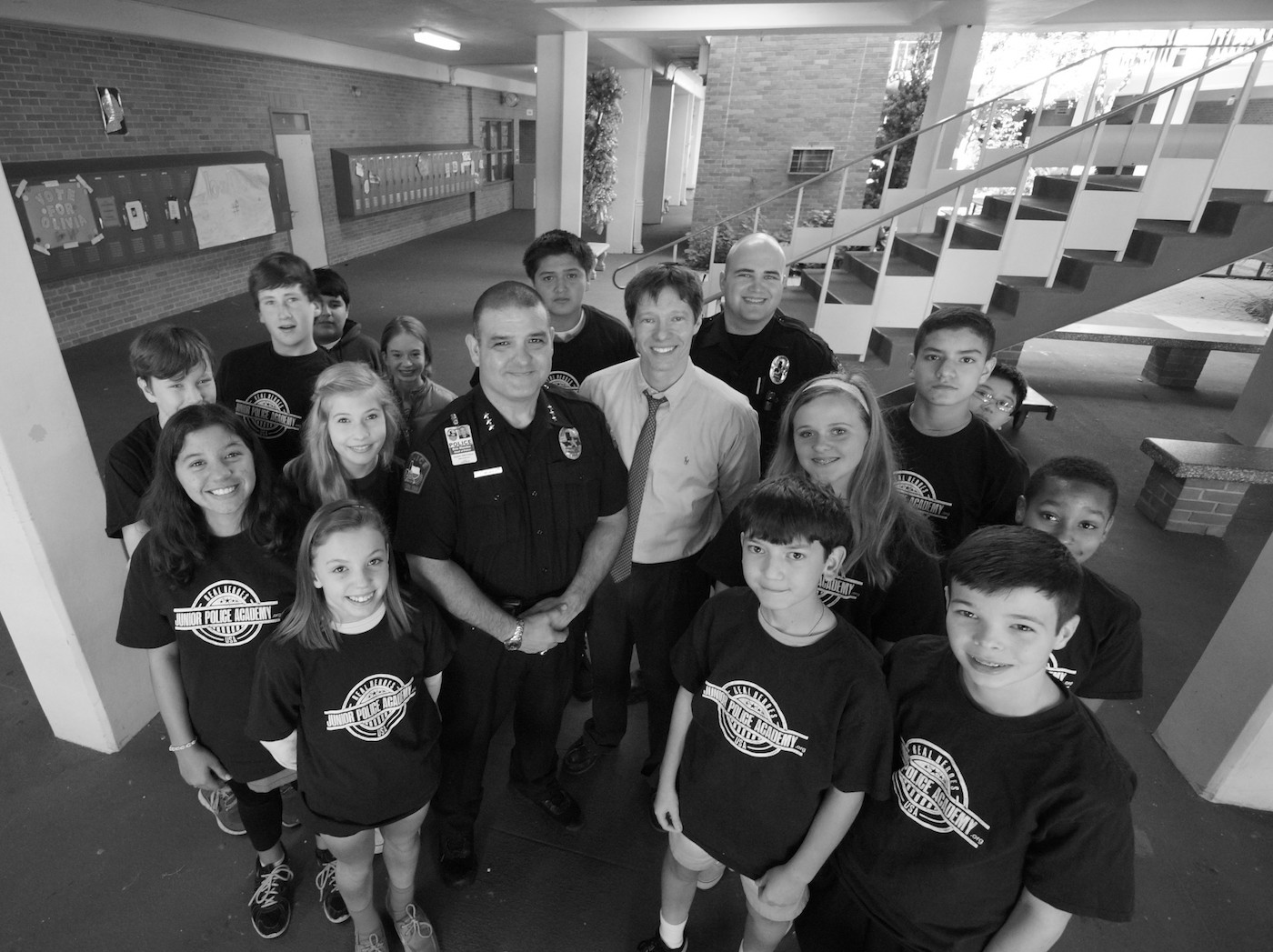
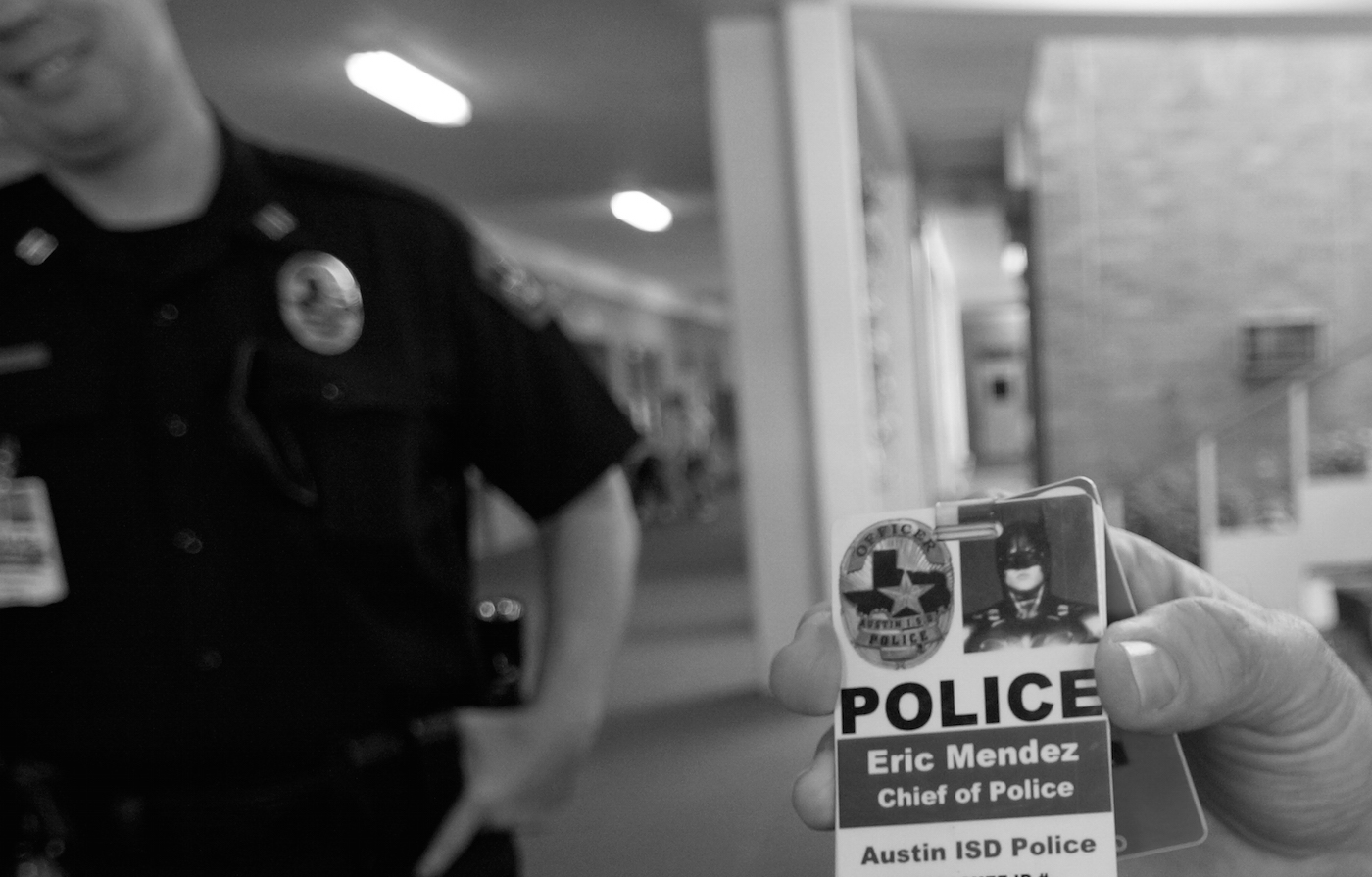
Their stories revealed the enduring influence of childhood heroes, from John Wayne (Ed Burris, Texas Dept. of Public Safety), Batman (Chief Eric Mendez, Austin ISD Police Dept.) and Steve McGarrett (Constable Adan Ballesteros).
Thanks also to John Marx, Founder of The Law Enforcement Survival Institute and the Editor of CopsAlive.com for first covering The Credo Project. We liked what he had to say about the project so much, we added a bit of his text to this page.
About Rabbi Friedman
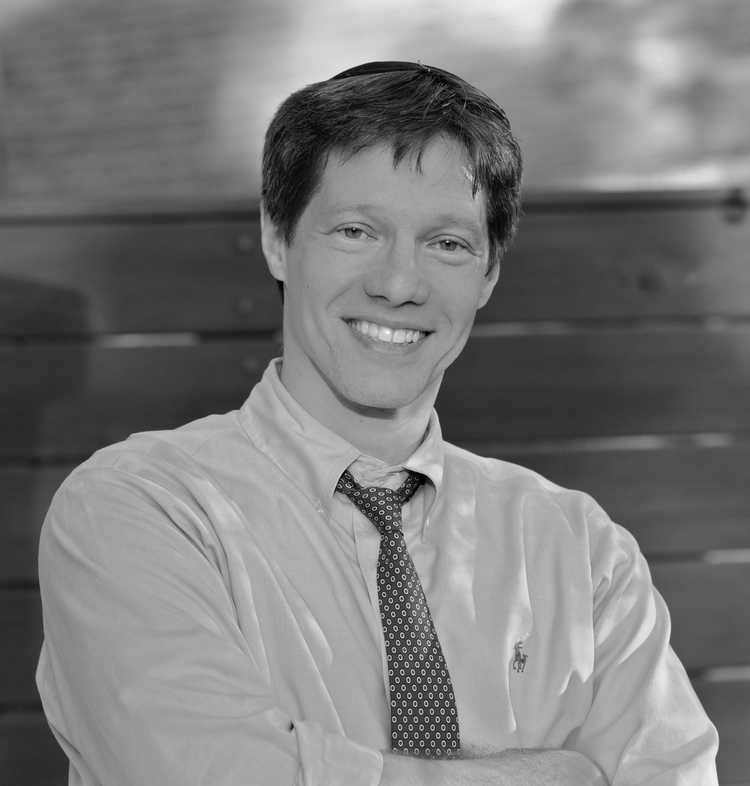
Rabbi Cary Friedman
Rabbi Cary A. Friedman is a police trainer on matters of stress-management and ethical decision-making and Associate Director of the Center for Tactical Resilience.
He earned a Masters degree in Electrical Engineering from Columbia University and Rabbinic ordination from Yeshiva University.
A former chaplain at Duke University, Rabbi Friedman serves as spirituality consultant to the FBI's Behavioral Science Unit [BSU] in Quantico, VA and the law enforcement community in general.
Friedman is the author of five books including Spiritual Survival for Law Enforcement and Wisdom from the Batcave. Friedman also appears in the extras documentary on the "Batman: The Dark Knight" blue-ray…being the go-to-guy on all-things Batman.

Cary speaks with attendee of the ICPC.
Rabbi Friedman has spoken at the FBI Academy, the FBI Training Network (FBITN), International Conference of Police Chaplains (ICPC), TX Department of Public Safety (TX DPS), and CT Department of Public Safety (CT DPS), and has appeared on The History Channel discussing the spiritual power of the Batman mythology ("Batman Unmasked: The Psychology of the Dark Knight").
Spiritual Survival for Law Enforcement has been translated into Russian, and Wisdom from the Batcave was the inspiration for the creation of the documentary "Legends of the Knight" (2014).
Cary is married, and he and his wife have six children.

