
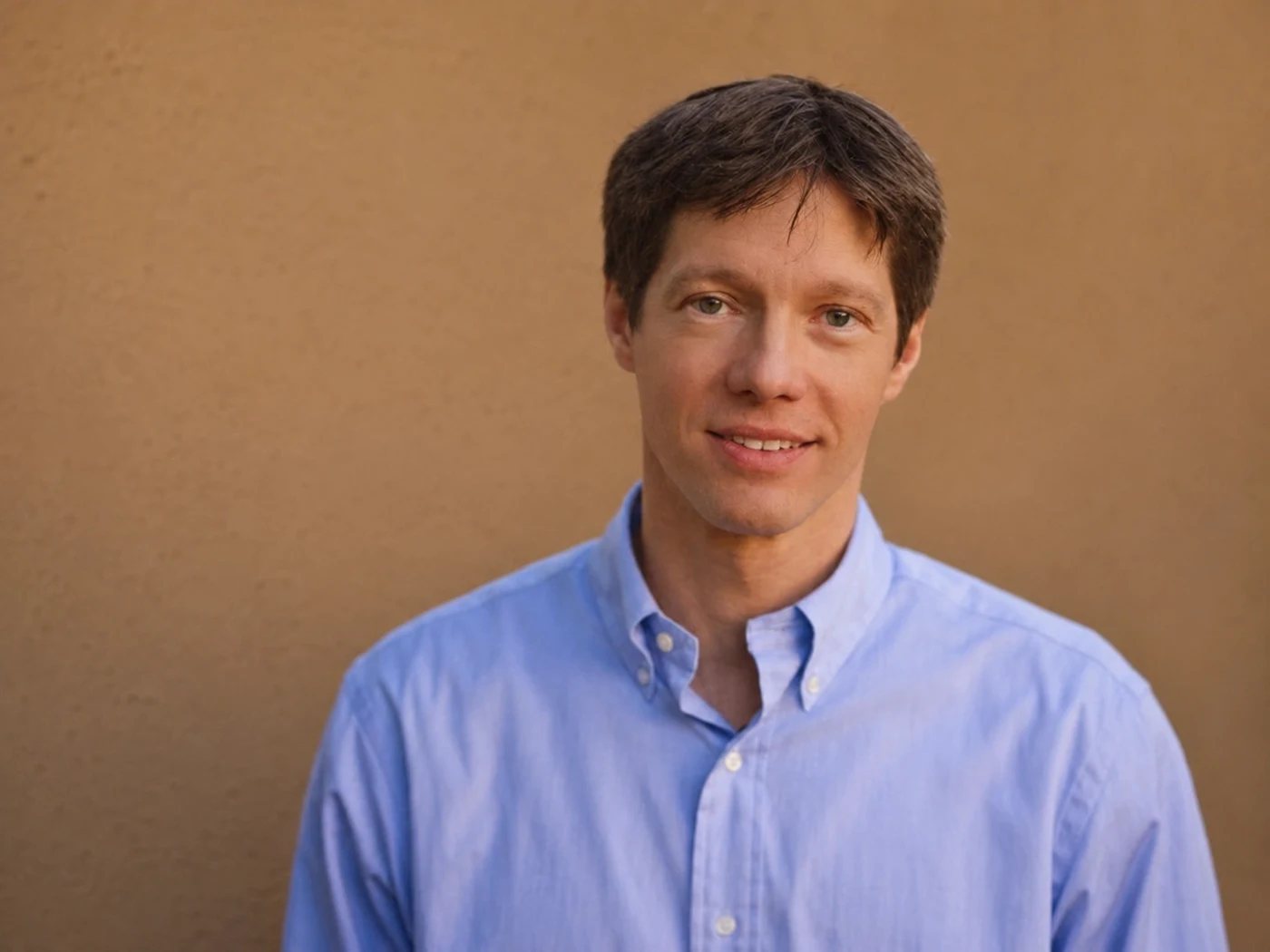
Rabbi Cary Friedman: Author, Ethicist, and Police Spirituality Consultant
Author, FBI spirituality consultant, and mentor to law enforcement
Rabbi Cary A. Friedman is an author, ethicist, and longtime consultant to law enforcement agencies whose pioneering work on first-responder resilience forms the spiritual cornerstone of modern police chaplaincy. A leading national authority on critical incident stress, spiritual survival, and moral endurance, Rabbi Friedman serves as a spirituality consultant to the FBI’s Behavioral Science Unit at Quantico and law enforcement organizations across the United States.
Since 2014, Rabbi Friedman has served as Associate Director of the Law Enforcement Survival Institute (LESI). He has worked as a police trainer since 2000, consulting on ethics and stress management.
His seminal framework—that a police officer enters the academy with a full "spiritual account" that is routinely sapped by trauma and must be actively replenished—is the beating heart of ChaplainUSA’s The Credo Project.
Philosophical Foundations and Law Enforcement Ministry
Rabbi Friedman's approach to law enforcement wellness centers on the fundamental human drive for purpose. He views policing not merely as a career or a civic duty, but as an essentially spiritual calling rooted in a candidate's innate desire to affect positive change.
Police officers do what they do because they are human beings pursuing meaning and trying to make the world a better place. Taking an oath to protect, serve, and defend the Constitution is a sacred step, but long before an officer puts on a badge, their soul is pulsating with a fundamental desire: I want to do something significant in the world. I want to make a difference.
Drawing on extensive field work and consultation with departments nationwide, Friedman highlights the stark contrast between young officers entering the academy with high ideals and those who succumb to years of unaddressed critical incident stress.
When young officers enter the field, they come in with a youthful idealism. But that initial idealism is often naive, and life can beat it out of them. I marvel at officers who can stay on the job over decades, seeing terrible things day in and day out, and still come away whole and idealistic. They aren't naive—you cannot remain naive on the job—but they have learned to connect to something deeper, tapping into the ultimate source of goodness and decency.
Spiritual Overdraft, Autonomic Biology, and The Credo Project
Rabbi Friedman’s core contribution to first-responder wellness is his concept of spiritual overdraft and spiritual bankruptcy. He observes that every shift, critical incident, and exposure to human suffering depletes an officer's internal reserves. Without intentional spiritual practices and support mechanisms to replenish those reserves, the officer’s internal well runs dry.
The spiritual reserves of an officer are depleted every single day. Even the most routine shift challenges and saps an officer’s inner well. When an officer has no mechanism to replenish those supplies, they go into a state I call spiritual overdraft, which quickly leads to spiritual bankruptcy. When you see a bitter, angry, dark, or hollow officer walking around, you are looking at someone who has run out of spiritual capital.
This spiritual depletion is compounded by the biological strain placed on the body's autonomic nervous system during operational duty.
Studies have shown that whether an officer is working high-stakes tactical operations or simply working traffic duty, their nervous system remains in a constantly elevated state. When the shift ends... the body needs the parasympathetic branch of the autonomic nervous system to kick in so it can rest and heal. But for many officers, that transition simply doesn't happen automatically... When officers are left without the tools to process trauma and replenish their spirit, the resulting depletion wreaks havoc—not just on the officer’s life, but as collateral damage across their families, their departments, and the communities they serve.
To combat this systemic depletion, Rabbi Friedman was instrumental in conceptualizing and creating The Credo Project with ChaplainUSA. Designed as a personalized, actionable framework, The Credo Project provides first responders with the practical tools and spiritual disciplines required to maintain moral clarity, process cumulative trauma, and prevent spiritual bankruptcy throughout their careers.
Publications and Literary Works
Rabbi Friedman is the author of several influential books spanning law enforcement ethics, pop-culture philosophy, relationships, and Judaic studies:
Spiritual Survival for Law Enforcement: Straight Talk About Proper Conduct and Life Threatening Stress — The foundational text used extensively in police chaplaincy academies, law enforcement agencies, and the FBI Academy to help officers maintain psychological and spiritual wholeness.
The Superhero Handbook for Cops — A practical guide applying the archetypal moral codes of classic superheroes to the real-world ethical challenges faced by police officers.
Wisdom from the Batcave: How to Live a Super, Heroic Life — An acclaimed analysis of the moral framework of superhero mythology. The book drew praise from Batman writer Ed Brubaker ("What I didn't know was how much Batman and his code had affected me, until I read this book") and legendary comic artist Neal Adams, who noted that "the most important item in Batman's utility belt is a moral compass."
Table for Two: A Guide to Creating and Sustaining the Intimate Marriage — A practical guide focused on building, strengthening, and maintaining healthy marital relationships.
Marital Intimacy: A Guide for Couples — A thoughtful exploration of emotional and spiritual connection within marriage.
Chanukas HaTorah — An annotated translation and commentary on classic Rabbinic scholarship.
Education, Lecturing, and Personal Life
Rabbi Friedman received his rabbinic ordination from the Rabbi Isaac Elchanan Theological Seminary (RIETS) at Yeshiva University.
He has lectured widely before prestigious academic, law enforcement, and media institutions, including the FBI Academy, the FBI Training Network, the International Conference of Police Chaplains (ICPC), the Connecticut and Texas Departments of Public Safety, and featured programs on The History Channel.
In addition to his consulting and writing, Rabbi Friedman teaches at the Yeshiva University High School for Boys (MTA) and holds a second-degree black belt in martial arts. He lives in Passaic, New Jersey, with his wife, Marsha; together they have six children.