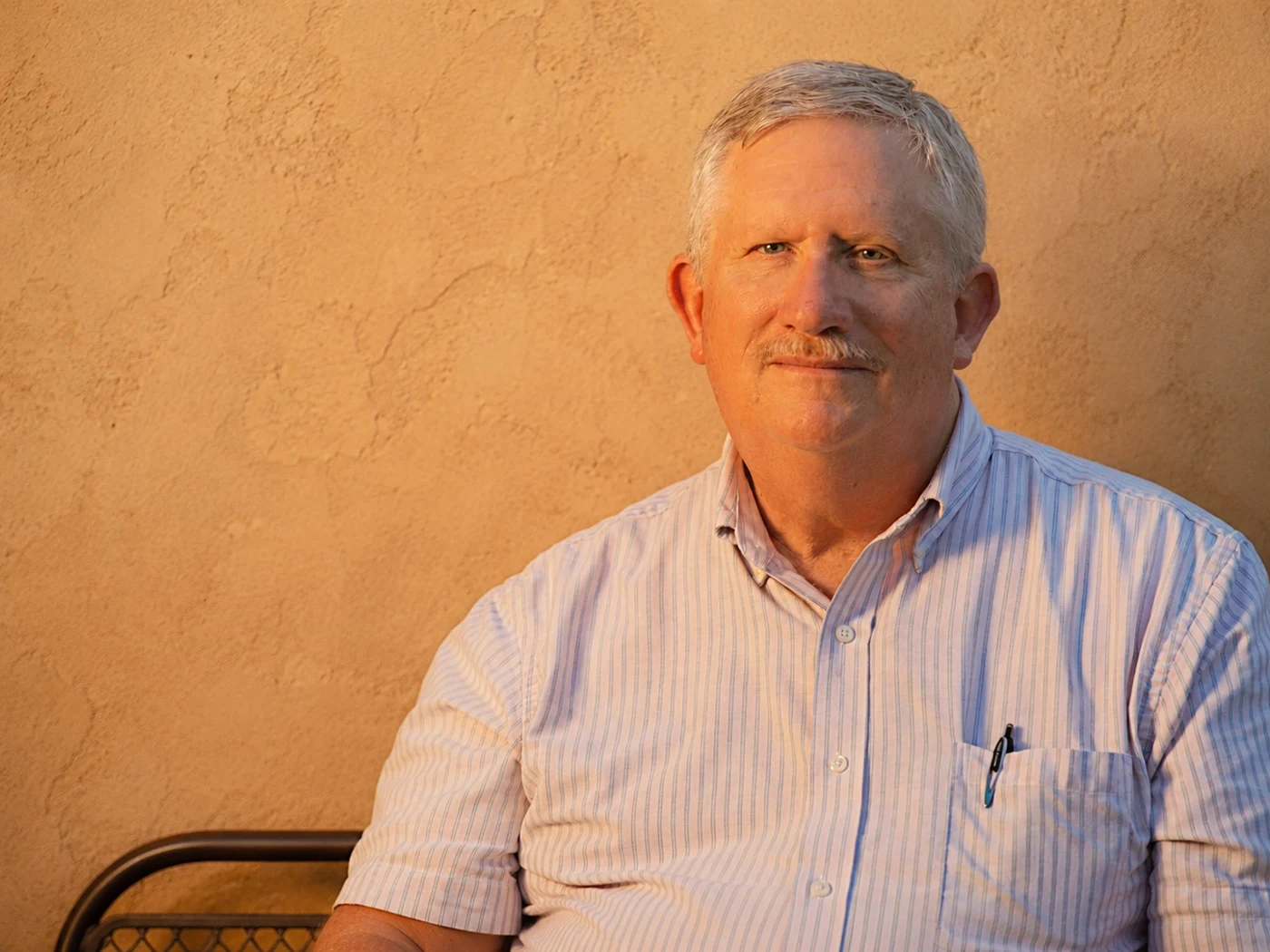
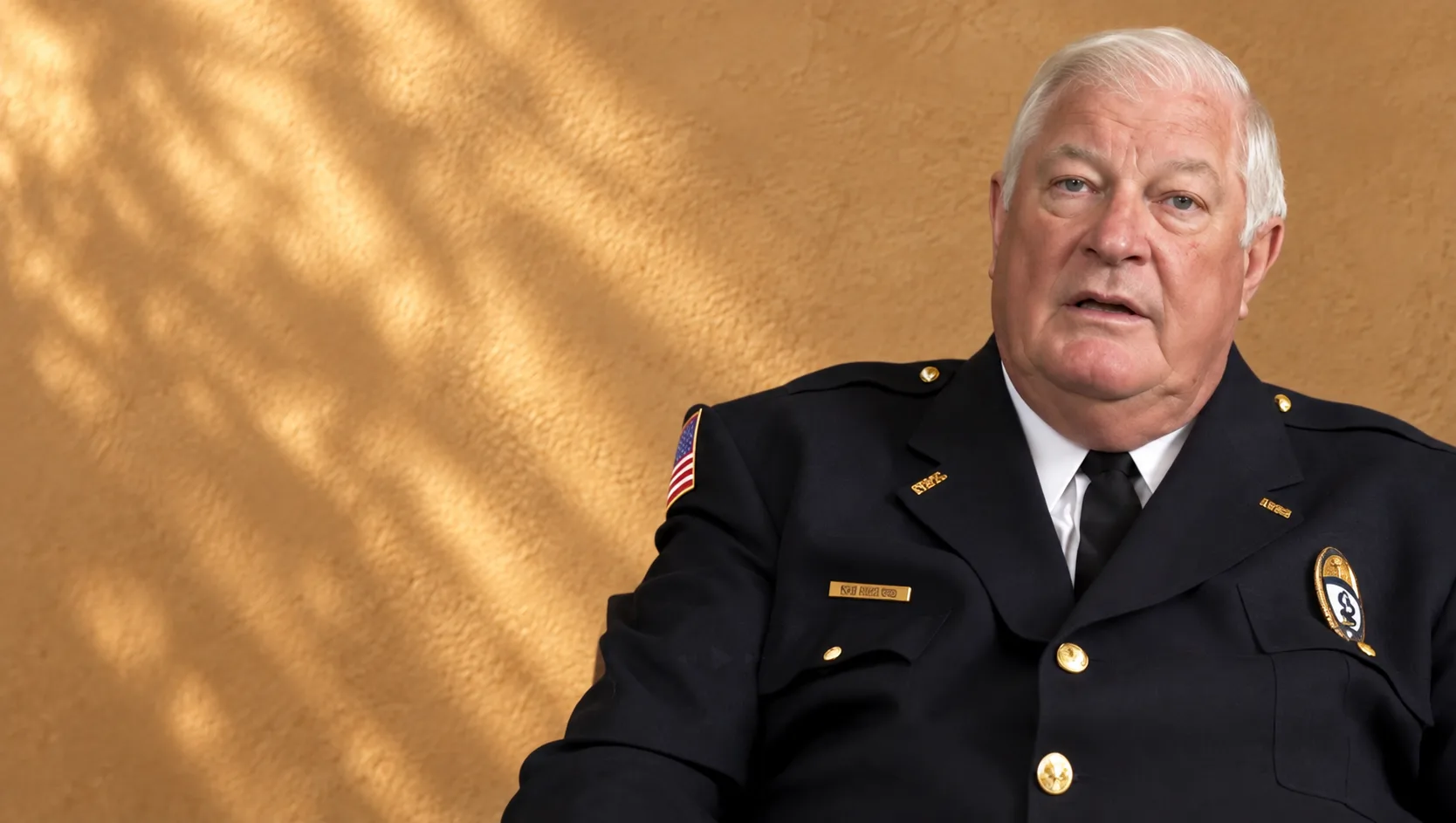
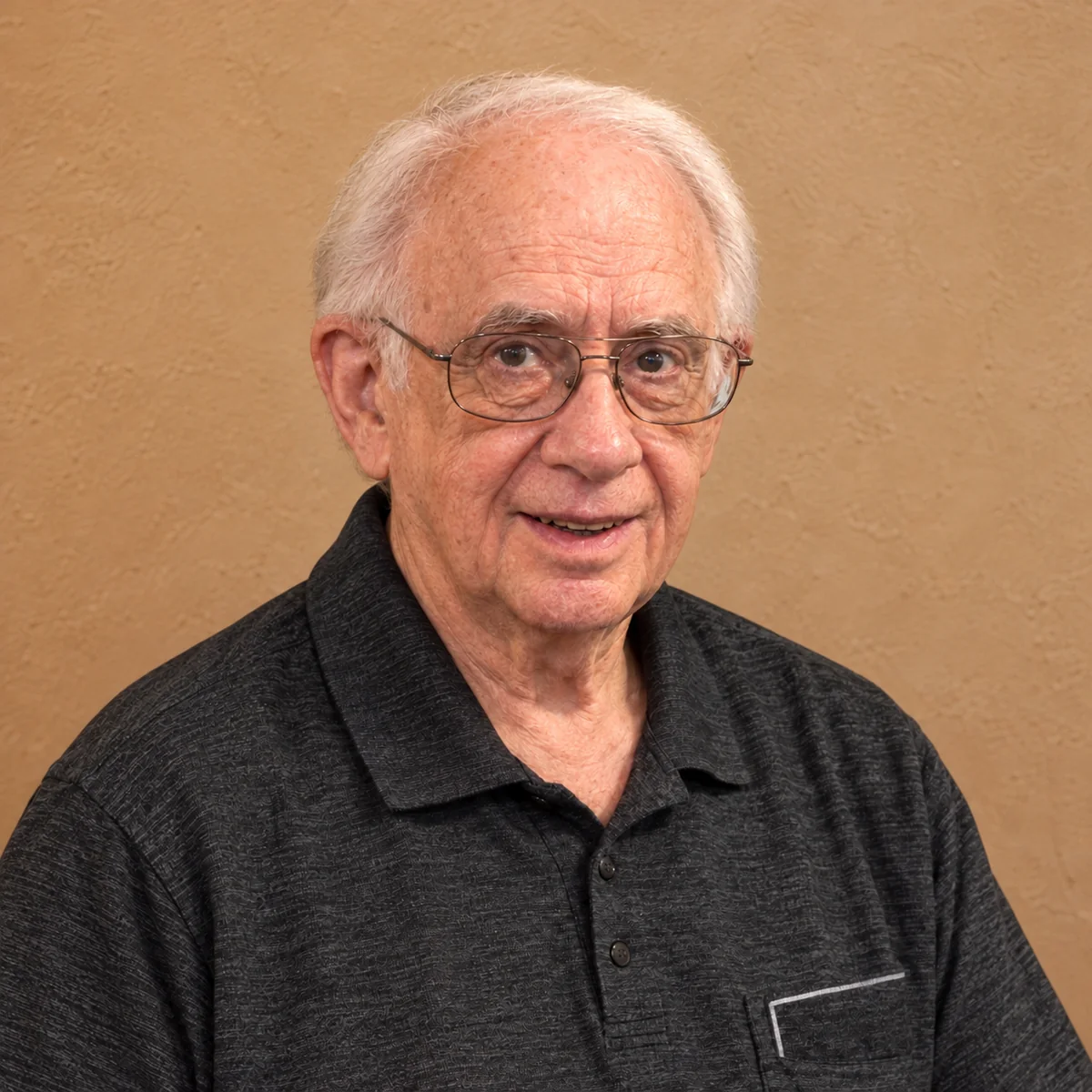
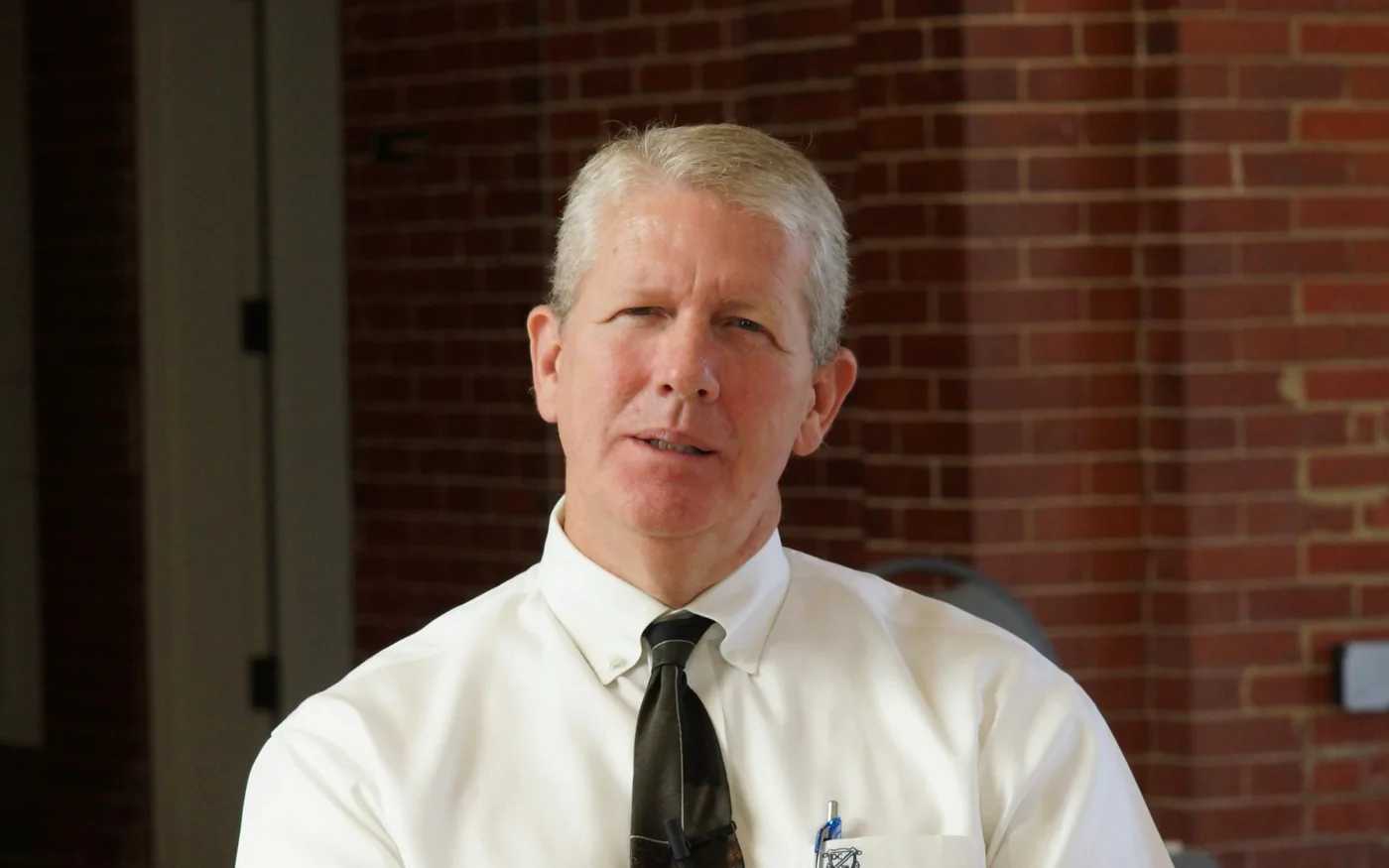
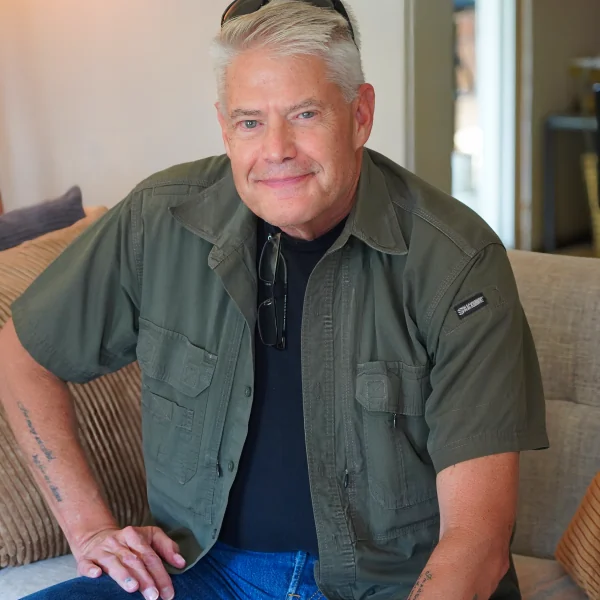
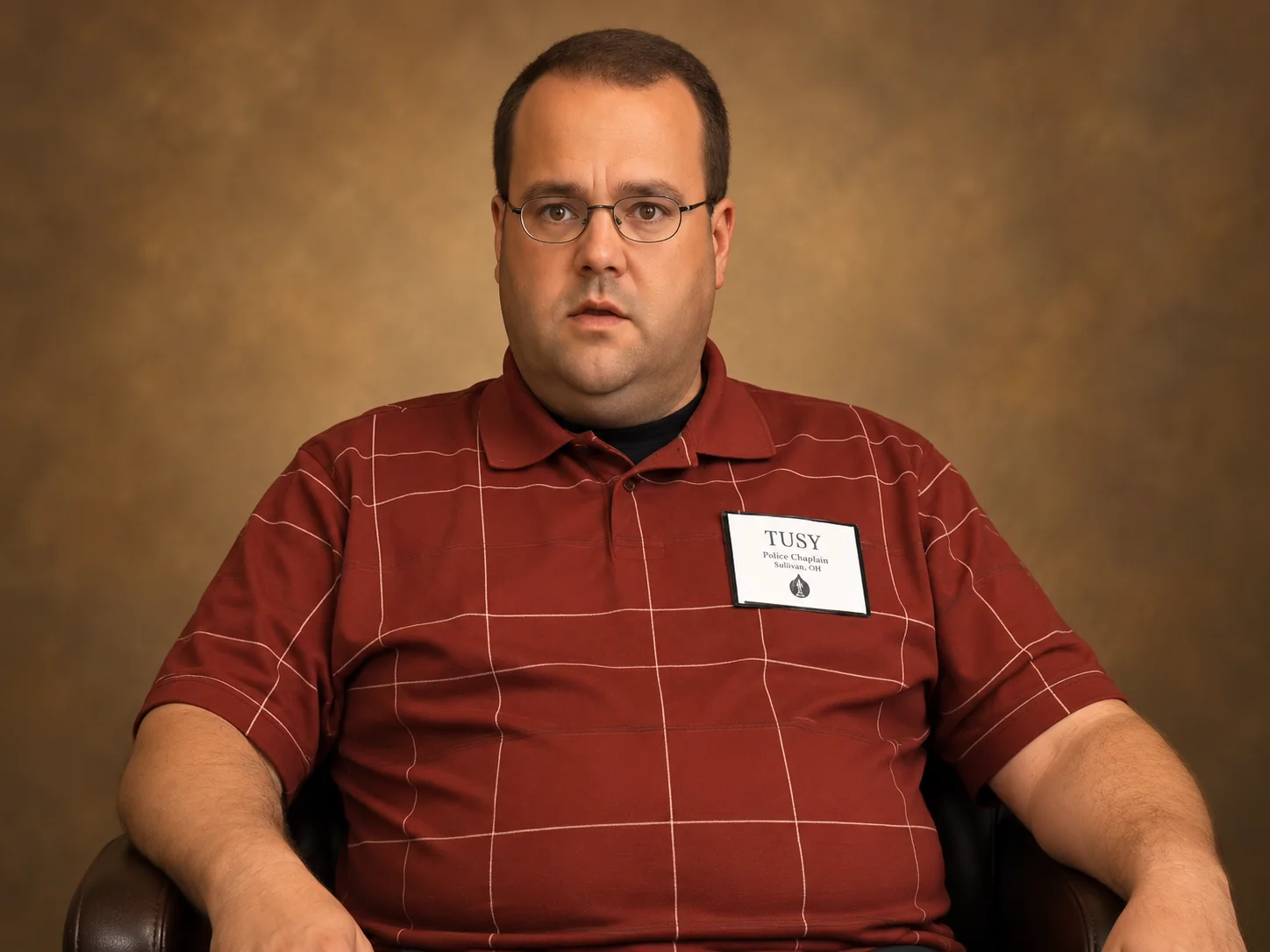
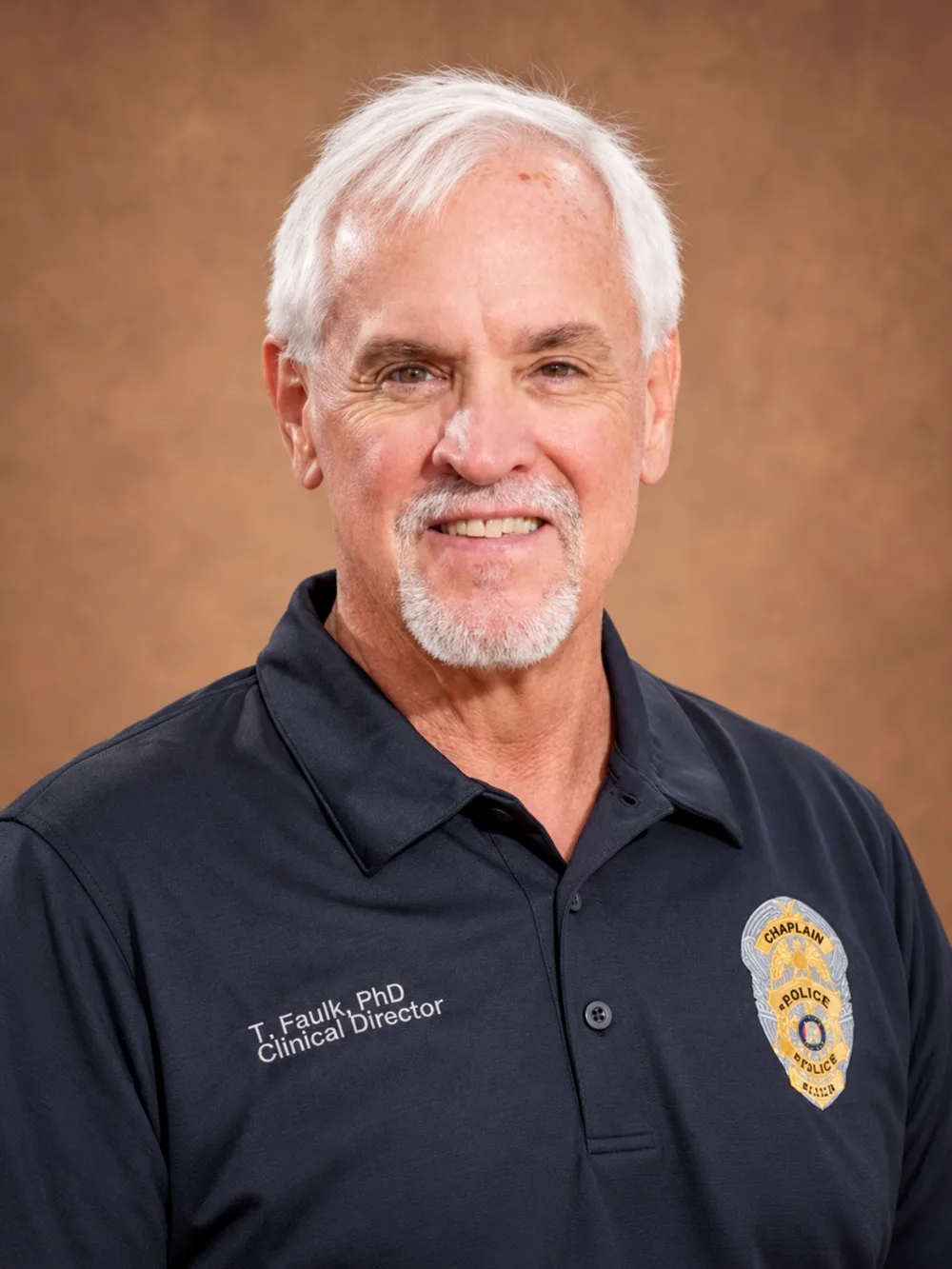
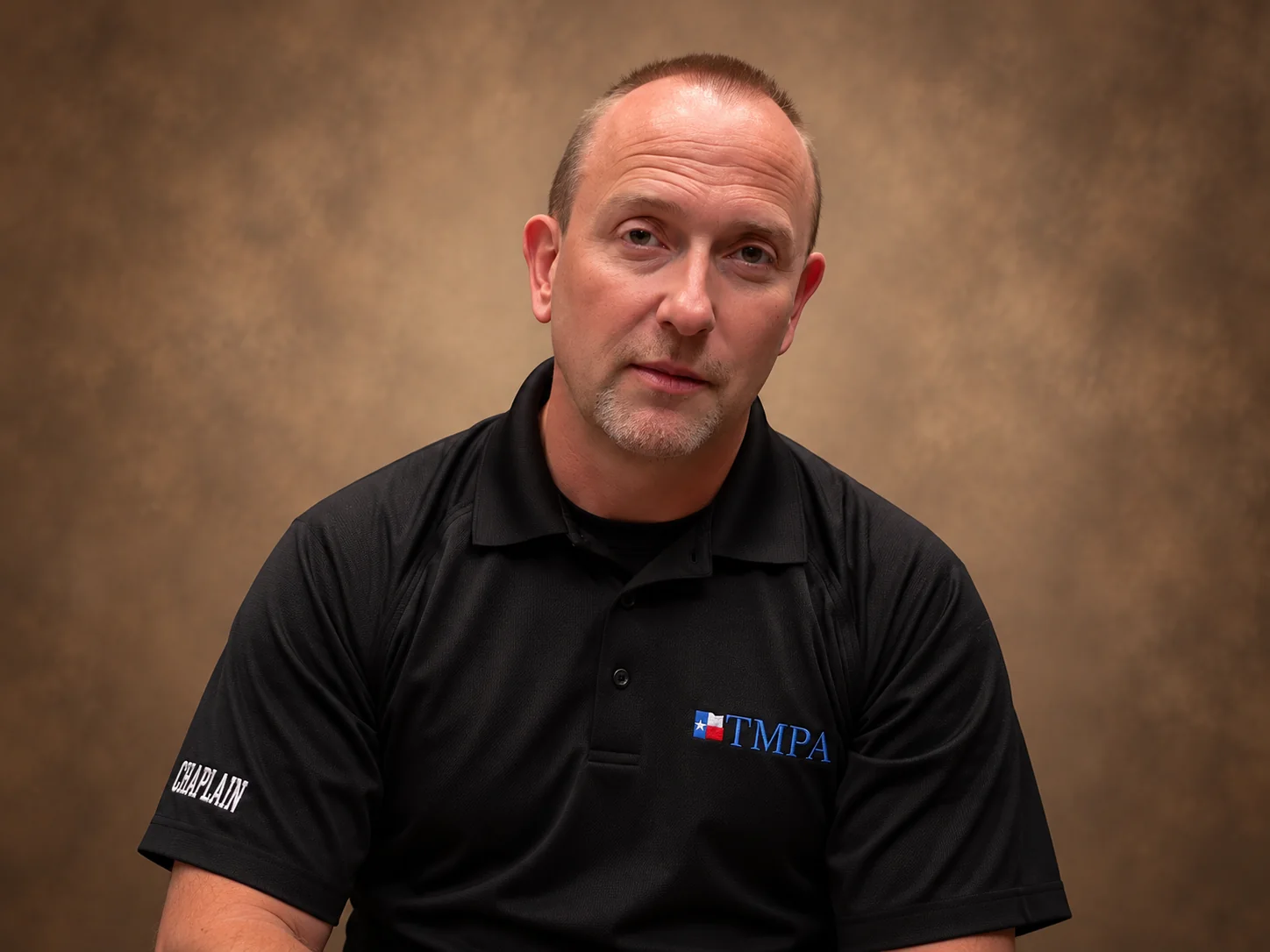
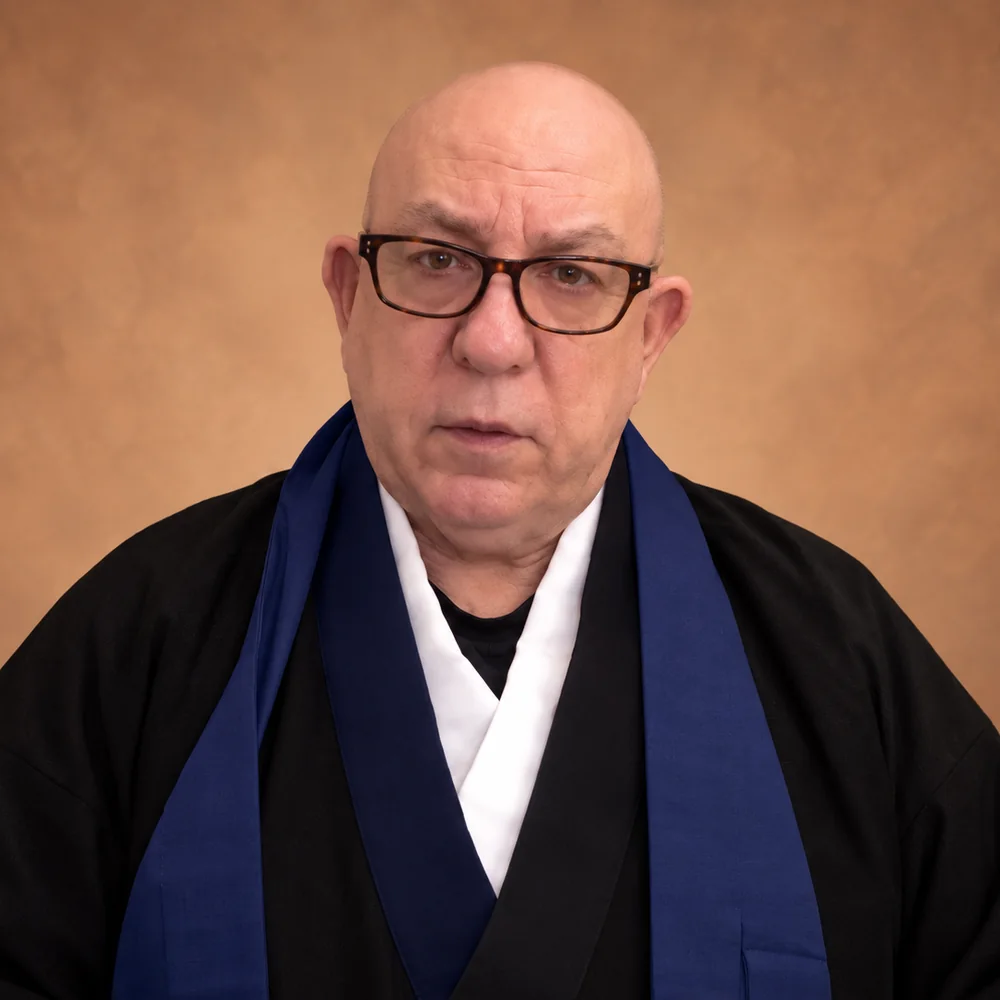
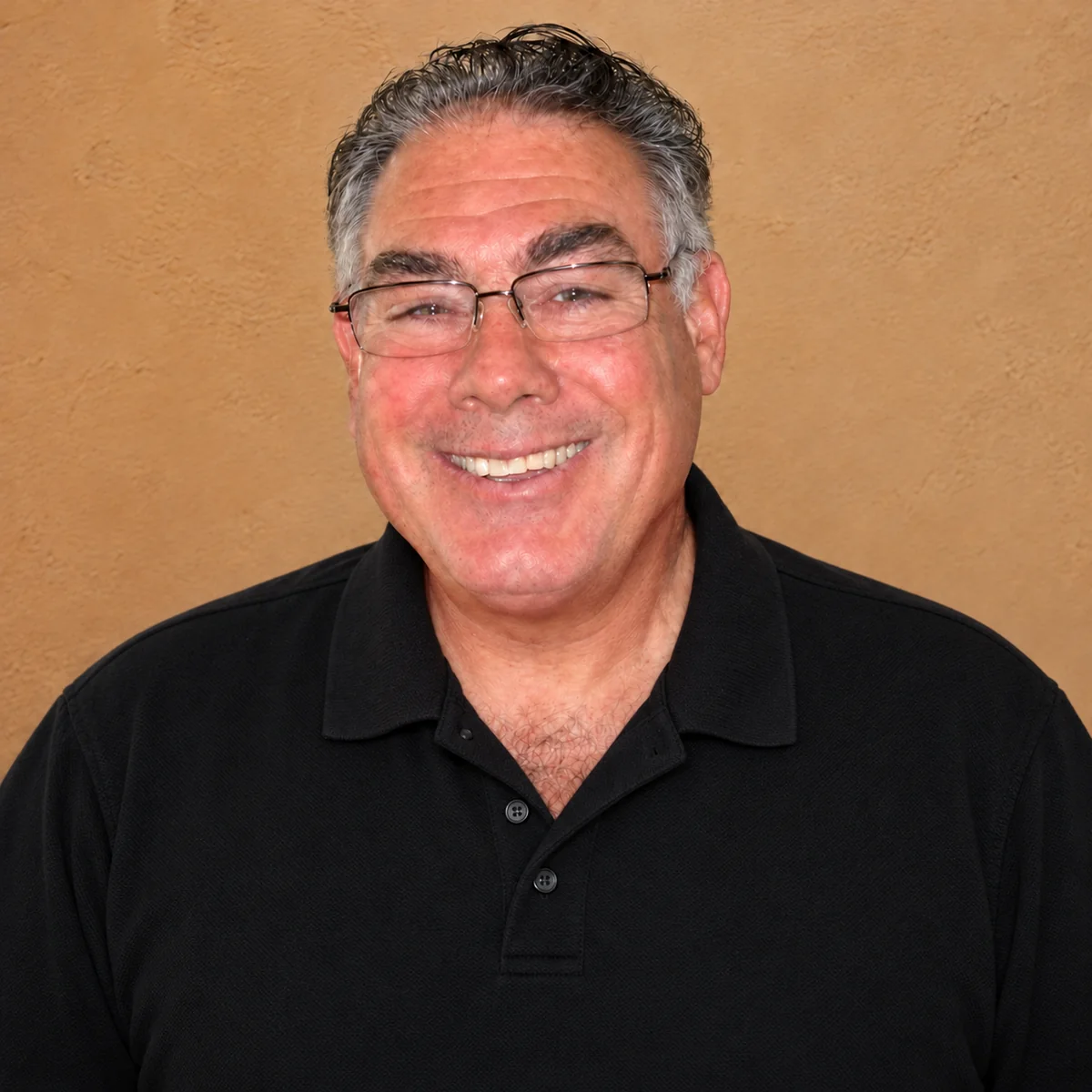
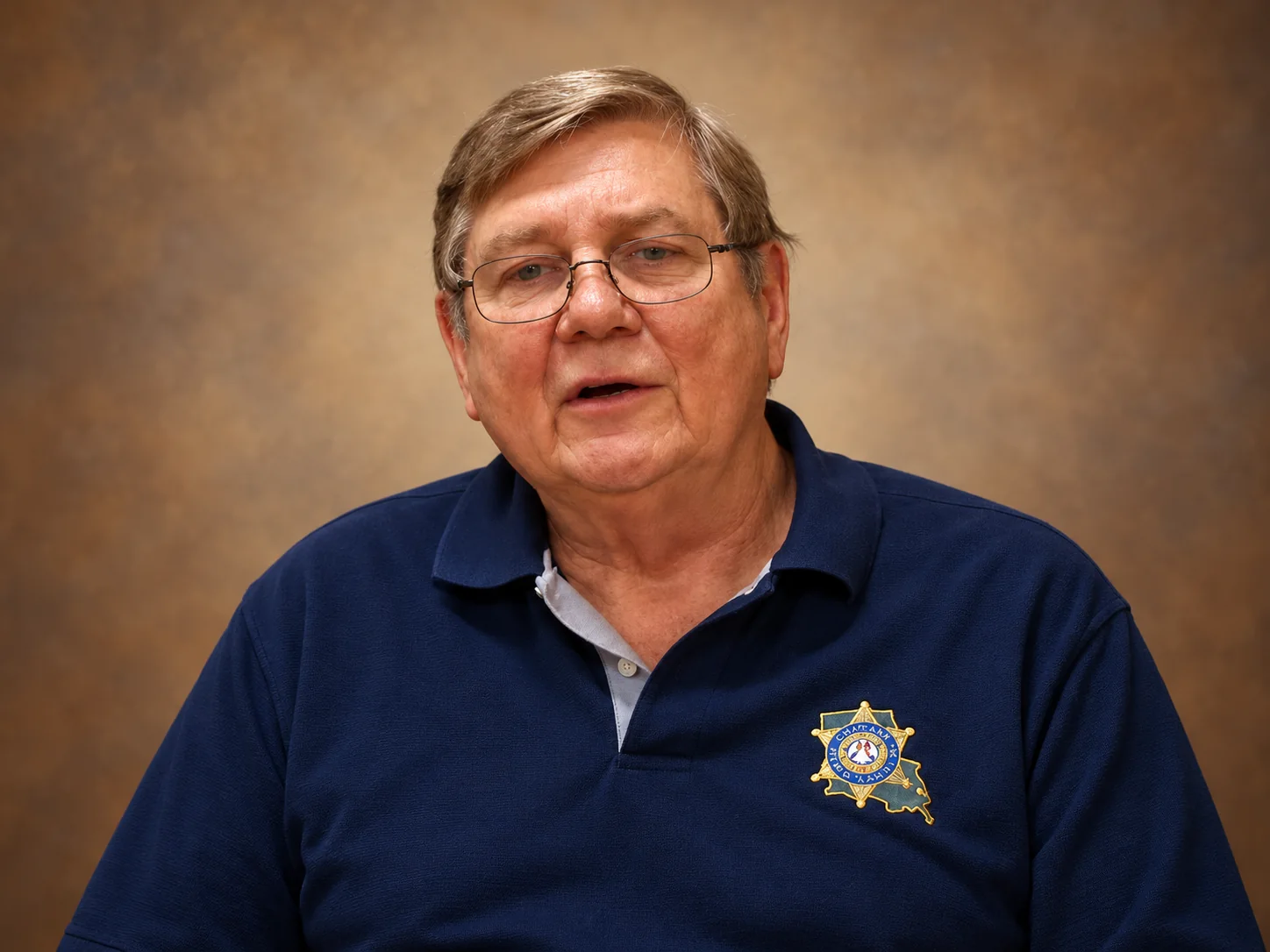
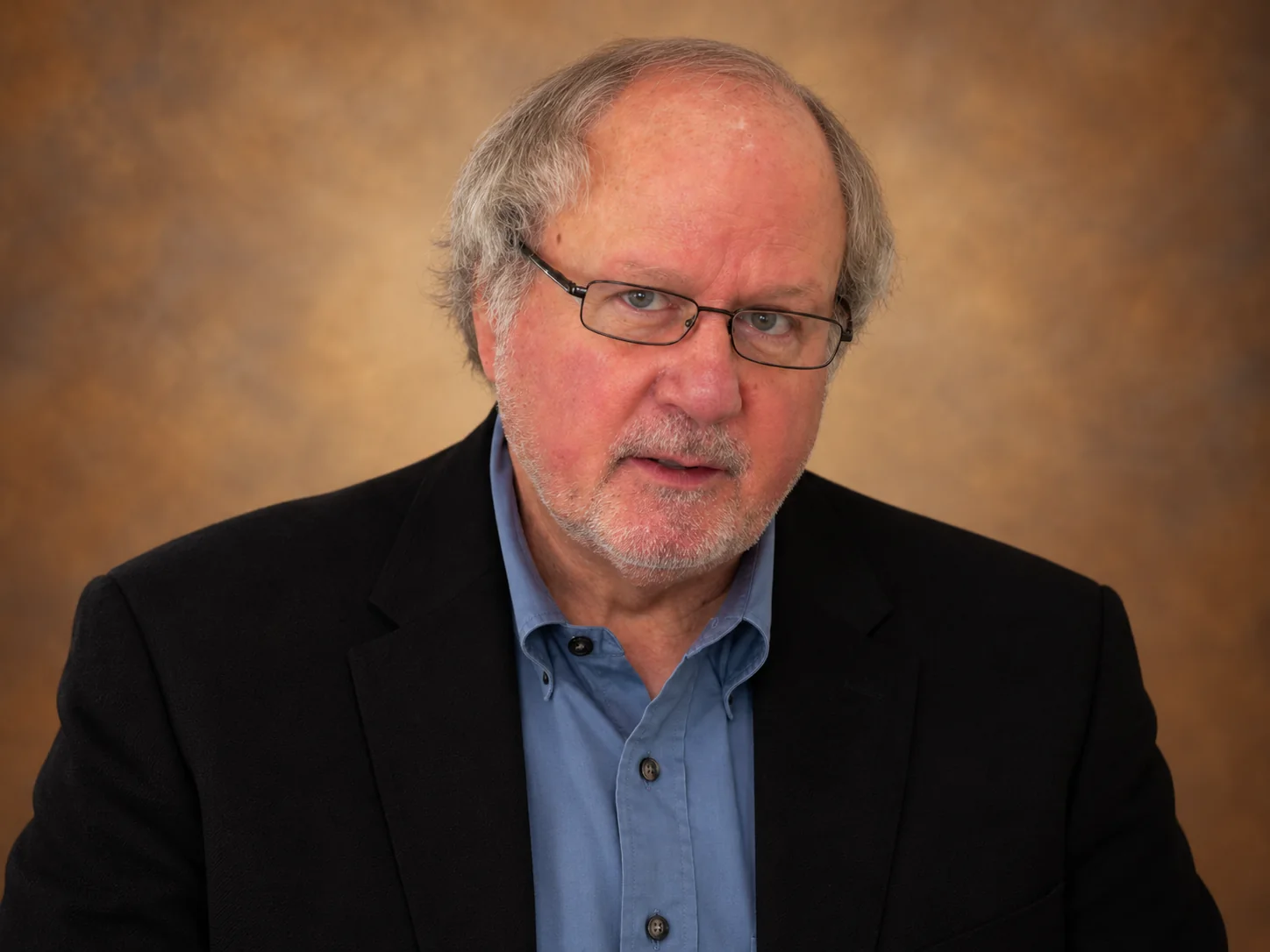
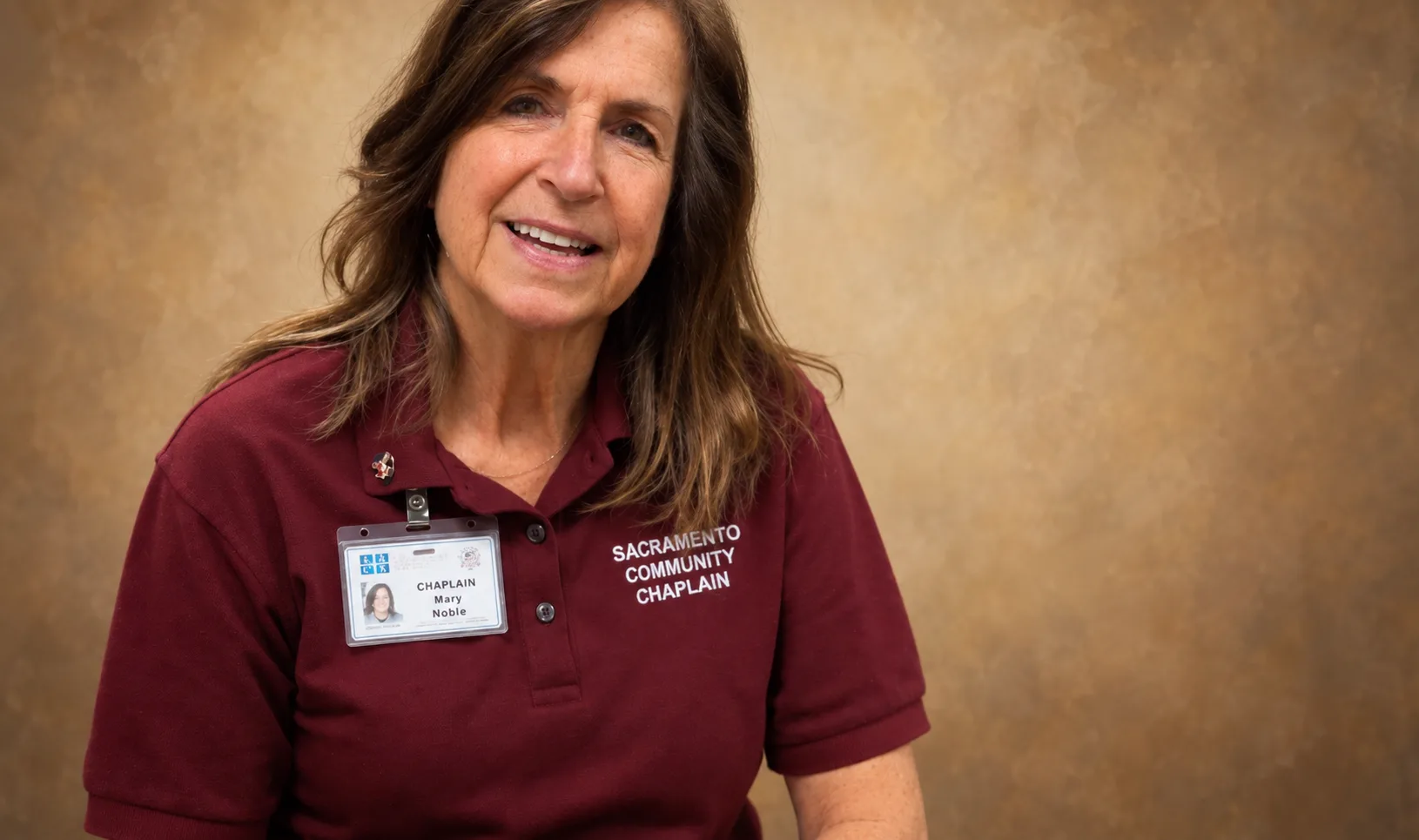
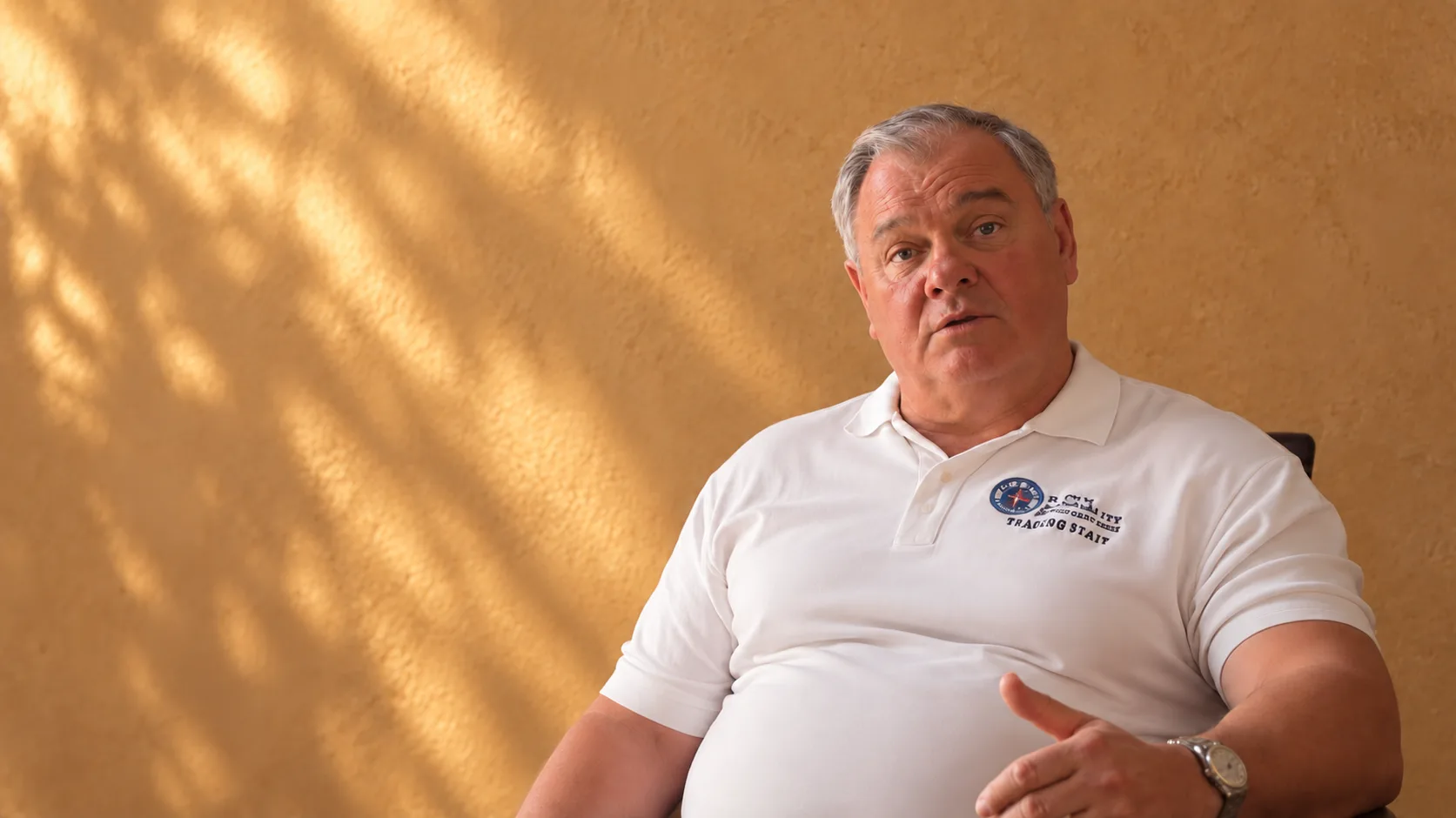
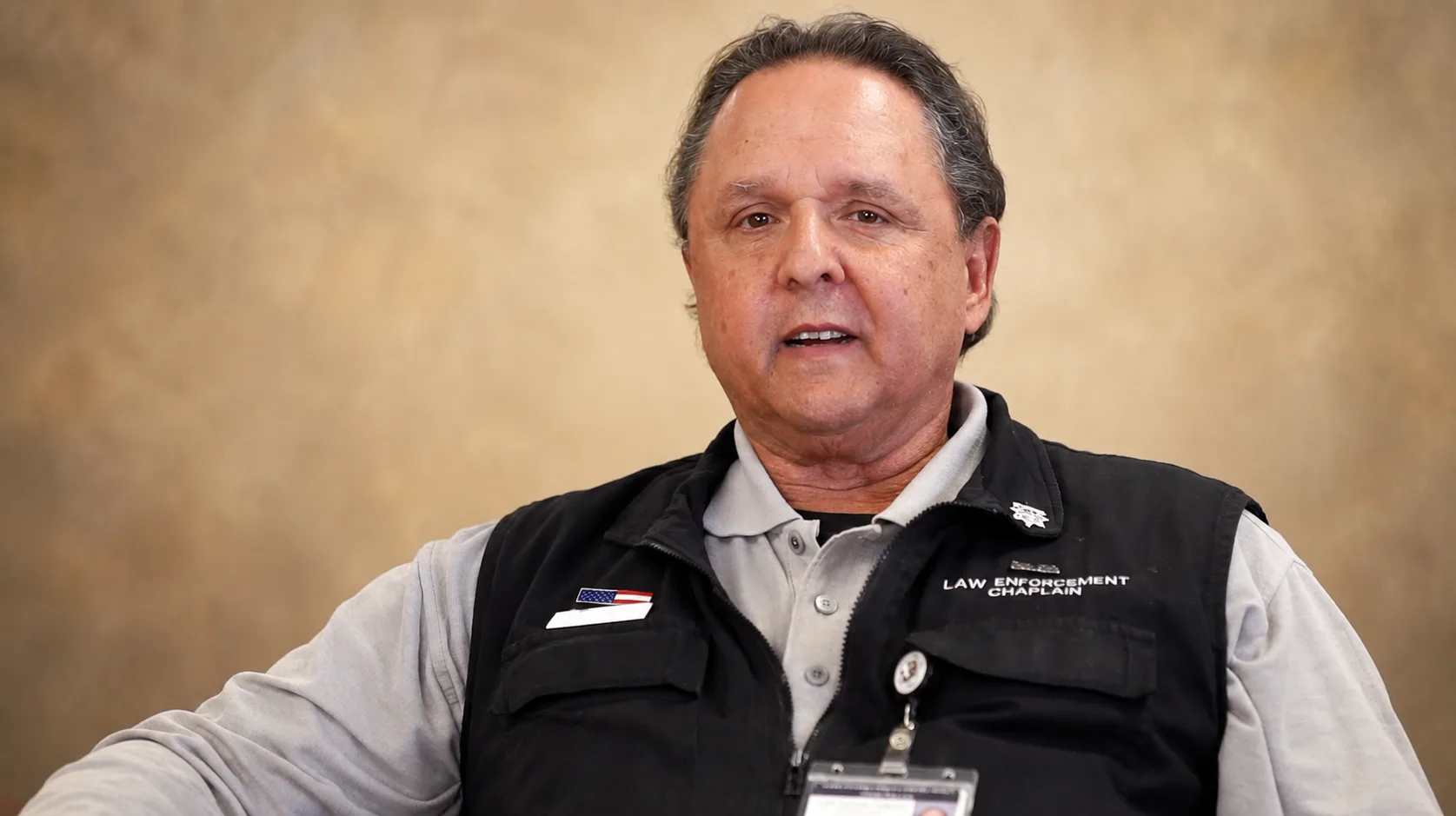
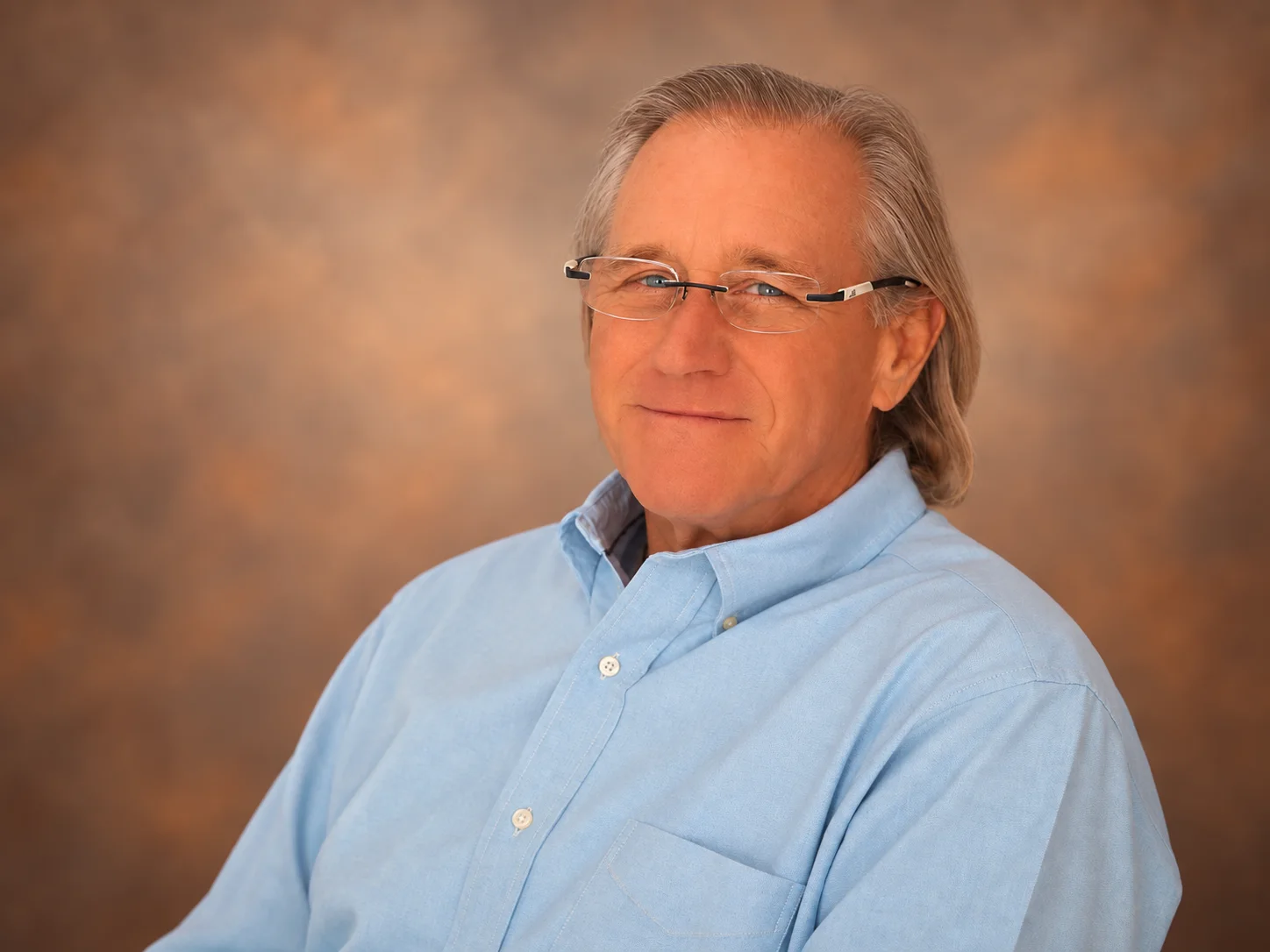
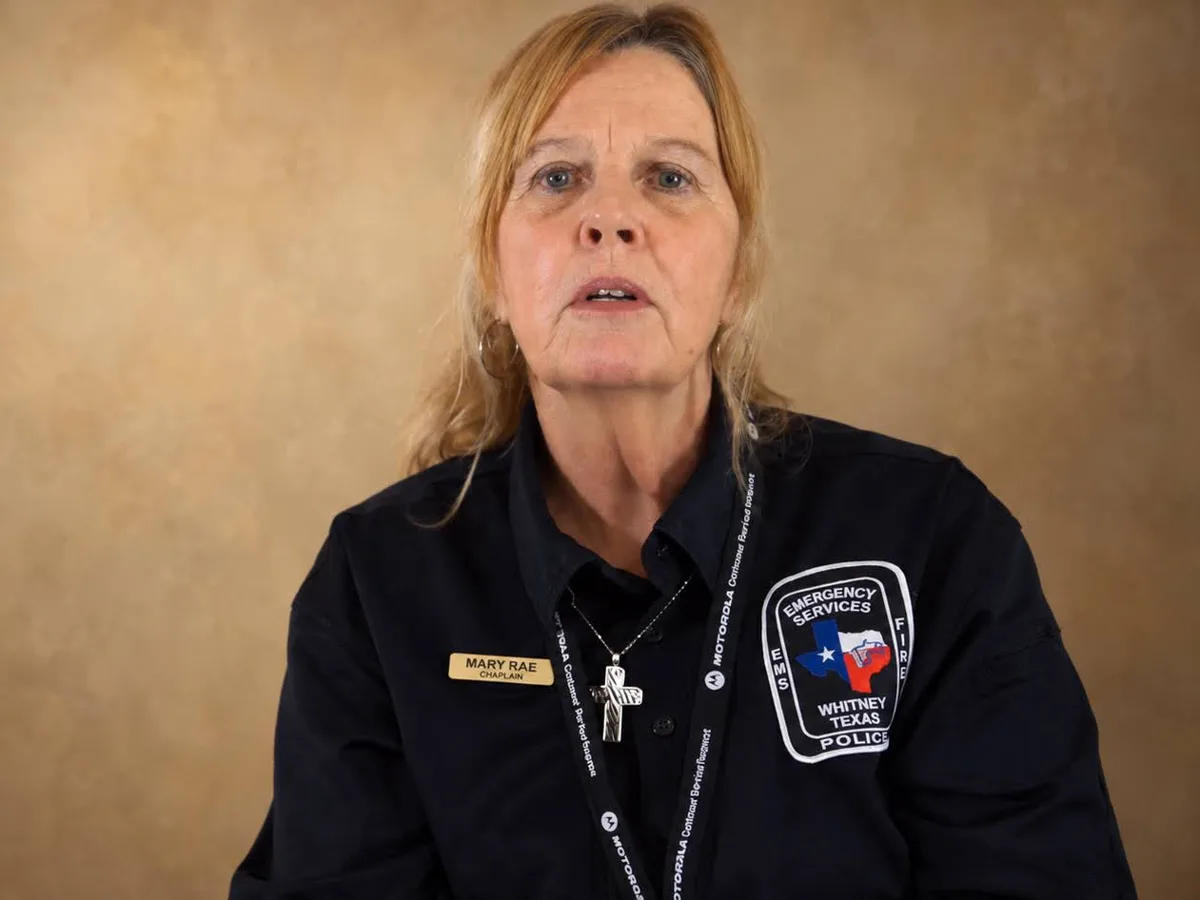
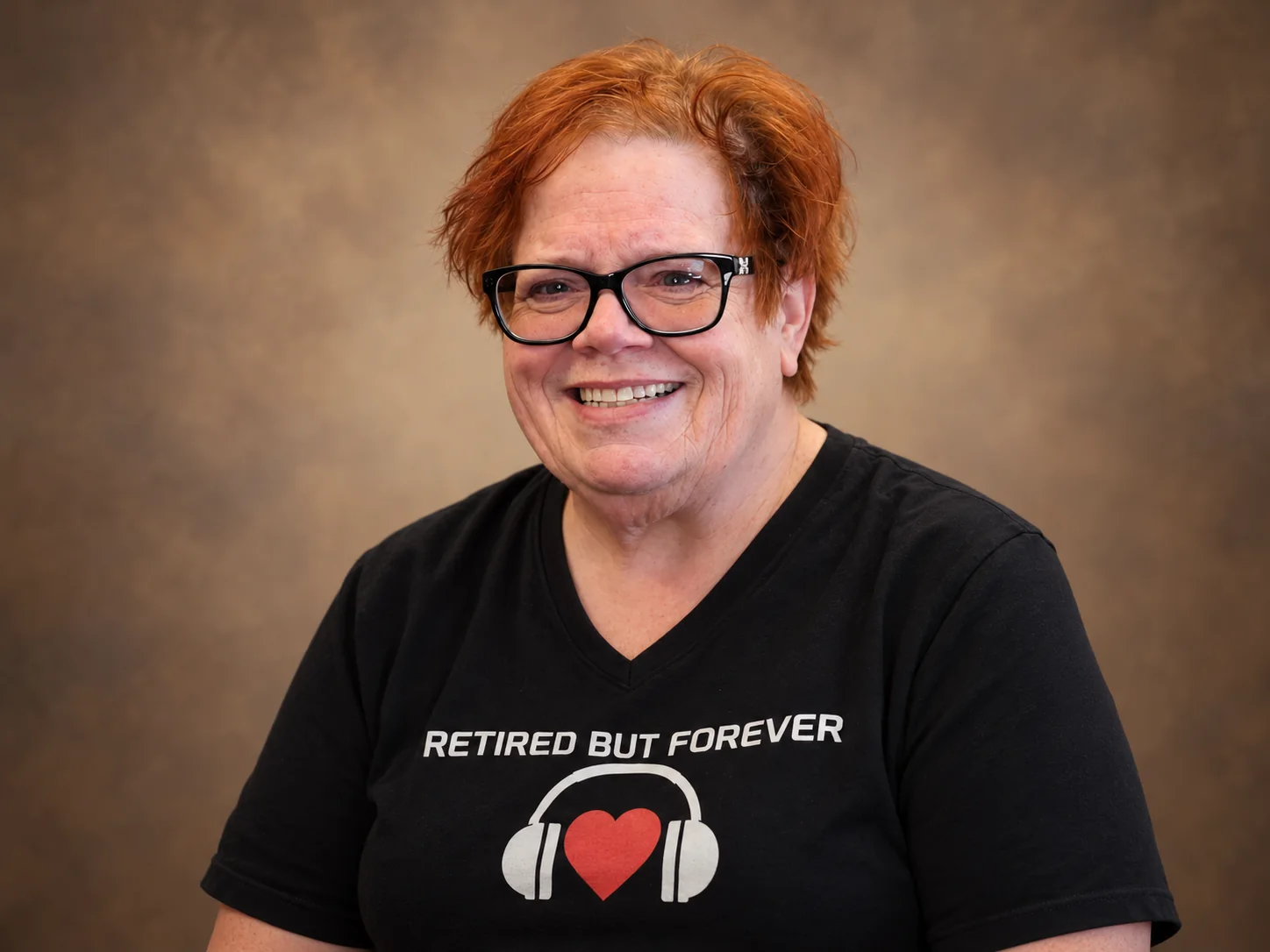
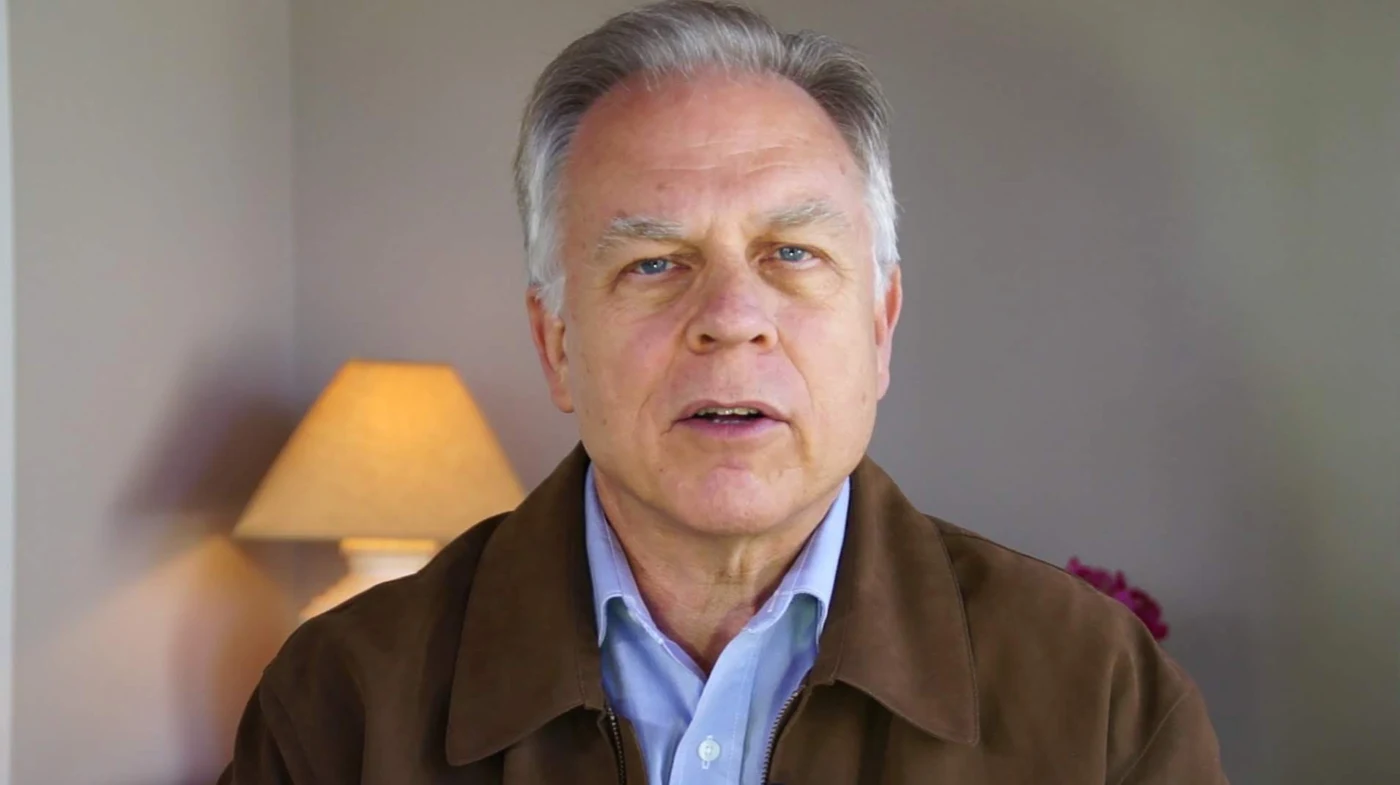
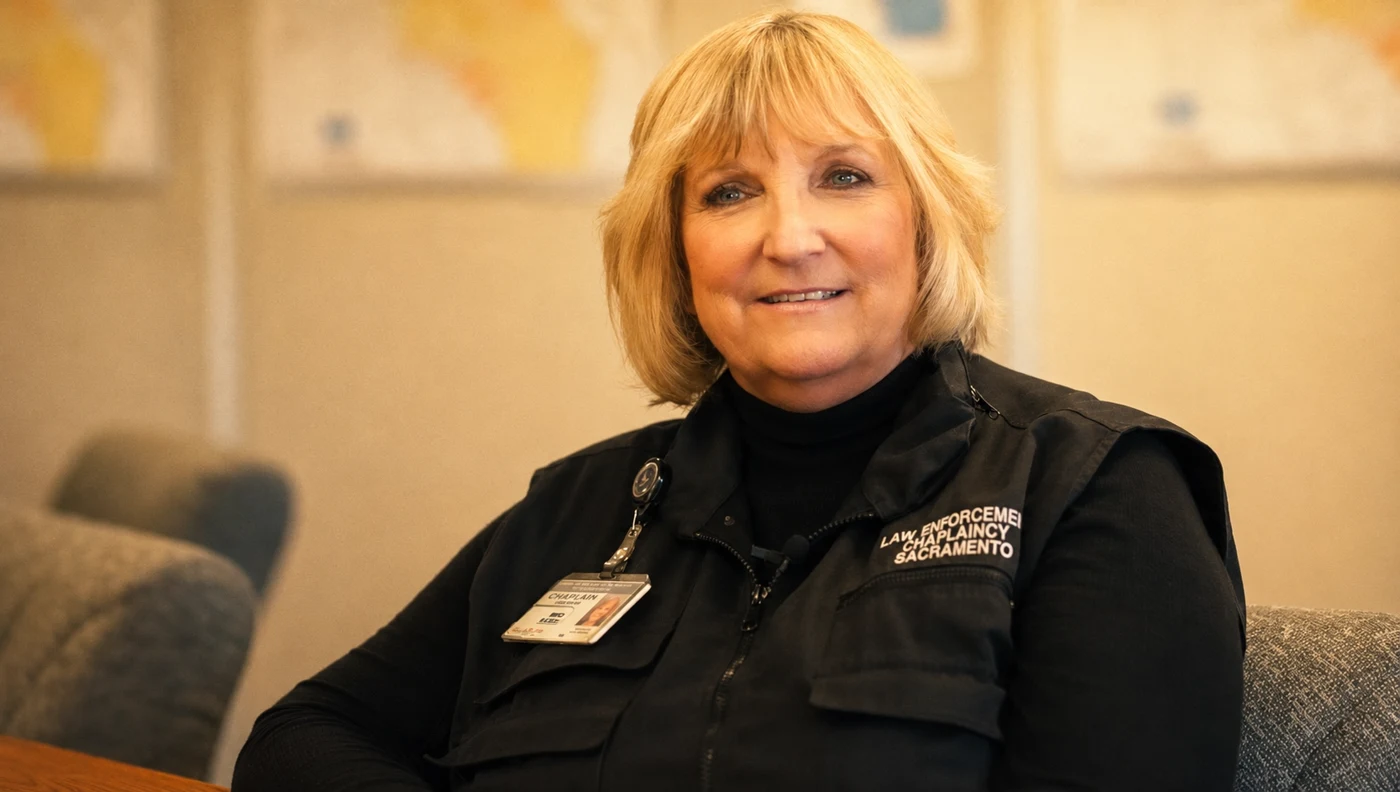
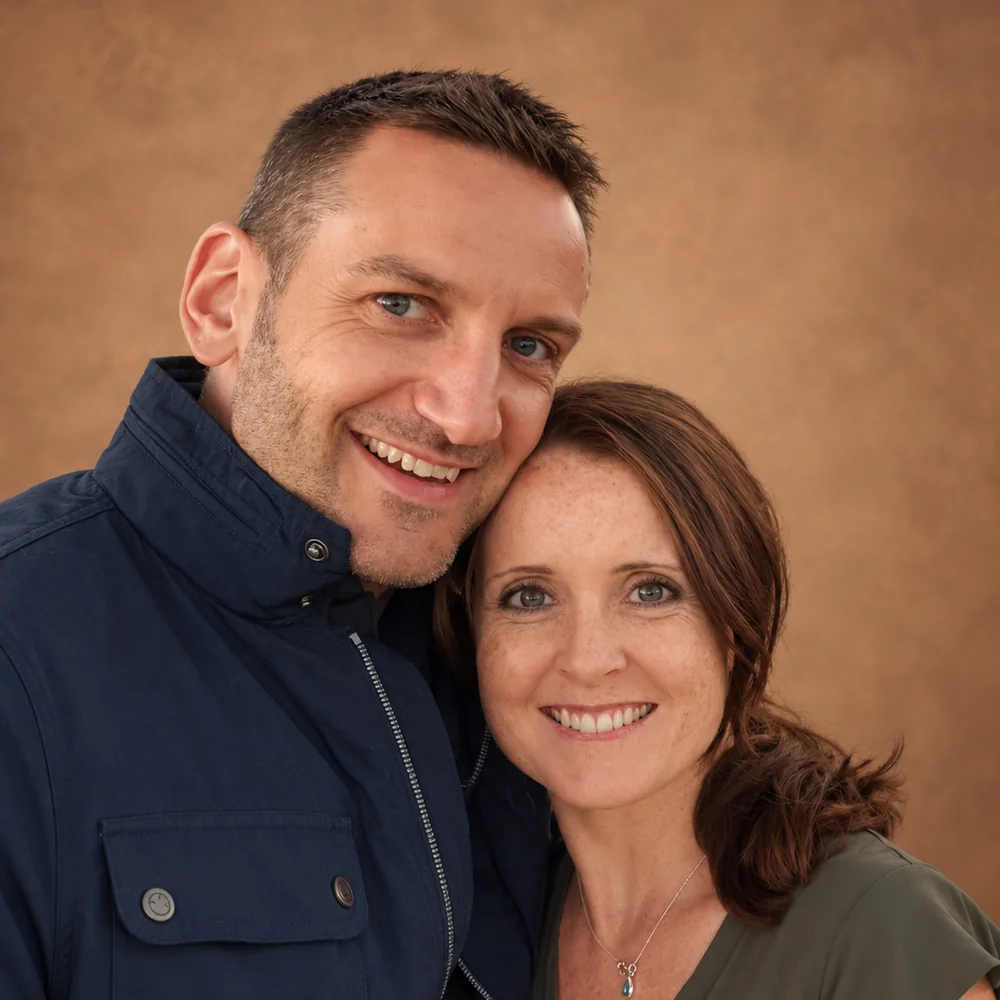
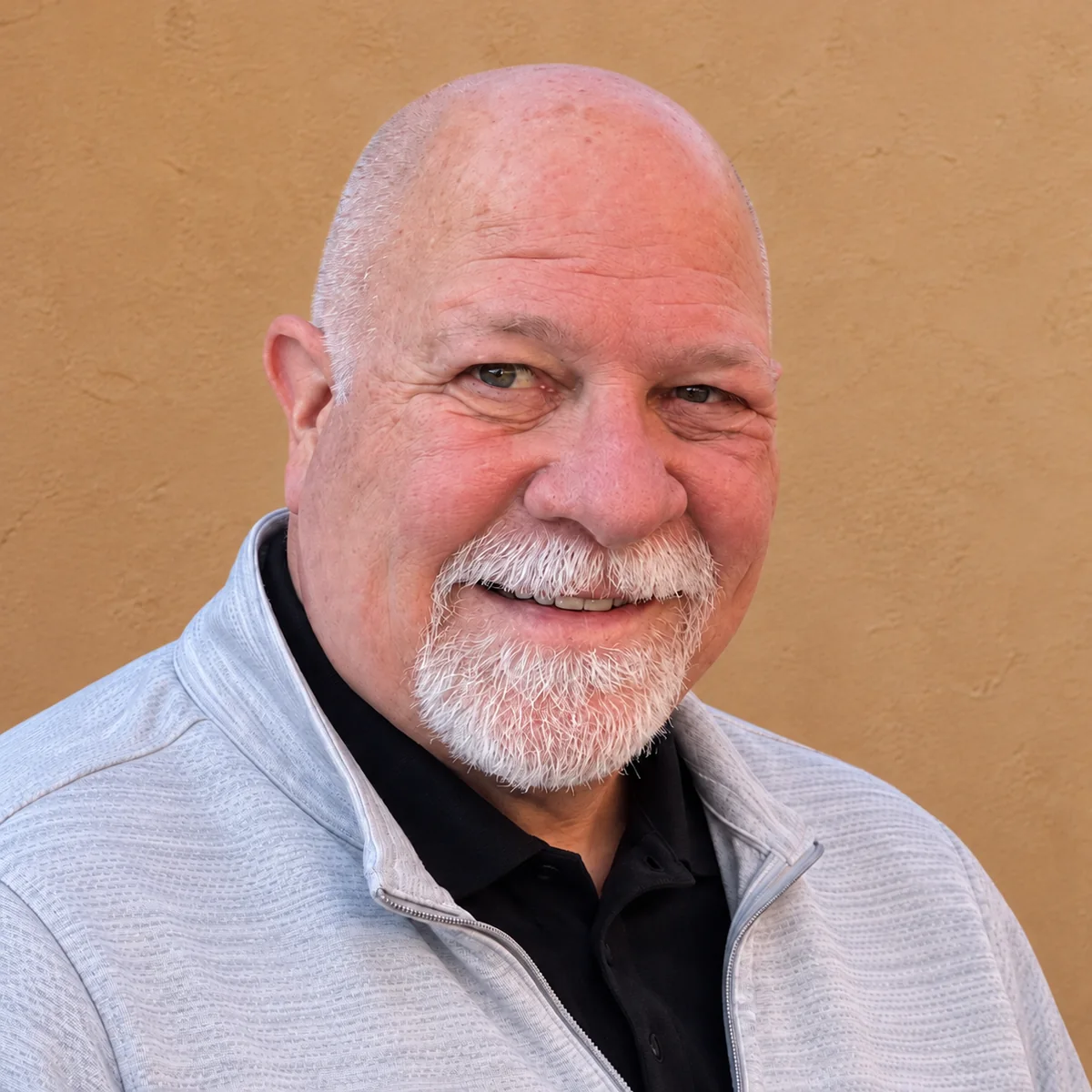
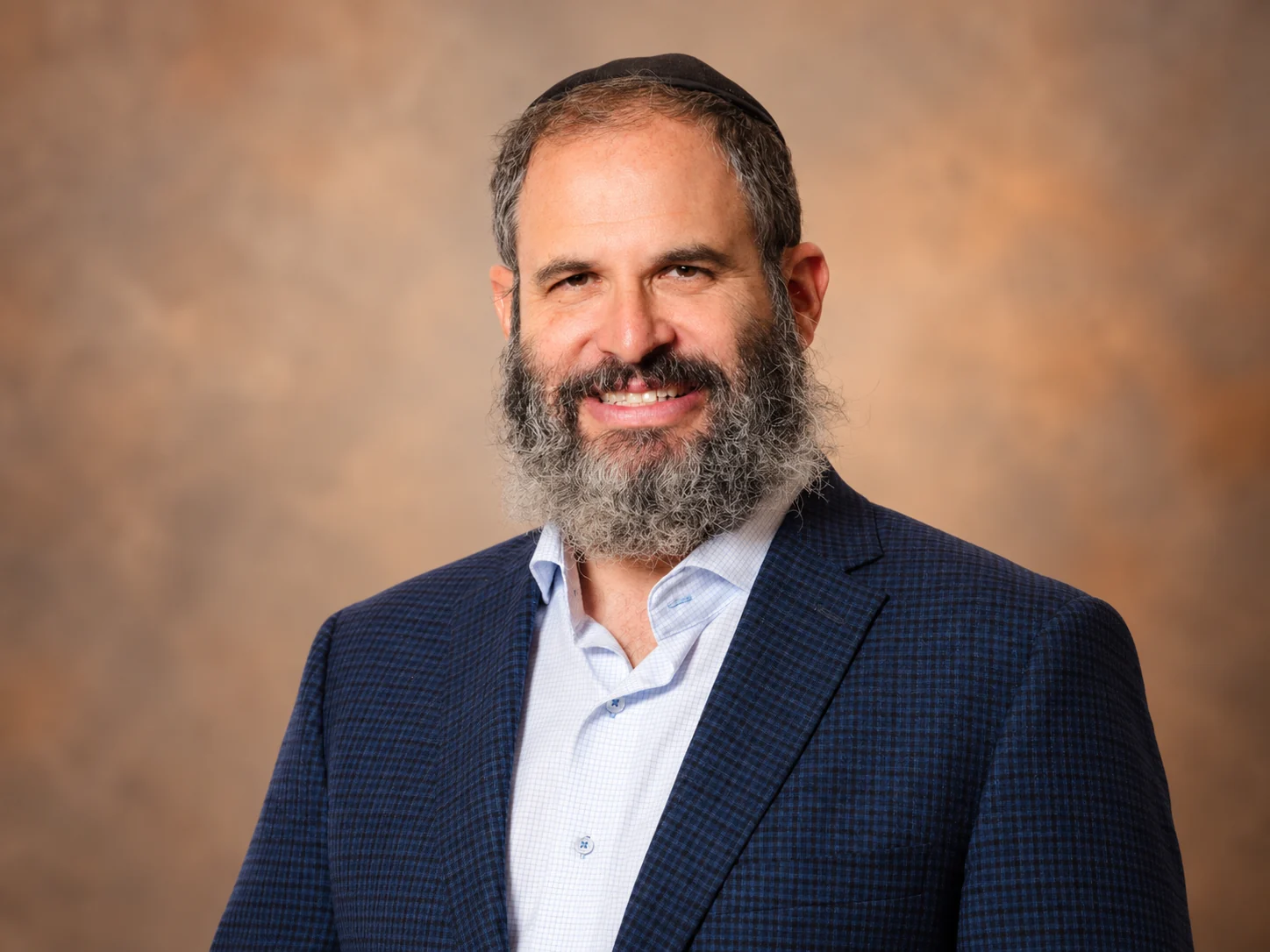
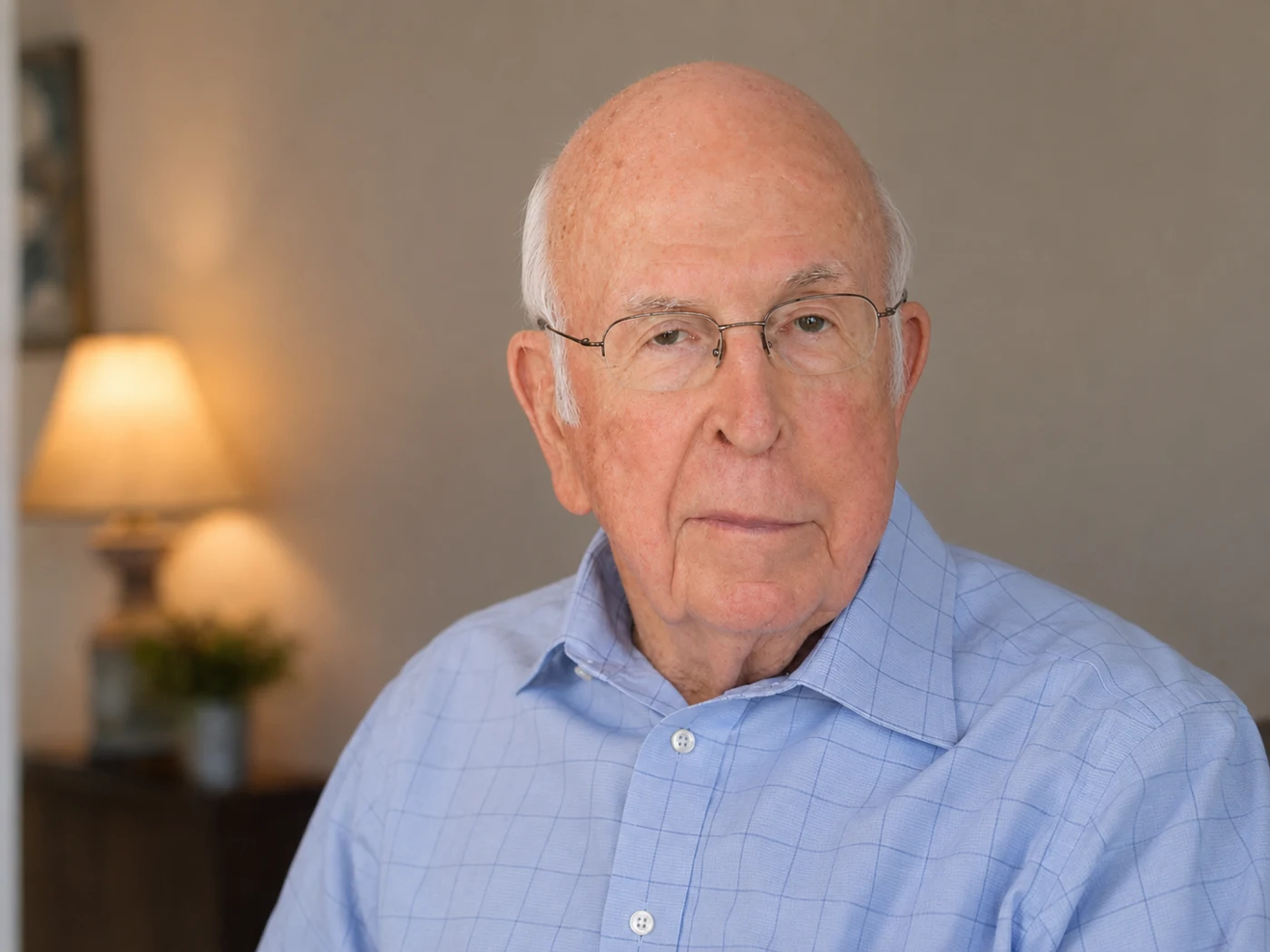
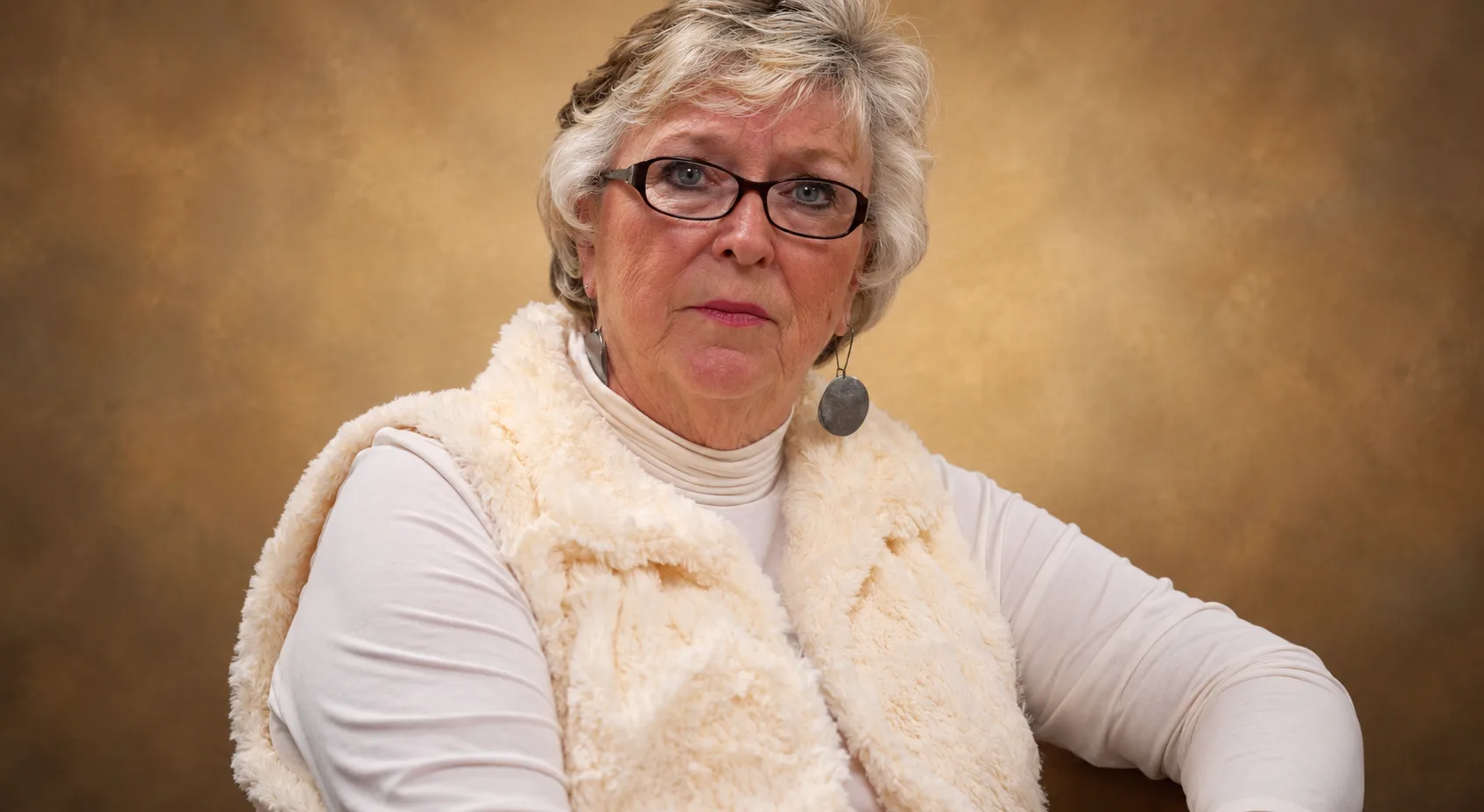
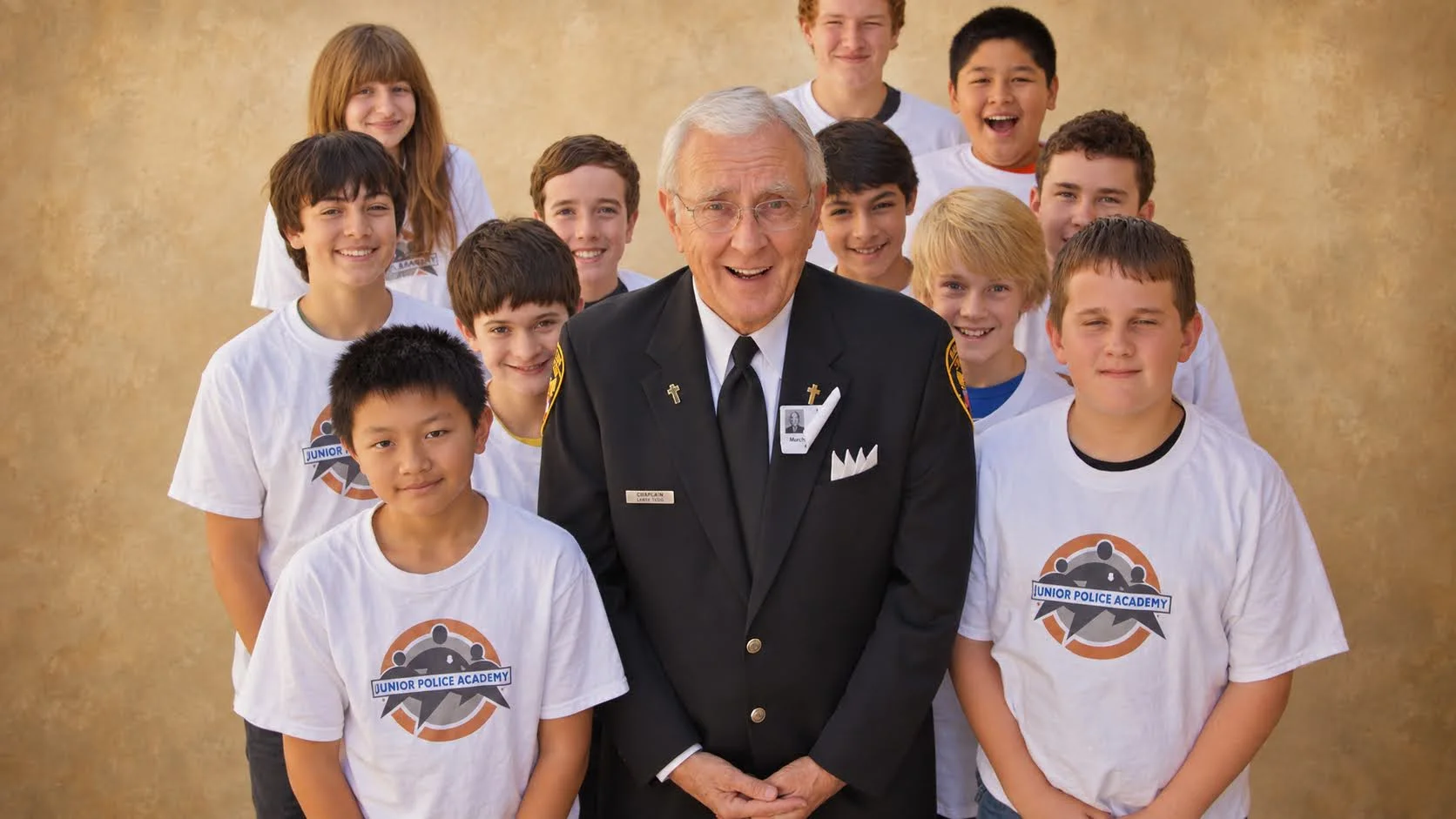
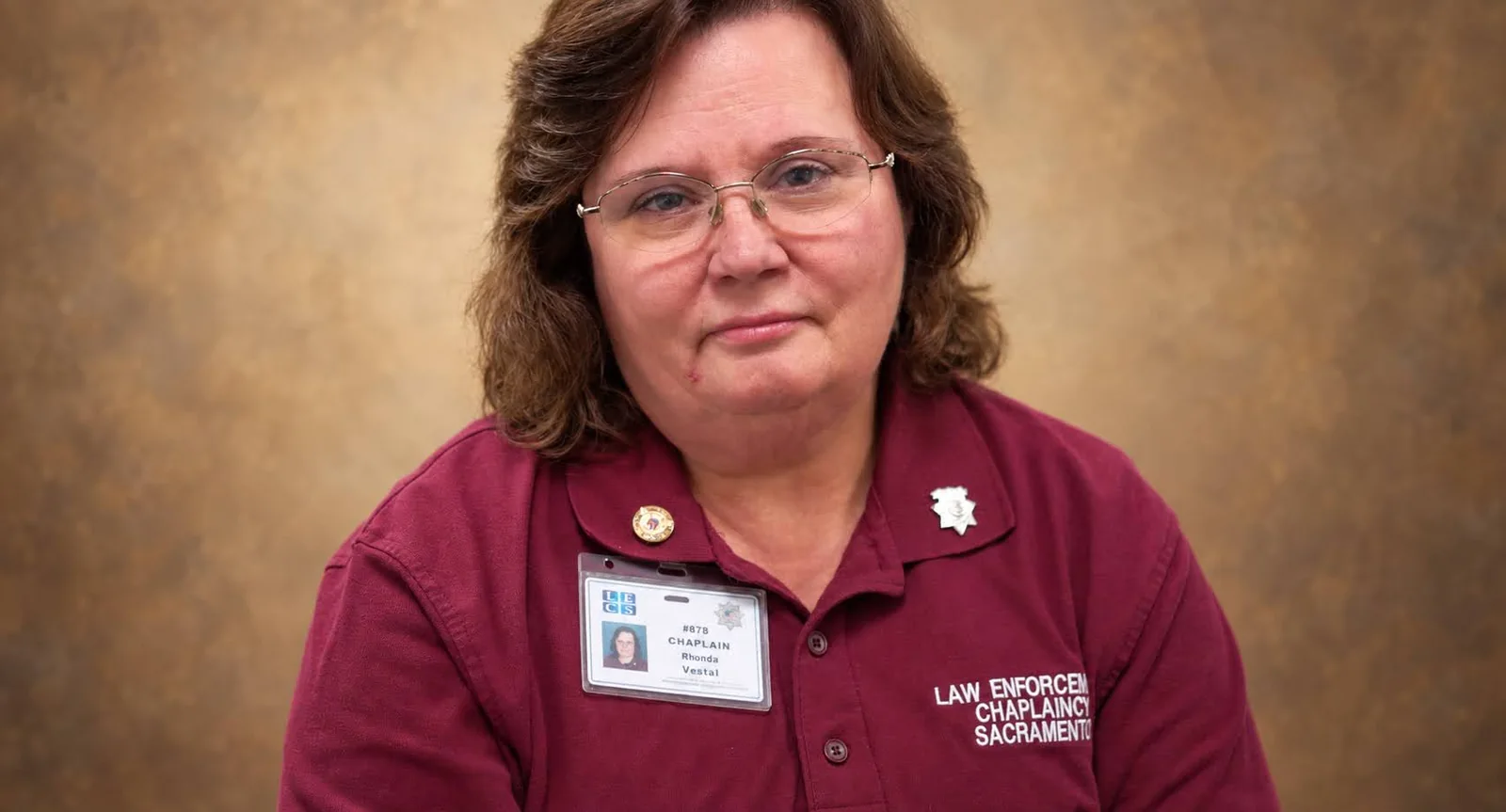
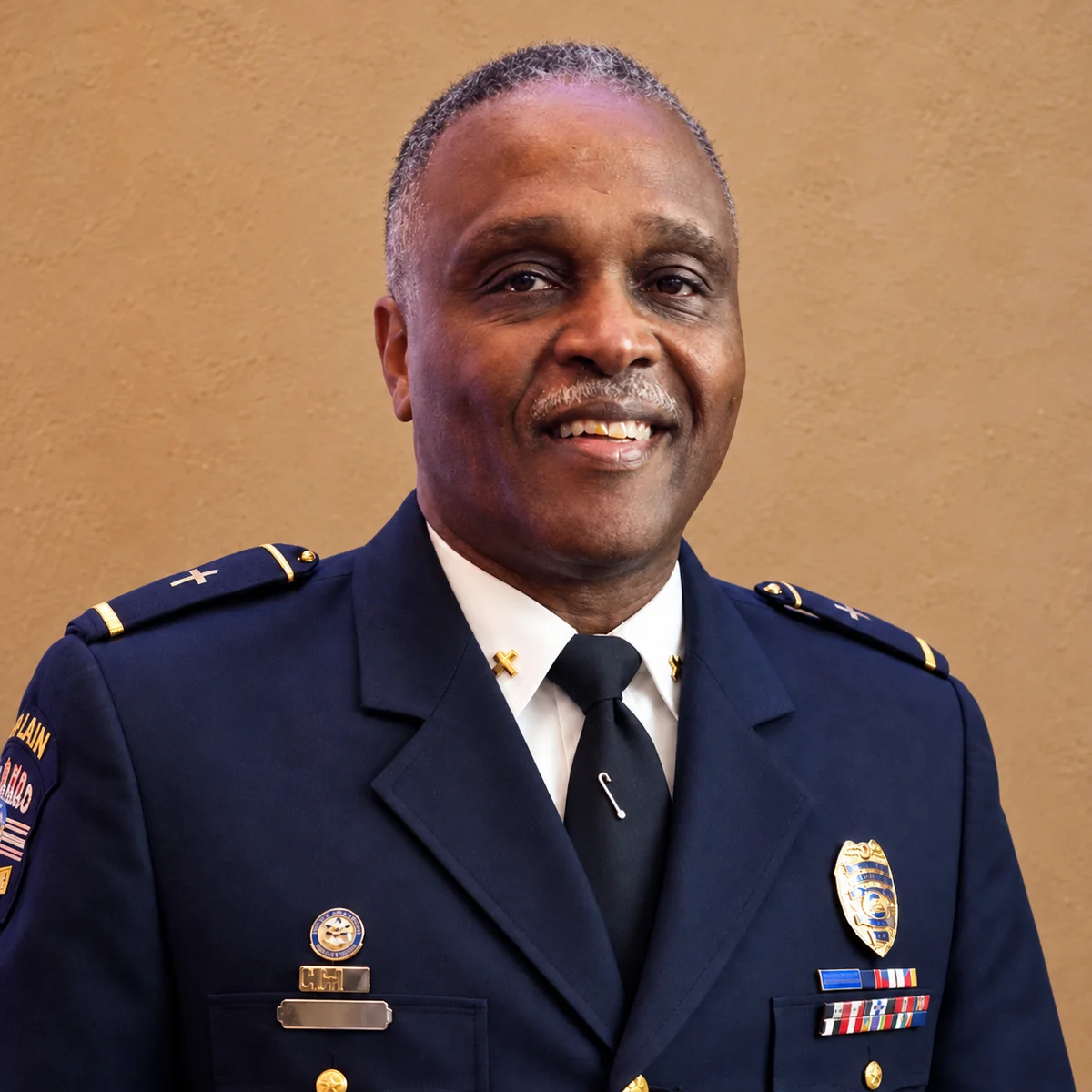
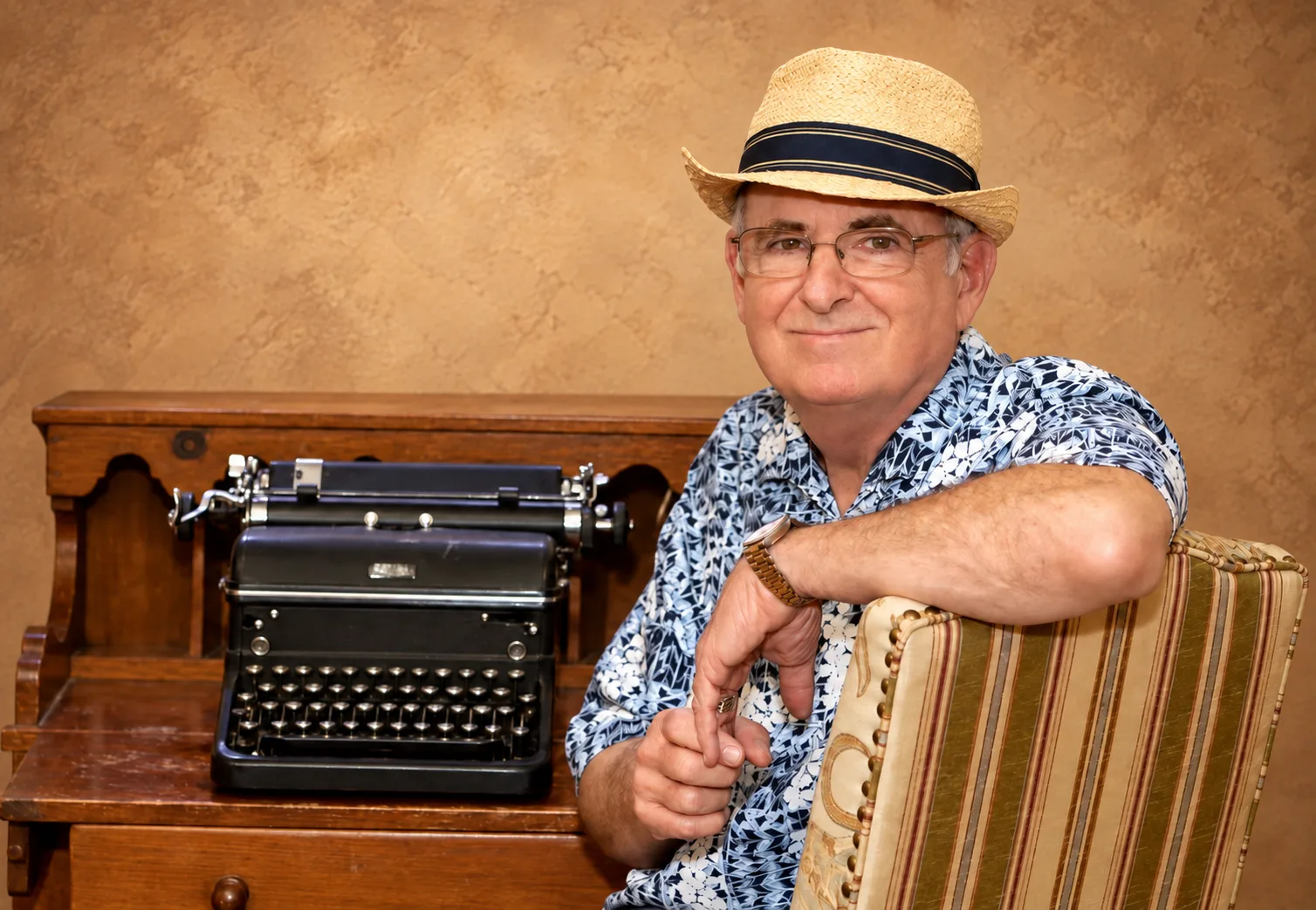
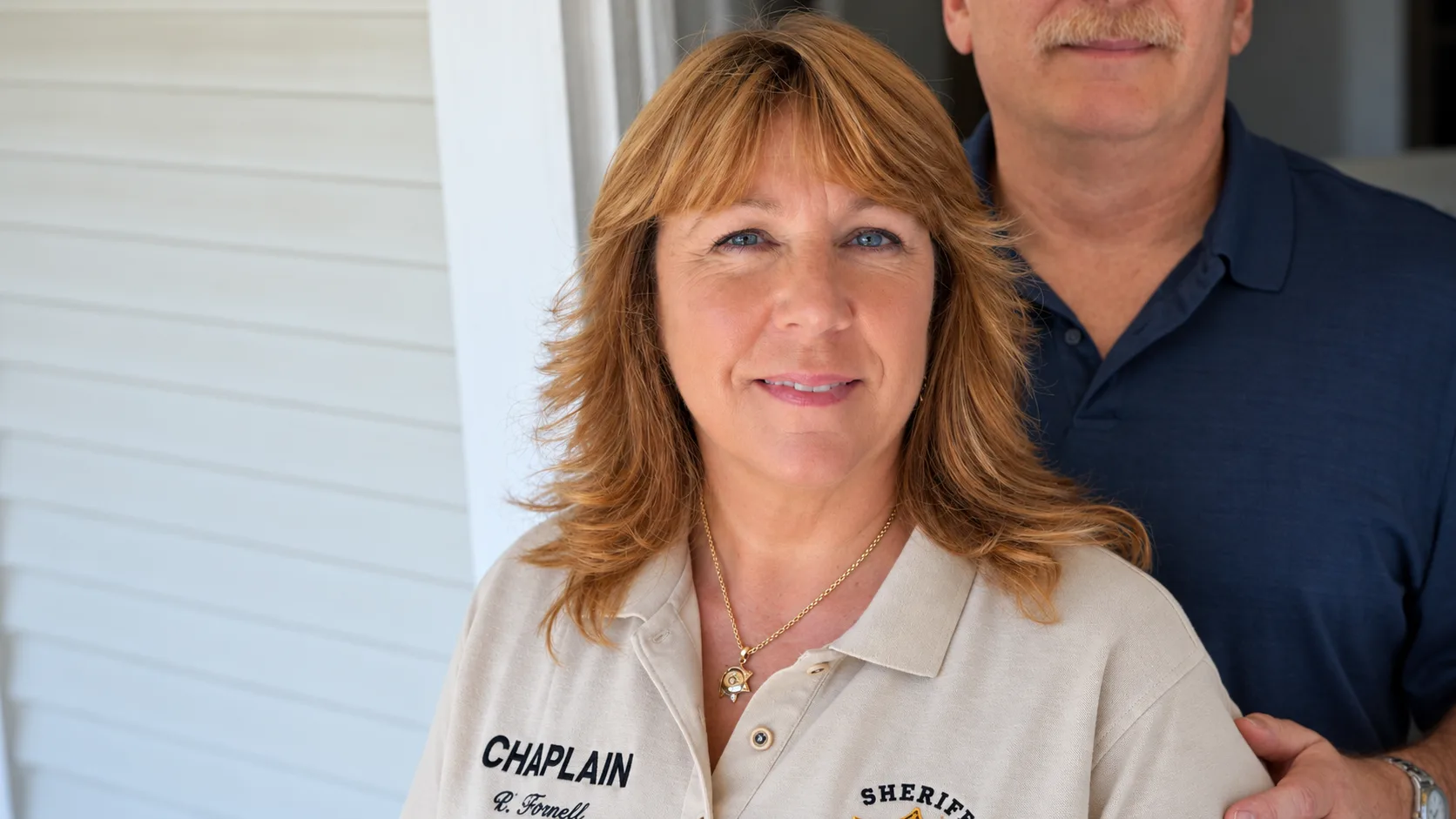
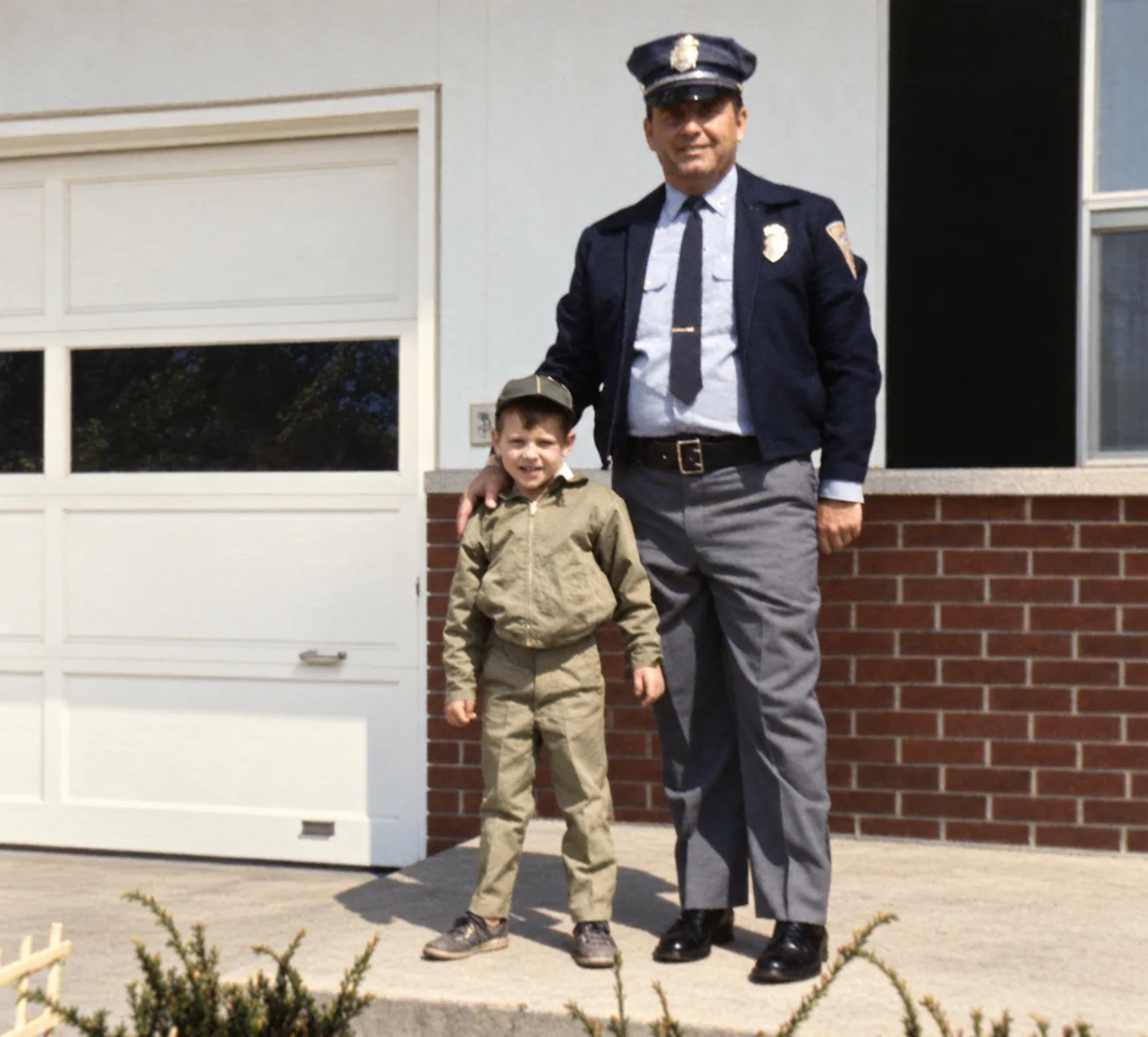
Chaplain Dave Fair Police chaplain · Project co-founder · May 5, 1946–January 7, 2023
Chaplain Dave Fair was a police chaplain, educator, crisis responder, author, former Brownwood city council member and co-founder of the Police Chaplain Project. He began as a radio broadcaster and plastics manager before joining the Brownwood Police Department as chaplain in 1989 and becoming a commissioned peace officer in 1994. Over the decades that followed, he became director of chaplain services and later chaplain emeritus in Brownwood, a senior chaplain with the Texas Department of Public Safety, a reserve deputy, a Texas mental-health officer and a military chaplain and major in the Texas State Guard.
Fair held master-chaplain standing with both the International Conference of Police Chaplains and Chaplain Fellowship Ministries International. He taught police and chaplain training, chaired ICPC education work, served on disaster and critical-incident teams and wrote Mastering Law Enforcement Chaplaincy . He earned doctorates in pastoral counseling and clinical Christian counseling and received the President’s Call to Service Award and formal recognition from the Texas DPS.
His deployments placed him inside major disasters and mass-casualty events: Ground Zero after September 11, the Oklahoma City bombing, the Branch Davidian standoff’s aftermath, the Space Shuttle Columbia debris field, the Fort Hood shooting, Haiti and Hurricanes Katrina, Rita, Dolly, Gustav and Ike. The résumé was formidable, but his gifts belonged firmly to the physical world. An iPhone and Facebook could leave him flummoxed. At a death notification, disaster scene or the edge of a water tower, he knew how to be present.
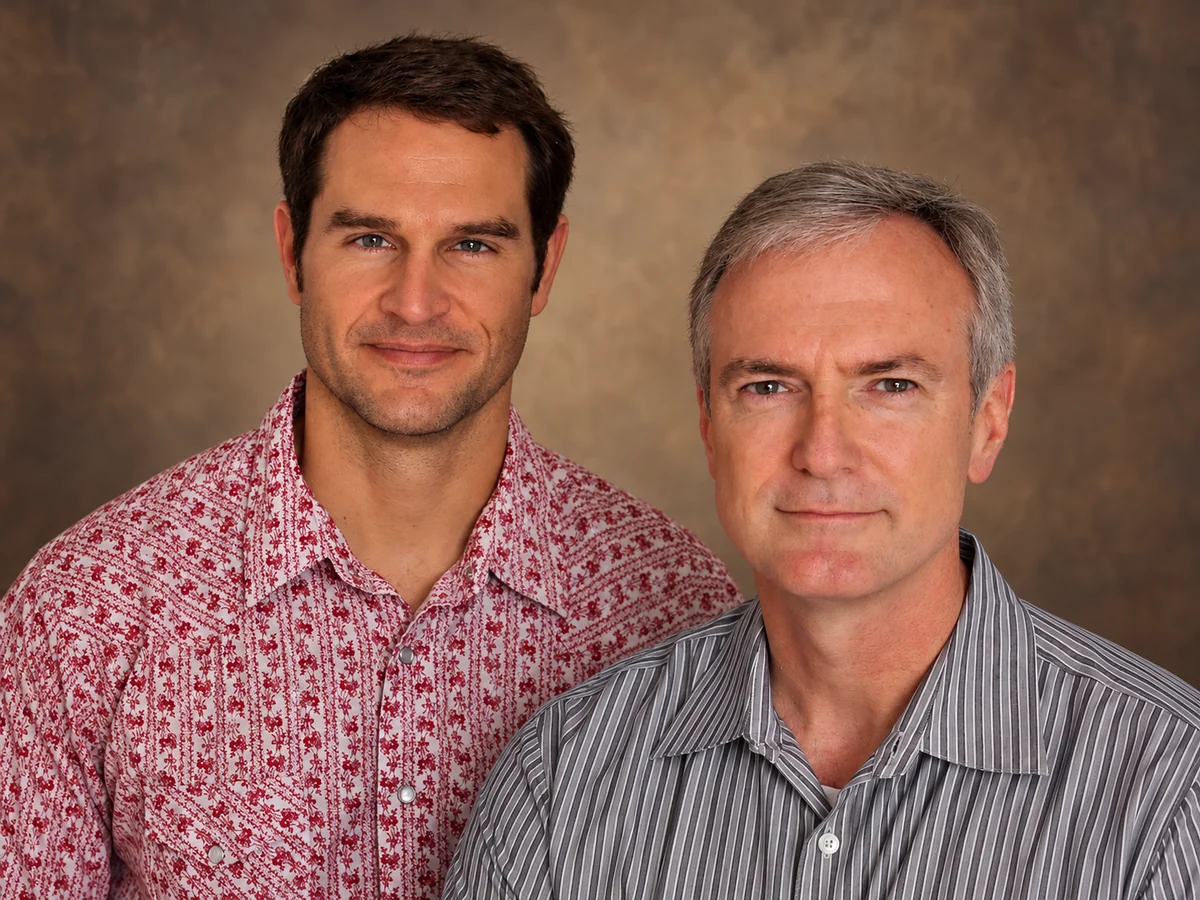
In 2008, together with Phillip LeConte, founded the Police Chaplain Project and built an on-camera archive of interviews with accomplished chaplains.
Fair died on January 7, 2023, at age 76. The project continues as one expression of his legacy. He is remembered by his wife, Karen, three daughters, four granddaughters, the officers and families he served, and the chaplains whose knowledge he helped preserve.
Across his Police Chaplain Project work, Fair helped preserve the practical craft of crisis ministry, the experiences that formed modern law-enforcement chaplaincy and the hard-earned knowledge of the people who practiced it.
“Police chaplains are essential to the spiritual survival of police officers and their families. Yet their hard-earned wisdom is lost with every retirement, with every death. The Police Chaplain Project is changing all that. It’s about leaving it all on the field. We capture what chaplains know and play it forward to empower future generations of chaplains.” Chaplain Dave FairOn the Police Chaplain Project Fair spent his life walking toward difficult scenes that many people instinctively avoid, then helped build an archive so the wisdom found there would not disappear with one generation. His voice remains part of the work he began: grounded, practical and close to the people who needed someone to stay.
Interviews & sources Filmed interviews The Art of Chaplaincy The Art of Chaplaincy Part 2 Project role Co-founder and interviewing partner Public record American Institute of Stress obituary · Career profile Archive update October 8, 2026 John Cooley Retired LAPD sergeant · Police-funeral specialist
John Cooley is a retired Los Angeles Police Department sergeant who made a second career out of a solemn necessity: guiding law enforcement agencies through the complex emotional and philosophical dynamics of police funerals. Though not a member of the clergy, Cooley spent the final decade of his 30-year LAPD tenure coordinating department memorial services, honor guards, peer support, and chaplains programs. Across his career, he directly coordinated more than 80 funerals and memorial services—including those for 18 LAPD officers who died by suicide.
During his time on the force, Cooley was appointed officer in charge of the department’s Employee Assistance Unit. In that role, he gained an unusually detailed understanding of the practical, ceremonial, and emotional decisions confronting a department, an agency, and a family during their most vulnerable moments.
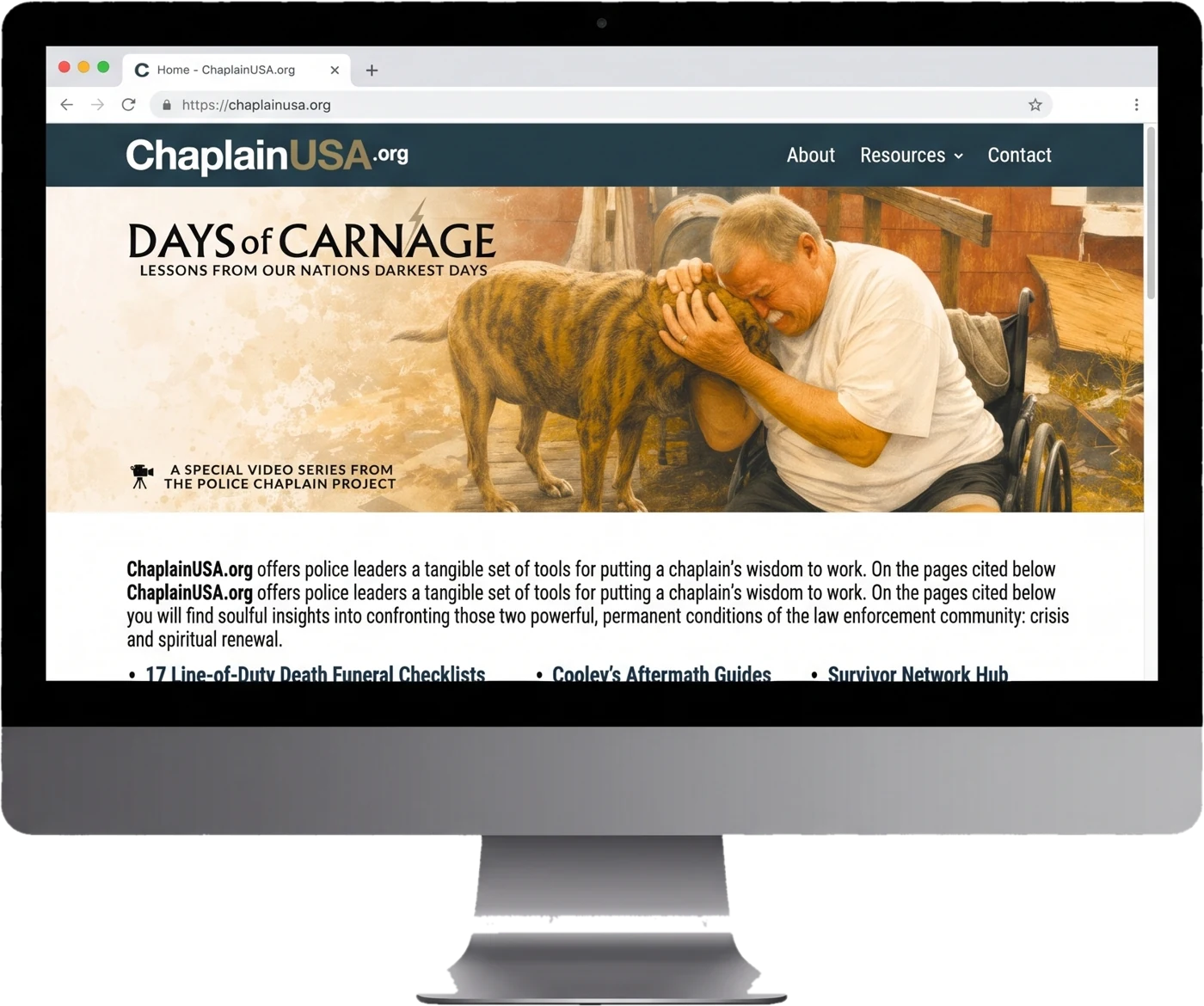
Following his retirement from the LAPD in 2001, Cooley extended his expertise nationwide. Partnering with chaplainusa.org and Policefunerals.com as a consultant and instructor, he began training police leadership across the country on funeral protocols, crisis preparation, and grief management.
Cooley’s work is rooted in the belief that an agency cannot wait until tragedy occurs to figure out how to grieve. Most law enforcement agencies operate under the dangerous assumption that a catastrophic loss will not happen on their watch, leaving them completely vulnerable when a crisis strikes.
“More than half of line of duty deaths occur in agencies that have never had a death before, or it’s been so long ago that no one was on the job when it did occur. And so they’re not prepared for it. They don’t have a cadre. They don’t have a protocol. It’s the unthinkable for them because it’s not going to happen to them. And then it does.” John CooleyFrom the Police Chaplain Project interview For Cooley, managing a police funeral is not merely about executing military precision or marching in formation—it is about protecting the grieving family and honoring the deceased in a way that provides true solace. While ceremonies almost always look polished to the public eye, improper planning behind the scenes can leave lasting emotional scars on the people left behind.
“I’ve never heard of a line of duty funeral not being done right, but I’ve talked to many agency funeral coordinators and learned that it wasn’t done best. And that’s, I think, is what our goal is—to make sure that every funeral is managed the best that it can be. There are so many little things that can come back and cause so much chaos behind the scenes, with the potential to really hurt the family.” John CooleyFrom the Police Chaplain Project interview Cooley strongly cautions agencies against adopting an “us versus them” posture when organizing a memorial service. He views an officer’s funeral as an essential community event rather than a closed departmental ceremony. He urges police leaders to establish strong relationships with civic, religious, and community leaders long before a crisis occurs, ensuring that the community feels invited to share in the honor and mourning.
“I think that people are waiting to be invited to participate. It’s not an obligation. It’s a privilege for them to participate, and they would be very excited about being asked to come and participate as an integral member of the whole planning process.” John CooleyFrom the Police Chaplain Project interview Across a career defined by service to grieving families and fellow officers, Cooley’s legacy rests on a foundational belief: ceremony begins long before the procession, and a department’s true strength lies in the human relationships built before loss arrives.
Rabbi-Cantor Marie Betcher Rabbi · Cantor · Senior police chaplain
Marie Betcher grew up in Las Vegas and learned piano as a girl. She earned a bachelor’s degree in vocal performance from Indiana University and a master’s from Florida State, then built a concert and opera career that took her to Carnegie Hall, the Kennedy Center, Great Britain and Sicily, where she won the Bellini International Opera Competition.
In her forties, after two decades in music, she changed direction. Seven years of seminary led to cantorial ordination from Hebrew Union College–Jewish Institute of Religion in 1999 and rabbinic ordination in 2011.
Each stage of that life became part of her chaplaincy. As a cantor, she learned to carry prayer through music and once sang a quiet prayer of healing into a suffering person’s ear. Rabbinic study gave her a deep grounding in scripture, ethics and the conviction that human lives are interconnected. She describes that path through the Jewish phrase Derech Eretz —the path of the world—and reminds people in despair of a simple truth: No one knows where tomorrow’s path may lead.
“We call it Derech Eretz in Judaism, the path of the world — the kind of path that God is going to lead you down. I would not have believed it if you had told me that I would go from opera singer to cantor to rabbi to chaplain — but all of them built upon each other.” Rabbi-Cantor Marie BetcherFrom The Meaning of Derech Eretz Betcher served Cedar Park police and fire and the Austin Police Department, eventually becoming APD senior chaplain. Public accounts identify her as the first female rabbi to serve as senior chaplain of a United States police department. She also served Congregation Shir Ami in Cedar Park and held leadership or volunteer roles with the American Conference of Cantors, Swan Songs, Service Dogs, Inc. and Interfaith Action of Central Texas. Her husband, Jonathan, a former police officer, has described the uncommon combination of vocation, scholarship and performance she carried into the role.
Her first death notification involved the mother of a 29-year-old Afghanistan veteran who had taken his own life. After the officers left, Betcher sat beside the mother, held her hand and, with permission, said the Lord’s Prayer with her. Conversation about her son brought tears; a question about the tiny Chihuahua in her arms brought a brief smile. Betcher recorded the encounter in her diary, an account that shows how a first notification can change the chaplain too.
Her understanding of that closeness also comes from two years of service with the Chevra Kadisha , the Jewish Holy Society that prepares the dead for burial. She eventually stopped because she became so connected to each person she cared for. For a little while, the chaplain enters another person’s grief and does not simply leave the experience at the door.
“For the little time we are with someone, we become one with that person. We cry with them. We suffer with them. And we carry some of that experience with us when we walk out the door.” Rabbi-Cantor Marie BetcherAdapted from My First Death Notification In her Police Chaplain Project interviews The Meaning of Derech Eretz and My First Death Notification , Betcher discusses the unpredictable path of vocation, the physical and spiritual intimacy of crisis care, the first notification that marked her, and the emotional cost of carrying another person’s suffering.
Betcher’s life joined the concert hall, the sanctuary and the crisis scene without treating any one of them as a detour. Music taught her to listen, study gave language to faith, and chaplaincy brought both into the room where words are hardest to find.
Chaplain Andy Toopes Pastor Emeritus · Law-enforcement chaplain
Andy Toopes is a Lutheran pastor and law-enforcement chaplain who has spent more than three decades showing up where people are suffering—at doors where the worst news is delivered, at disaster scenes, and in police stations in the small hours of the morning. Across a 31-year pastoral career and more than 25 years in police chaplaincy, he has served congregations and agencies across the American South and Midwest, including the Arkansas State Police, the Saline County Sheriff’s Department, the ATF, the DEA, and the Bowling Green Police Department. In 1998, the International Conference of Police Chaplains recognized him with the John A. Price Award—its highest annual honor for lifetime achievement and excellence in law enforcement chaplaincy.
Early Life and Pastoral Calling Toopes’s path to ministry began in high school, leading to decades of pastoral service across the South.
I was called into the ministry when I was a senior in high school... did my internship in Cullman, Alabama, fell in love with the South, and wanted to stay in the South the rest of my ministry. I’ve been at it for 31 years as a pastor... and I’ve enjoyed every minute of it. Chaplain Andy Toopesfrom Police Chaplain Project. His foundational values were shaped early on by his family and mentors.
My parents were probably the most caring people on the planet. They would help anybody, anytime, whatever they needed... If you show people just a little bit of compassion and a little bit of love, you can change their life. Chaplain Andy Toopesfrom Police Chaplain Project. Becoming a Law Enforcement Chaplain While serving as a parish pastor, a pivotal encounter on an interstate highway altered the trajectory of his life’s work, introducing him to law enforcement chaplaincy.
The coroner was a good friend of mine... and mentioned that we needed somebody to be a police chaplain in town, because so many things were being done wrong when there was a death in the community. Chaplain Andy Toopesfrom Police Chaplain Project. The chaplaincy program quickly grew under his leadership to bridge gaps between police officers and local youth.
We created a ‘Shop with a Cop’ program that helped 100 kids every Christmas... It was a great way to get to know everybody in the community through the boys’ club, the sheriff’s department, and police departments. Chaplain Andy Toopesfrom Police Chaplain Project. Major Deployments and Community Service Over the years, Toopes’s ministry called him to respond to major regional and national tragedies. In April 2007, serving as an ATF chaplain, he deployed to Roanoke, Virginia, following the Virginia Tech massacre, spending days providing counseling and support to federal agents processing the scene.
In December 2021, after devastating tornadoes struck western Kentucky—killing 17 people in his immediate community, mostly children—the Bowling Green Police Department called Toopes at 1:30 a.m. He drove debris-filled roads to reach the station, standing alongside first responders and organizing community relief through Lutheran Church Charities at his parish, Holy Trinity Lutheran Church.
Through hundreds of crisis responses and death notifications over 25 years, Toopes built deep, lasting bonds with both the officers he served alongside and the families he supported during their hardest moments.
I still hear from people that I delivered notifications to years ago on Facebook. All of a sudden I’ll get a friend request from a mom that I shared her daughter was killed in a car accident seventeen years ago. It’s a pretty amazing thing. Chaplain Andy Toopesfrom Police Chaplain Project. Earning Trust through Presence Toopes spent decades earning the respect of law enforcement agencies through consistent, hands-on presence.
The more I would ride along, the sooner the trust would come. One of my seminary professors called it the ‘theology of presence’—the more I was around, the more people trusted me, and the more I was able to help instead of be a bother. Chaplain Andy Toopesfrom Police Chaplain Project. Retirement and Legacy Since 2011, Toopes served as Senior Pastor of Holy Trinity Lutheran Church (LCMS) in Bowling Green, Kentucky, earning a widespread reputation as a calm, steady pastoral presence in the region.
Now retired from full-time parish ministry, he holds the title of Pastor Emeritus at Holy Trinity. He remains active in Bowling Green in the pulpit, with the police department, and across the community. The Bowling Green Police Department has honored his voluntary service with a special pin recognizing his decades of dedication.
He lives in Bowling Green with his wife, Sue Ann; together they have two daughters and five grandchildren—a steady family anchor supporting a lifetime of service.
Chaplain Terry Morgan: The Science and Soul of Crisis Care Senior chaplain, author, and educator
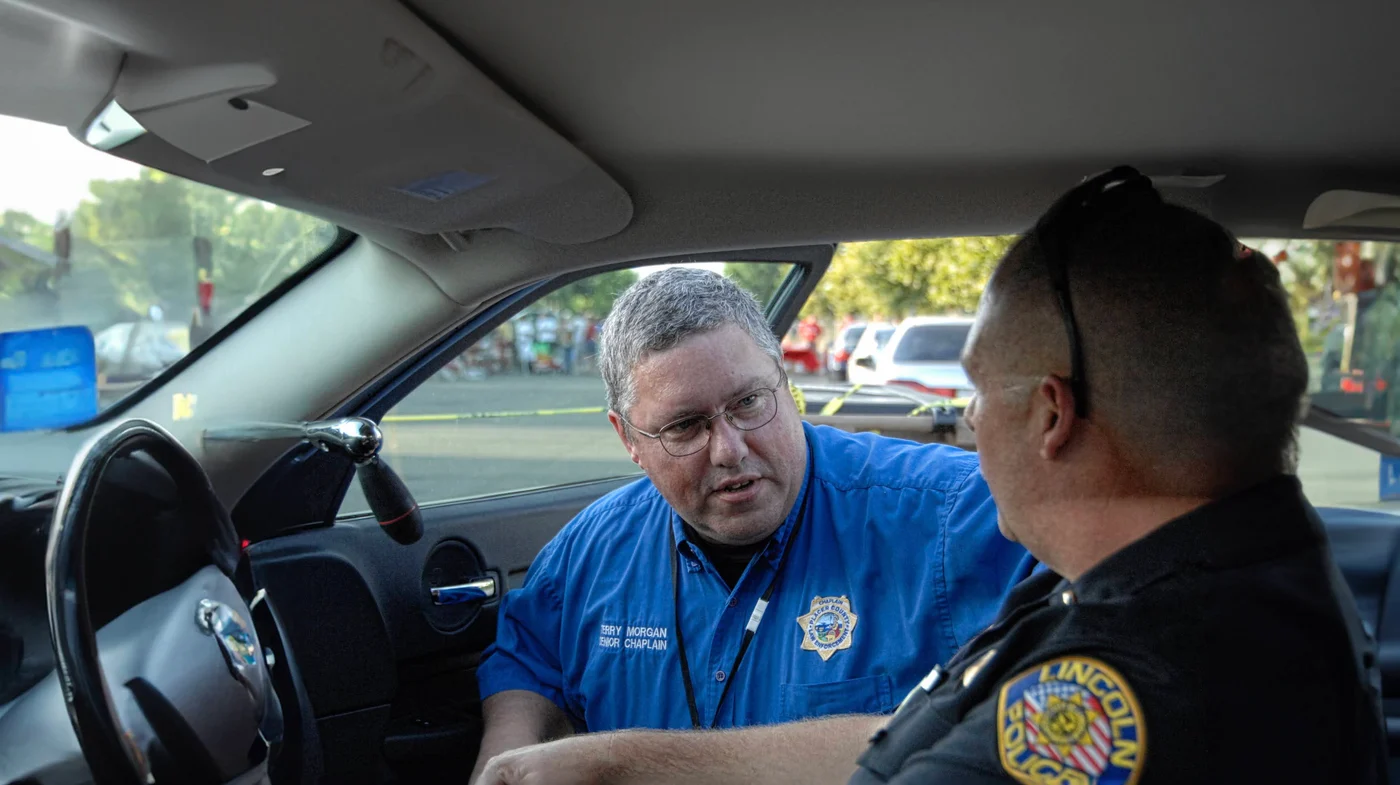
Chaplain Terry Morgan has spent more than forty years in ordained ministry and over twenty-five years as a law enforcement chaplain. Serving as Senior Chaplain and Executive Director of Gold Country Chaplaincy in California's Sierra Nevada foothills, he has dedicated his life to equipping chaplains and first responders with the tools needed to face critical incident stress, trauma, and moral injury.
Master Chaplain credentialed through the International Conference of Police Chaplains (ICPC) and a member of the International Critical Incident Stress Foundation (ICISF), Morgan bridges academic rigor with frontline crisis response. In addition to his law enforcement ministry, he serves as Senior Pastor of New Hope Church in Redding, California, works as a full-time hospice chaplain with Mercy Hospice / Dignity Health, and teaches crisis counseling at Shasta Bible College and Graduate School.
The Essentials of Public-Safety Chaplaincy Morgan believes that effective chaplaincy requires rigorous preparation and deep personal discipline. He emphasizes five core principles that every chaplain must master: continuing professional training, patient trust-building, strict confidentiality, proactive self-care, and spiritual readiness.
"There are five essentials that every new chaplain should know before the first day on the job or volunteering in chaplain ministry. Number one is get training. There's no substitute for good training. Law enforcement officers are constantly training, and they're going to have a lot of respect for a person that's also continuing their training in chaplaincy and knowing what to do, what to say and how to do it." Chaplain Terry Morganfrom Police Chaplain Project. He strongly cautions new chaplains against expecting immediate acceptance from officers, pointing out that trust is earned gradually through presence and strict confidentiality.
"Be patient and pay your dues. Just because you have a uniform and a title doesn't mean that you're going to be immediately accepted by all of the officers... When I get into a car for a ride-along, I always tell the officer: whatever's said in the patrol car stays in the patrol car. Keep secrets. This is probably one of the most important things as a chaplain that you can do... Once you lose their trust, it's really hard to ever get their trust again." Chaplain Terry Morganfrom Police Chaplain Project. Spiritual and operational readiness must also align before responding to a crisis scene.
"Be prayed up before you go out. When you go to a crime scene or you're working with a law enforcement officer, you're not going to have time to pray... You need to be able to hit the ground running and be prepared for anything." Chaplain Terry Morganfrom Police Chaplain Project. Frontline Crisis Response and Countertransference Morgan’s ministry has called him to some of the country's most grueling disaster and trauma sites. He was among a small group of law enforcement chaplains chosen to embed with Louisiana Mental Health and the New Orleans Police Department immediately following Hurricane Katrina. He has also been selected to serve surviving family members of fallen officers during National Police Week in Washington, D.C.
Through hundreds of critical incident responses, Morgan has experienced firsthand the psychological weight that emergency calls place on first responders and chaplains, including the phenomenon of countertransference . He recalls responding to a tragic multiple homicide-suicide where a young boy was hospitalized with a gunshot wound to the head.
"I was assigned to be in the emergency room with the little boy as they're operating on his head... Part of my job was to be there with the child, make sure the child knew that he wasn't alone, but I was also there to keep an eye on the police officer and make sure he was okay... There's something called countertransference. As I was standing there, I'm looking at this little boy, and for just one second I thought, Gee, this little boy is about the same age and the same size as my little nephew .
Kind of like the old black-and-white horror movies where you see Lon Chaney turning into a werewolf, this little boy's face changed right in front of my eyes. And he wasn't a stranger anymore—he was my little nephew. I had been taught about countertransference, but this was like getting kicked in the stomach... I left the house, went to this call, and a few hours later I was a different person. That was one call that changed me." Chaplain Terry Morganfrom Police Chaplain Project. Critical Incident Stress Management and Verbalizing Trauma To prevent cumulative trauma from developing into post-traumatic stress disorder (PTSD), Morgan advocates strongly for Critical Incident Stress Management (CISM) and structured debriefing.
"These kind of scenes sometimes can cause us not only mental problems, but physically they can make us sick... The key piece of Critical Incident Stress Management is being able to talk about what happened. When we have it bouncing around in our head, it has power over us. When we express it, it takes away some of the power of that scene... Having someone that can walk you through and ask the right questions—sometimes that's exactly what you need. It can be very healing." Chaplain Terry Morganfrom Police Chaplain Project. In ministering to grieving families, Morgan helps individuals articulate their loss by putting a clear name on their grief:
"To lose a parent is like losing part of your past. To lose a spouse is like losing part of your present. To lose a child is like losing a part of your future." Chaplain Terry Morganfrom Police Chaplain Project. Author, Educator, and Academic Legacy Dr. Morgan holds a Doctor of Ministry in Spiritual Formation and Leadership and a Master of Divinity from Epic Bible College & Graduate School in Sacramento, as well as a Master’s degree in Ministry in Public Safety from Trinity Biblical University. He is Board Certified in Emergency Crisis Response by the American Academy of Experts in Traumatic Stress, a certified QPR Suicide Prevention trainer, and a provisional trainer for ASIST suicide intervention.
A prolific writer, his foundational textbook, The Chaplain's Role: How Clergy Can Work With Law Enforcement , was adopted by Liberty University for chaplain formation. His published works also include The Church Chaplain's Role , The Hospice Chaplain's Role , and What to Do When Grief Kidnaps Your Soul . In his writing, he articulates the noble heritage of public safety work through classical imagery:
"In my book The Chaplain's Role , I talk about how law enforcement officers are very similar to the Paladin Knights of old... A king would take a knight and give them a suit of armor with a shield, with the emblem of the king's symbol on the shield, a sidearm sword to enforce the laws, and a white steed to travel the countryside. It's very similar to our law enforcement officers, where they're given a badge to cover their heart with the symbol of the department, a firearm to enforce the laws, and their steed is a police car. It's a very noble calling." Chaplain Terry Morganfrom Police Chaplain Project. Dr. Morgan lives in Redding, California, with his wife, Phyllis. Together they have two adult children and two grandchildren, grounding a lifetime dedicated to bringing resilience, faith, and clinical care to those who serve.
Chaplain Ken Ashlock Pastor · Police chaplain · In service since 1962
Ken Ashlock began serving as a law-enforcement chaplain in 1962, when the work was still unfamiliar to much of the public. People understood military, hospital and jail chaplains, he recalled, but few knew that chaplains also worked beside officers and their families. Regional conferences—particularly the multi-state Region 7 network serving Texas, Oklahoma, Arkansas and neighboring states—helped define the field. So did the practical help chaplains gave to people in crisis.
Ashlock also served as pastor of New Liberty Baptist Church in Garland, Texas. Public records place him at the funerals of Texas law-enforcement officers, including Senior Trooper Richard “Dickie” Cottle and Garland Police Officer Keith Prinz, and as the author of a booklet on the charismatic movement. The International Conference of Police Chaplains’ South Central Region named the Ken Ashlock Award in his honor. It is a durable recognition of the standards he helped establish.
Of the changes Ashlock describes, the one he considers biggest is the acceleration of violence. Early in his service, he recalled, an officer might complete an entire career without drawing a weapon in self-defense. Severe violence has since become more common, while communications and the demands placed on officers have changed around it. Ashlock says an estimated 75 to 85 percent of people involved in fatal crashes, suicides, shootings and similar emergencies did not have a minister or church home. A chaplain could be the person available to meet that need.
“For a person who’s lost a loved one, there may be very few people in the world who know about their loss, but God does. And to them it’s the greatest loss they ever experienced. And so we’re the people business.” Chaplain Ken AshlockFrom the Police Chaplain Project interview His own introduction to the ministry was immediate and difficult. On his first day he accompanied an officer on an assignment involving someone who had threatened a detective’s life. At disaster scenes, Ashlock learned to narrow his attention from a day, to an hour, to one event and one person at a time. “One day at a time? It’s not even one hour at a time. It’s one event at a time.”
“Someone says, ‘One day at a time.’ And I mentioned that to one of the first responders. He said, ‘They stopped — one day at a time? It’s not even one hour at a time. It’s one event at a time’ — where you’re helping an individual, or helping another first responder, or another chaplain.” Chaplain Ken AshlockFrom the Police Chaplain Project interview That perspective shapes the way he counsels officers nearing burnout. Repeated exposure to deception, suffering and violence can bury the original purpose that brought them into police work. Ashlock urges them to rest, take stock and remember the lives they may have helped without ever knowing it. Effective chaplaincy, he says, depends on knowing when to be tender and when to be tough.
In his Police Chaplain Project interview How the World Has Changed Since First Becoming a Chaplain , Ashlock discusses the professionalization of police chaplaincy, the rising intensity of violence, endurance at disaster scenes, officer burnout and the trust earned by remaining with officers through the work.
From 1962 forward, Ashlock helped give an unfamiliar calling a public shape. His interview keeps returning from the scale of a disaster to the person immediately in front of him. A loss may be known to very few people, he says, yet to the person living through it, it is the greatest loss they have experienced.
Liz Brown Law-enforcement spouse & family-support advocate
Liz Brown recognized the need for support among law-enforcement spouses after her husband, Sacramento County Deputy Scott Brown, survived the incident in which his partner Danny Oliver was killed in 2014. Working with Chaplain Mindi Russell, she helped bring spouses together. Her Police Chaplain Project interview explores the effects of trauma at home and why officers’ families need a community of their own.
Scott Brown Sacramento County sheriff’s deputy
Sacramento County Deputy Scott Brown was beside his partner Danny Oliver when Oliver was killed in 2014. In the Survivor Network’s account of his wife Liz’s work, that experience helps explain why support must extend beyond the officer to the family at home. Their story is part of the Police Chaplain Project’s examination of the lasting needs that follow a critical incident.
Kaylen Bynoe Survivor-family voice · Police Chaplain Project
Kaylen Bynoe is the daughter of Sacramento County Deputy Robert “Bobby” French, who was killed in the line of duty in 2017. In her Police Chaplain Project interview, she describes the grief and difficult decisions that followed, and the support of Chaplain Mindi Russell. Her story shows the value of a trusted relationship with a chaplain long before tragedy arrives.
Carol Daly Law-enforcement pioneer & advocate for survivors
Carol Daly helped change what leadership in American law enforcement could look like. During a career spanning more than 33 years, she became the first woman appointed undersheriff of the Sacramento County Sheriff’s Department and later the first woman to chair California’s Board of Prison Terms. A 1975 graduate of the FBI National Academy, she brought experience in sexual assault, homicide and crimes against children to those leadership roles.
Her work on the East Area Rapist investigation, later connected to the Golden State Killer, placed her alongside people living through extraordinary fear. As one of the lead investigators in the late 1970s, she interviewed nearly every victim. Listening, earning trust and helping people recover a sense of safety were essential parts of that work.
Daly’s career also unfolded in a profession where women faced substantial barriers. Her rise through the department made her a trailblazer, while her approach to victims demonstrated that compassion and rigorous investigation belong together. The people behind a case mattered as much as the case itself.
That commitment continued beyond her law-enforcement career. As a board member of Phyllis’s Garden, she supports an organization devoted to sexual-assault survivors. She has also joined survivors and fellow investigators in public conversations about the Golden State Killer case, helping preserve lessons about the way victims are heard and treated.
Rabbi Cary Friedman: Author, Ethicist, and Police Spirituality Consultant Author, FBI spirituality consultant, and mentor to law enforcement
Rabbi Cary A. Friedman is an author, ethicist, and longtime consultant to law enforcement agencies whose pioneering work on first-responder resilience forms the spiritual cornerstone of modern police chaplaincy. A leading national authority on critical incident stress, spiritual survival, and moral endurance, Rabbi Friedman serves as a spirituality consultant to the FBI’s Behavioral Science Unit at Quantico and law enforcement organizations across the United States.
Since 2014, Rabbi Friedman has served as Associate Director of the Law Enforcement Survival Institute (LESI). He has worked as a police trainer since 2000, consulting on ethics and stress management.
His seminal framework—that a police officer enters the academy with a full "spiritual account" that is routinely sapped by trauma and must be actively replenished—is the beating heart of ChaplainUSA’s The Credo Project .
Philosophical Foundations and Law Enforcement Ministry Rabbi Friedman's approach to law enforcement wellness centers on the fundamental human drive for purpose. He views policing not merely as a career or a civic duty, but as an essentially spiritual calling rooted in a candidate's innate desire to affect positive change.
Police officers do what they do because they are human beings pursuing meaning and trying to make the world a better place. Taking an oath to protect, serve, and defend the Constitution is a sacred step, but long before an officer puts on a badge, their soul is pulsating with a fundamental desire: I want to do something significant in the world. I want to make a difference. Rabbi Cary Friedmanfrom Police Chaplain Project. Drawing on extensive field work and consultation with departments nationwide, Friedman highlights the stark contrast between young officers entering the academy with high ideals and those who succumb to years of unaddressed critical incident stress.
When young officers enter the field, they come in with a youthful idealism. But that initial idealism is often naive, and life can beat it out of them. I marvel at officers who can stay on the job over decades, seeing terrible things day in and day out, and still come away whole and idealistic. They aren't naive—you cannot remain naive on the job—but they have learned to connect to something deeper, tapping into the ultimate source of goodness and decency. Rabbi Cary Friedmanfrom Police Chaplain Project. Spiritual Overdraft, Autonomic Biology, and The Credo Project Rabbi Friedman’s core contribution to first-responder wellness is his concept of spiritual overdraft and spiritual bankruptcy . He observes that every shift, critical incident, and exposure to human suffering depletes an officer's internal reserves. Without intentional spiritual practices and support mechanisms to replenish those reserves, the officer’s internal well runs dry.
The spiritual reserves of an officer are depleted every single day. Even the most routine shift challenges and saps an officer’s inner well. When an officer has no mechanism to replenish those supplies, they go into a state I call spiritual overdraft , which quickly leads to spiritual bankruptcy . When you see a bitter, angry, dark, or hollow officer walking around, you are looking at someone who has run out of spiritual capital. Rabbi Cary Friedmanfrom Police Chaplain Project. This spiritual depletion is compounded by the biological strain placed on the body's autonomic nervous system during operational duty.
Studies have shown that whether an officer is working high-stakes tactical operations or simply working traffic duty, their nervous system remains in a constantly elevated state. When the shift ends... the body needs the parasympathetic branch of the autonomic nervous system to kick in so it can rest and heal. But for many officers, that transition simply doesn't happen automatically... When officers are left without the tools to process trauma and replenish their spirit, the resulting depletion wreaks havoc—not just on the officer’s life, but as collateral damage across their families, their departments, and the communities they serve. Rabbi Cary Friedmanfrom Police Chaplain Project. To combat this systemic depletion, Rabbi Friedman was instrumental in conceptualizing and creating The Credo Project with ChaplainUSA. Designed as a personalized, actionable framework, The Credo Project provides first responders with the practical tools and spiritual disciplines required to maintain moral clarity, process cumulative trauma, and prevent spiritual bankruptcy throughout their careers.
Publications and Literary Works Rabbi Friedman is the author of several influential books spanning law enforcement ethics, pop-culture philosophy, relationships, and Judaic studies:
Spiritual Survival for Law Enforcement : Straight Talk About Proper Conduct and Life Threatening Stress — The foundational text used extensively in police chaplaincy academies, law enforcement agencies, and the FBI Academy to help officers maintain psychological and spiritual wholeness.
The Superhero Handbook for Cops — A practical guide applying the archetypal moral codes of classic superheroes to the real-world ethical challenges faced by police officers.
Wisdom from the Batcave : How to Live a Super, Heroic Life — An acclaimed analysis of the moral framework of superhero mythology. The book drew praise from Batman writer Ed Brubaker ("What I didn't know was how much Batman and his code had affected me, until I read this book") and legendary comic artist Neal Adams, who noted that "the most important item in Batman's utility belt is a moral compass."
Table for Two: A Guide to Creating and Sustaining the Intimate Marriage — A practical guide focused on building, strengthening, and maintaining healthy marital relationships.
Marital Intimacy : A Guide for Couples — A thoughtful exploration of emotional and spiritual connection within marriage.
Chanukas HaTorah — An annotated translation and commentary on classic Rabbinic scholarship.
Education, Lecturing, and Personal Life Rabbi Friedman received his rabbinic ordination from the Rabbi Isaac Elchanan Theological Seminary (RIETS) at Yeshiva University.
He has lectured widely before prestigious academic, law enforcement, and media institutions, including the FBI Academy, the FBI Training Network, the International Conference of Police Chaplains (ICPC), the Connecticut and Texas Departments of Public Safety, and featured programs on The History Channel.
In addition to his consulting and writing, Rabbi Friedman teaches at the Yeshiva University High School for Boys (MTA) and holds a second-degree black belt in martial arts. He lives in Passaic, New Jersey, with his wife, Marsha; together they have six children.
Fr. John M. Harth Catholic priest · Emergency-services chaplain · September 8, 1950–April 16, 2026
The Reverend John M. Harth spent 39 years as a priest of the Diocese of Springfield–Cape Girardeau. Before seminary, he worked in radio and television, beginning at WGLC in Mendota, Illinois, and later serving as news and sports director at KGMO radio and working seven years at KFVS-TV in Cape Girardeau. He was ordained February 27, 1987, after study at the Pontifical College Josephinum.
His parish assignments took him across southern Missouri, including Joplin, El Dorado Springs, Stockton, Neosho, Noel, Oran, Jackson, Leopold, Glennon and Fredericktown. He also served Notre Dame Regional High School and was a Fourth Degree Knight of Columbus. In 2020 he retired from parish administration, but the record of service around him continued.
Harth became an emergency-services chaplain in 1987 and served the Missouri State Highway Patrol; sheriff’s offices in Cape Girardeau, Bollinger and Scott counties; police departments in Kelso and Oran; Jackson Fire/Rescue; county emergency management; and the United States Secret Service in southeast Missouri. Within the International Conference of Police Chaplains, he earned Fellow-level certification, served as public-relations officer and edited the ICPC Journal for many years.
His chaplaincy centered on the belief that every person has a spiritual core. An early phrase stayed with him: “Don’t just say something—stand there.” Presence may be more useful than speech. A chaplain does not have to fill silence, invoke God on demand or explain why suffering occurred. Readiness is the discipline to arrive, stay alert and listen for what the person in front of you needs.
“One of the catchphrases that I heard early on in chaplaincy was, ‘Don’t just say something — stand there,’ indicating that the role of a chaplain is not necessarily to flap your jaws or to interject God or religion or spirituality into a circumstance, but to rather perhaps just be God’s presence in His circumstance.” Fr. John M. HarthFrom the Police Chaplain Project interview Harth died on April 16, 2026, at Saint Francis Medical Center in Cape Girardeau after a brief illness. He was 75. His funeral Mass was celebrated April 22 at Immaculate Conception Catholic Church in Jackson, Missouri, and he was buried at Saints Peter and Paul Cemetery in Peterstown, Illinois. This archive recognizes his death and preserves the voice with which he taught presence over performance.
In his Police Chaplain Project interview Beyond Words: Unspoken Impact , Harth discusses the spiritual core shared by people inside and outside formal religion, the discipline of silence, the danger of careless words in crisis and the training that makes restraint possible.
“Officers are told time and time again in their training that when push comes to shove and the trauma happens, you react from your training. And the same can be said for chaplains. But it’s just — it’s just something that you’ve got to keep working at, keep honing your skills, uh, polishing the tools in your kit, is what one of our presenters at this conference is talking about. You do the best you can to keep up and stay alert and be ready. Be ready.” Fr. John M. HarthFrom the Police Chaplain Project interview Across parishes, highways, fire scenes and the pages of the ICPC Journal , Harth gave nearly four decades to the discipline of showing up prepared and speaking only when words could help. What remains is the lesson he carried into the rooms he entered: presence can be a complete sentence.
Chaplain Craig Hungler Chaplain and funeral director
Craig Hungler brings a rare dual perspective to ChaplainUSA — as both a chaplain and a longtime funeral director with Schoedinger Funeral and Cremation Service, the family-rooted Central Ohio firm that has served Columbus families since 1855. His insights on grief, ritual, and the pastoral care of families bridge two callings most chaplains only encounter from one side: he is present for the family the night their world breaks, and he is present again when it is time to lay their loved one to rest.
A longtime presenter and contributor with the International Conference of Police Chaplains, Craig and his wife Kathy together delivered the keynote on the emotional and spiritual support officers need and want at the ICPC's International Training Seminar — a session still referenced years later in the chaplaincy community. His combination of professional credentials — a certified funeral director and a commissioned police chaplain — gives him a vantage point that very few people in either field share.
He and Kathy live in the Columbus area, and his quiet, steady wisdom continues to bridge the work of officer care and family care in ways that have shaped the Police Chaplain Project archive.
Chaplain Scott Johnson Franciscan Friar, Vietnam veteran, and chaplain
Scott Johnson is a Franciscan Friar and Vietnam veteran who was no stranger to death and dying, and who offered ChaplainUSA his great insight into ritual and grief. His thoughtful pastoral voice — including reflections on grief and the assurance that those who mourn are never alone — is woven into the heart of the Police Chaplain Project.
Robert Kenneth Jones Writer, counselor, and contributing editor
Bob Jones spent more than four decades quietly innovating in the treatment of addiction and the wounds of childhood abuse. He worked in residential treatment as a counselor whose listening was as careful as his writing, and in his later years he stepped back from clinical practice to set those listening hours down on the page — first through the blog An Elephant for Breakfast, then through his podcast A Mystical Elephant, and finally through the bi-weekly entries collected as the Robert Jones Journal on ChaplainUSA.
Bob noticed something of God in each hour of the day, and felt a joyful obligation to all living things. His reflections on compassion, kindness, healing, and wisdom continue to find new readers through Timeless Wisdom and the Robert Jones Journal archive — proof, as ChaplainUSA noted at the time of his passing, of 'the power of the human spirit to overcome the worst of life's difficulties.'
He passed away in 2021. His widow, Bonita Jones, continues to partner with ChaplainUSA to bring his work to a new generation.
Chaplain William Henry King III Senior pastor, chief police chaplain, and combat veteran
A featured voice in the Police Chaplain Project, Dr. William Henry King III brings to his ministry the full weight of a remarkable life. The tenth of thirteen children born in Houston's Third Ward, he served from 1983 to 1992 in the United States Marine Corps — a combat veteran of Operation Desert Storm who rose to Gunnery Sergeant with multiple meritorious promotions, two Certificates of Merit, and a Commanding General Award. He is now Senior Pastor of Greater New Hope Missionary Baptist Church in Dickinson, Texas, and Chief Chaplain of the Dickinson Police Department.
His reflections on the principles of hope have offered enduring encouragement to officers and chaplains alike, and his ministry on the Gulf Coast extends far beyond the pulpit. He has served seven terms on the Dickinson City Council, twice as Mayor Pro-Tem, and eight years on the board of the Houston-Galveston Area Council. He founded Greater New Hope Christian Academy and led the campaign that designated the historic African-American Magnolia Cemetery as a Texas Historical Landmark. He is currently President of the American Baptist Convention of Texas and Moderator of the Southeast District Association, and he holds the highest recognition of the International Conference of Police Chaplains.
He lives in Dickinson with his wife, First Lady Shemika King, and their children Destini, Bailee, and William H. King IV. His contribution to the ChaplainUSA archive — a sustained meditation on hope itself — sits at the foundation of the project.
Chaplain Tim Klerekoper Archbishop and Executive Director, Charteris Foundation
The Most Rev. Dr. Timothy Klerekoper serves as Archbishop and Primate of the Christian Episcopal Church — a Continuing Anglican jurisdiction with parishes across the United States, Canada, and the Cayman Islands — and as the founding Executive Director of the Charteris Foundation, the nonprofit he established in 1992 to support chaplaincy to law enforcement, fire service, and federal agencies. His vocation to chaplaincy began at a funeral: the murder of his family's babysitter, where he found himself seated beside the head chaplain of the King County Police Department, and from that grief grew a lifetime of ministry.
He has served as Head Chaplain of South King County Fire Department, as Chaplain with the rank of Major in the Des Moines (WA) Police Department, as Chaplain to the King County Sheriff's Office, and as Regional Chaplain for the Federal Protective Service across DHS Regions 9 and 10. He holds Master Chaplain and Diplomate certifications from the International Conference of Police Chaplains and is Board Certified by the American Academy of Experts in Traumatic Stress. As a faculty member for the International Critical Incident Stress Foundation, FEMA, the IACP, California POST, and ICPC, his fingerprints are on the training of an entire generation of first-responder chaplains.
He holds degrees from Whitworth College, Regent College, Faith Evangelical Lutheran Seminary, and Trinity Biblical University. His participation in the Police Chaplain Project has helped broaden the archive's theological reach.
Phillip LeConte Photographer, writer, and nonprofit founder
Phillip LeConte is a professional photographer and the founder of two enduring nonprofits. His work with police chaplains began in 2008 after meeting Chaplain David Fair, and has continued ever since as the creative engine behind ChaplainUSA's video archive — now the only national digital library devoted to the wisdom of America's police chaplains. After graduating from the University of Illinois, Phillip moved to Los Angeles and worked in public relations on the Stephen J. Cannell television series 21 Jump Street and Hunter.
As a feature writer he interviewed Roy Scheider, Sally Field, director Robert Benton, and journalist Bill Moyers — who called Phillip's piece 'my favorite interview I did on that tour.' His 1986 Psychology Today feature The Psychologist as TV Guide introduced readers to network television's use of psychological consultants and has since been cited in professional journals and in the textbook Values and Knowledge by Terrance Brown. In 1992 he co-founded the Junior Police Academy with his father, retired police officer Robert LeConte, who passed away in 2000. Through JPA he authored educational programming now used by police departments and schools nationwide.
His photography has appeared in the Austin Business Journal and has sold at auction to benefit the American Cancer Society and the Austin Museum of Art. He makes his home in Austin, Texas, where he continues to lead both the Junior Police Academy and the Police Chaplain Project.
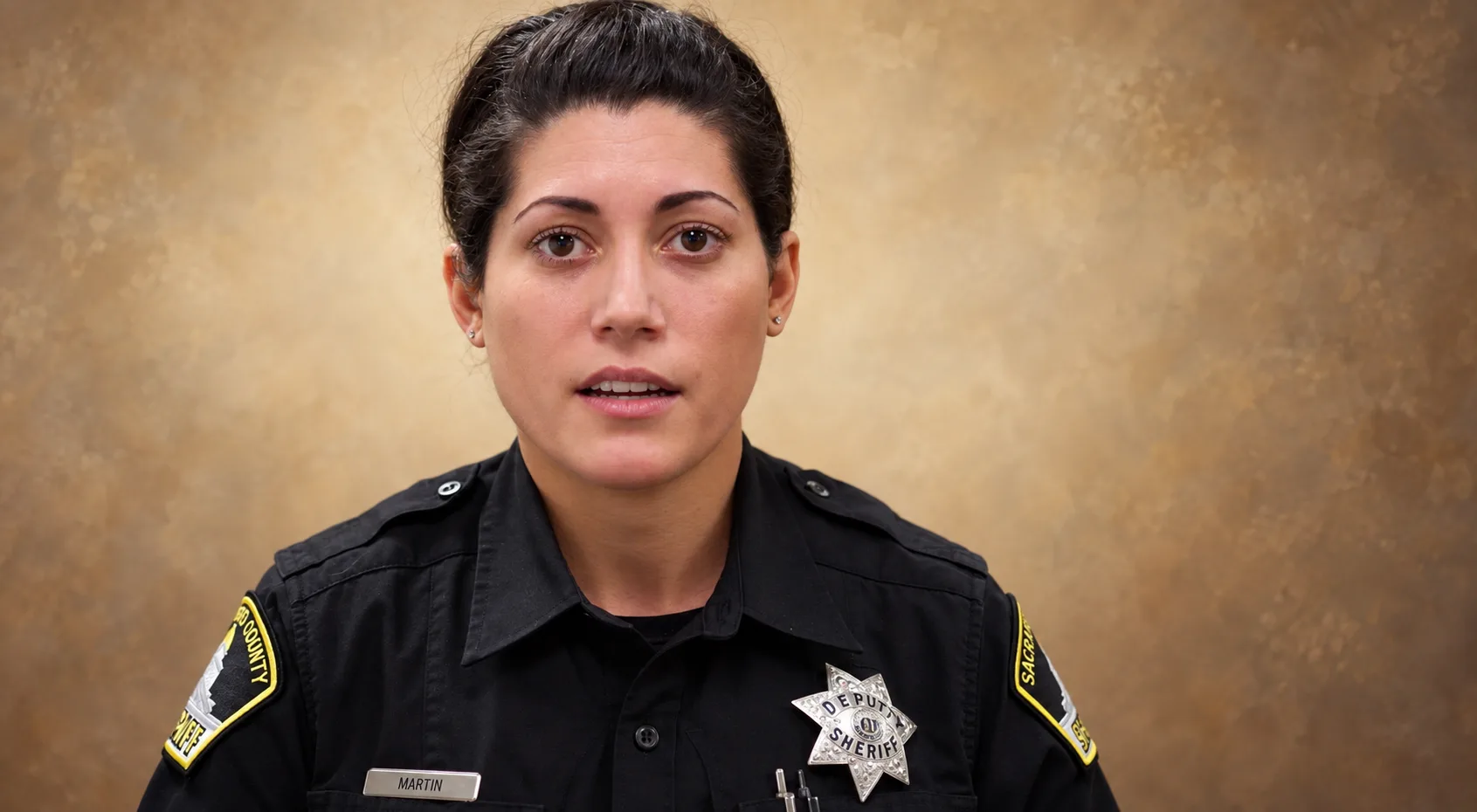
Investigator Bianca Martin Sacramento County Sheriff’s Department
Bianca Martin is a crime-scene investigator whose Police Chaplain Project interviews explore the emotional demands of moving from one difficult scene to the next. Drawing on her work with the Sacramento County Sheriff’s Department, she describes how chaplains support families and bystanders while also checking on investigators. Her account shows why the people doing this work need someone who understands what they carry.
Chaplain Wesley McDuffie Tarrant County Sheriff’s Office chaplain · Cross-cultural ministry
The Reverend Wesley McDuffie serves with the Tarrant County Sheriff’s Office in Fort Worth and has also served the Dalworthington Gardens Department of Public Safety, the Drug Enforcement Administration’s Dallas Field Division and the National Association of Police Organizations. Before chaplaincy, he worked in commercial-vehicle enforcement for the Texas Department of Public Safety and retired after a 27-year career with UPS.
At Tarrant County, McDuffie has led a force of roughly 300 volunteers serving officers, inmates and families. The American Jail Association named him its 2023 Civilian Employee of the Year, describing a trail in chaplaincy that had benefited thousands. He has also organized work that is easy to overlook but meaningful inside a jail, including an inmate Christmas choir supported by volunteer officer-conductors.
McDuffie speaks directly about the barrier race can create in crisis ministry. As a Black chaplain serving white families, he has left some encounters unsure whether anything he said was heard or accepted. Some families have asked whether someone else could be sent. He does not pretend those requests are neutral, but he also refuses to make his own injury the center of a family’s emergency.
Because chaplaincy often offers no immediate proof of its effect, a later word of thanks can matter deeply. One person eventually came back to tell McDuffie that his help had been appreciated. “I was just happy that they verified that I did touch their heart and was able to help them.” The message confirmed that the boundary he felt in the room had not prevented his care from reaching the family.
“There’s been times when someone came back and said, ‘Hey, just want you to know I really appreciate everything that you did for me.’ And that was a situation where I’m like, oh, thank you. I didn’t look back. I just — I was just happy that they verified that I did touch their heart and was able to help them in some way or another.” Chaplain Wesley McDuffieFrom the Police Chaplain Project interview In his Police Chaplain Project interview When Race Is a Barrier , McDuffie discusses racial rejection in crisis care, the discipline of keeping the family’s needs central, and the rare later acknowledgment that showed his ministry had crossed a boundary.
McDuffie’s public honors describe the scale of his service; the interview reveals its cost and character. He crossed barriers without pretending they were not there, kept the family’s need ahead of his own hurt, and sometimes received the rare gift of learning that compassion had reached the other side.
Chaplain Mary Nobbe Chaplain & comfort-dog specialist
Chaplain Mary Nobbe works with comfort dogs to help people through crisis. In her Police Chaplain Project interviews, she describes how a calm canine presence can help children, patients and grieving families begin to communicate when words are difficult. Her reflections on Sophie and other trained dogs show another way chaplains can build trust and offer reassurance.
Chaplain Jack Poe: The Definitive Biography Longtime chaplain, Oklahoma City Police Department
For more than twenty-six years, Chaplain Jack Poe served as the voice of comfort, stability, and spiritual strength for the Oklahoma City Police Department. A pioneering figure in law enforcement chaplaincy, Poe redefined emergency crisis management and first-responder care through his leadership during the April 19, 1995 bombing of the Alfred P. Murrah Federal Building—one of the deadliest acts of domestic terrorism in American history.
Known for his calm authority and deep pastoral insight, Poe’s command during moments of catastrophic trauma established modern standards for crisis intervention, debriefing, and tactical chaplaincy.
Early Life, Education, and Pastoral Ministry Jack Poe brought a strong academic and theological foundation to his decades of service in public safety. He earned a Bachelor of Arts in Sociology from the University of Central Oklahoma, followed by a Bachelor of Divinity (B.D.) from Southwestern Baptist Theological Seminary in Fort Worth, Texas, and a Doctor of Ministry (D.M.) from Phillips University in Enid, Oklahoma.
His combination of sociological training and clinical theology equipped him to understand both the systemic stress placed on first responders and the deeply personal nature of human grief.
Over his 26-year career as the chief chaplain for the Oklahoma City Police Department, Poe moved beyond traditional clergy roles, embedding himself alongside officers during routine shifts, critical incidents, and high-stress operations.
The Oklahoma City Bombing: 21 Days on Site On the morning of April 19, 1995, when a truck bomb destroyed the Alfred P. Murrah Federal Building, Poe and his wife, Phyllis, immediately deployed to the scene. They remained at Ground Zero for twenty-one consecutive days, overseeing emotional support, spiritual care, and tactical debriefing for search-and-rescue teams, firefighters, police officers, and federal agents working inside the rubble.
Poe quickly recognized that the sheer scale of destruction was unlike anything first responders or local clergy had ever encountered:
I don't know that you can ever prepare yourself for the amount of carnage that we were going to experience in that building. We had Vietnam veterans who told us they never saw the carnage there that they saw in the building. I don't know that we could ever have prepared ourselves for the sights and the sounds and the smells of what was going on in such a horrific explosion that took place in the heart of Oklahoma City. Chaplain Jack Poefrom Police Chaplain Project. As medical triage centers were established around the perimeter, Poe realized that the nature of the explosion left almost no casualties to treat on-site—turning the mission almost immediately into a grueling recovery operation.
Our police and fire chaplains began to just kind of be there to monitor and see what was going on with the rescue community... A lot of good counseling that you thought might go on early didn't go on, because the early part of what we did was simply to support them, to be there, to listen to them, to carry water to them. A lot of great ministry took place after we realized it was going to become not a rescue, but a recovery operation. Chaplain Jack Poefrom Police Chaplain Project. Decisive Command and Tactical Discipline As hundreds of well-meaning ministers from across the country flooded into Oklahoma City hoping to help, Poe demonstrated firm, uncompromising command to protect both the integrity of the rescue site and the mental health of the responders.
Recognizing the biological hazards and psychological dangers of the site, Poe established strict credentialing protocols. He required non-first-responder clergy to undergo specialized disaster response training through the National Organization for Victim Assistance (NOVA) before entering the hot zone, enforcing the rule without exception:
We had 255 ministers on site that we had record of... It was a management problem. So we went to the people that were issuing credentials and we said to them, unless one of three people come down here with another clergy person to say issue them a permit, there's no other clergy person allowed to be issued a permit to get on site. It made some of them angry... We actually got on site and pulled tags and escorted clergy off the site because if they were there and didn't know what they were doing, they began to interfere with the recovery operation. Chaplain Jack Poefrom Police Chaplain Project. His decisive command left a lasting impression on fellow chaplains across the nation. Reflecting on Poe's leadership during the disaster, Chaplain Andy Toopes noted:
Jack just can take command of a situation like nobody else. The Oklahoma City bombing—perfect example of that. When people were trying to get in and trying to help, thinking they were helping, Jack knew how many chaplains he needed, where they needed to be, and just politely excused the other ones and told them to go home—or not so politely at times. Chaplain Andy Toopesfrom Police Chaplain Project. Trauma Memories and the Impact on Clergy Poe was among the first in law enforcement chaplaincy to articulate the long-term psychological impact of critical incident stress on untrained clergy. He emphasized that untrained ministers lacked the psychological "inoculation" required to process traumatic sensory inputs—sight, sound, and smell—which can trigger state-dependent trauma memories years later.
He recalled an encounter a year after the bombing with a local minister who had rushed to the scene uncredentialed:
A year later he came to my office... He said, 'In our faith community, we christen babies... Last week, I went to a birthing. They birthed the baby, they handed the baby to me, and I couldn't take the baby.' I knew exactly what he did at the site, but I needed him to tell me.
He said, 'I went down to where they were carrying babies out... and we carried baby parts over to the temporary morgue.' Now you're telling me that a year later you're having problems? Because when they handed him that baby that wasn't cleaned up, didn't smell like a baby that had just been birthed, it took him right back to that site. Those are state-dependent memories that he had no idea were a part of who he was. Local clergy don't have any clue how one of these events can change them spiritually, physically, emotionally. Chaplain Jack Poefrom Police Chaplain Project. National Impact, Honors, and Ongoing Legacy Jack Poe’s leadership at Oklahoma City established a blueprint for public-safety chaplaincy during mass-casualty events. In September 2001, following the attacks on the World Trade Center, Poe traveled to New York City to provide crisis counseling and chaplaincy support for rescue personnel working at Ground Zero.
In 2010, Poe was inducted into the Oklahoma Law Enforcement Memorial Hall of Fame in recognition of his decades of dedicated service to first responders. He also serves as a member of the Conscience Committee for the Oklahoma City National Memorial & Museum, helping preserve the legacy and lessons of April 19, 1995.
His voice remains a vital touchstone during national commemorations. On the 30th anniversary of the Oklahoma City bombing in 2025, his reflections were featured nationally by StoryCorps and NPR.
Jack and his wife, Phyllis, reside in the Oklahoma City area. They have two children, three grandchildren, and two great-granddaughters—a family that has anchored a lifetime dedicated to standing alongside those who serve.
Norm Powers School programs & community support
Norm Powers coordinates school programs for Law Enforcement Chaplaincy Sacramento, including Kids in Crisis and Every 15 Minutes, along with the organization’s work at DUI checkpoints. His role connects chaplaincy with young people and the wider community, supporting the practical programs that bring this work beyond an emergency scene.
Jay T Rabon Minister, Texas Rancher, and Voice of Quiet Solace
Jay T Rabon’s life and ministry are deeply anchored in the Texas land. Having spent years as manager of Texas’s Game Creek Ranch, Rabon lived the daily rhythms of animal care, land stewardship, and rural life—a practical, grounded background that continues to profoundly shape his ministry to people navigating acute grief, trauma, and life's hardest seasons.
“Having worked with animals and been around animals all my life, you develop a really fine-tuned intuition. And if you can use that with someone that's telling you a lot of the things that's going on in them, you're better able to help them get where they are wanting to go or needing to be... My experience is that the fewer words, the better.”
— Jay T Rabon, Police Chaplain Project
What a Horse Whisperer Knows About People In his featured contribution to ChaplainUSA’s Survivor Network, titled What a Horse Whisperer Knows About People, Rabon shares vital insights drawn directly from his interview transcript and his years working with livestock and pastoral care:
Intuition Over Arguments: Applying the fine-tuned intuition developed over a lifetime around animals to listen deeply to what people are experiencing beneath their spoken words, guiding them toward emotional and spiritual healing.
Spirit to Spirit Connection: Recognizing that in moments of severe loss, elaborate scripts and theological explanations often fall short: "To be able to break through and help someone is to just be present. You're a spiritual being and just being present... without a whole lot of words will help change things for those people. Because you're speaking of spirit to spirit here instead of words to words."
A Lifeline in Hard Seasons: Embracing his purpose to help people through life's toughest spots, enabling them to perceive and look at themselves in a fresh, healing way when facing catastrophic loss.
A Purposeful Life of Ministry and Presence Drawing from his extensive experience on the ranch and in pastoral support, Jay T Rabon exemplifies the power of quiet faith. His life stands as a testament to the belief that true spiritual guidance is built on genuine connection, humble service, and the quiet strength of simply standing by those who need support.
Chaplain Steve Rekedal Eloquence, Executive Mastery, and the Courage of Ordinary Presence
“Of all the chaplains featured in the Police Chaplain Project, Steve remains deeply extraordinary to me. He possesses a rare, poetic command of language—a warmth and eloquence that never fails to touch the heart, no matter how many times I listen. His reflections on his brother, and the poignant path toward reconciliation and peace after his loss, stand as some of the most moving moments in our entire archive.”
— Phillip LeConte, Executive Director, Police Chaplain Project
Steve Rekedal brought a lifetime of executive decisions, complex global operations, and international corporate leadership to the precise place where no decision can undo what has happened. Before stepping into ministry, Rekedal studied at the University of Minnesota and forged a substantial international business career in life and health insurance across Latin America, Asia, and Europe—serving as a global consultant, executive vice president, chief marketing officer, and chief executive. The combination is rare and striking: a corporate executive accustomed to directing vast systems who, in the presence of acute grief, begins by stripping away everything except human presence.
An ordained, bilingual English–Spanish chaplain, Rekedal’s service has spanned prisons, hospitals, hospices, and independent congregations throughout the Austin area. Having served the U.S. Navy League in Panama during the 1980s and later serving as an elder and board member for churches across Virginia, California, and Texas, he and his wife, Mary Jo, have dedicated decades to walking alongside couples preparing for marriage, families in crisis, and spouses rebuilding after infidelity.
The First Ten Minutes: Silence, Touch, and the Rejection of Cliches In his foundational Police Chaplain Project interview, The First Ten Minutes, Rekedal outlines the essential discipline required when entering a home in the immediate aftermath of a child's death:
The Ministry of Initial Silence: Beginning not with speeches or explanations, but with quiet, unhurried presence. Rekedal explicitly rejects empty consolations like "Your child is better off" or "God must have had a reason," noting that in the first minutes, such phrases deny both the magnitude of the loss and the anger that inevitably accompanies it.
The Human Touch First: Asking simply, "How are you doing?" and allowing parents the room to grieve without theological judgment. As Rekedal notes, while questions of faith and mortality eventually matter, immediately following tragedy, theological explanations must wait until grief has first been met by simple human touch.
Love as the Willingness to Risk: Drawing on C. S. Lewis, Rekedal describes love as a willingness to risk being hurt. He sees parents who have lost a child as people who took a profound, heroic risk for love: "C.S. Lewis would say that the ability to love is the ability to risk. And so a family that’s been bearing children and now lost one—they have tremendous risk that they put themselves in for a tremendous outpouring of love that comes with it."
“If I’m gonna console somebody who’s just lost a little one, the first consolation approach I’m going to use is silence. And then I will, at some point—and just by being there, they’re aware that’s something, and I’m there, that’s fine... And the next question—or the first question I would ask them—is, 'How are you doing?'”
— Chaplain Steve Rekedal, The First Ten Minutes
Preserving Heartfelt Wisdom in the Archive Steve Rekedal’s contributions to the Police Chaplain Project stand as an enduring testament to the power of authentic presence. By pairing executive discipline with deep emotional eloquence, Rekedal teaches candidate chaplains and first responders that true solace begins not with answers, but with the quiet courage to stand beside those whose worlds have just broken apart.
Chaplain Mindi Russell Executive director · Law Enforcement Chaplaincy Sacramento
Mindi Russell began as the first female chaplain in Placer County and is believed to be one of the first female law-enforcement chaplains in the country. Since that time, she has established herself as an indispensable force for good, combining a deep intuition for helping others in crisis—born out of her own childhood—with an exceptional skill for organization.
Together, these traits allowed her to build one of the nation's most widely admired chaplaincy organizations, serving as the gold standard that agencies and chaplains across the country actively look to emulate.
“Well, I was the first female chaplain in Placer County. Probably I was one of the first female chaplains in the nation. So the first day, I get sworn in had media, because quite frankly it was something new.” Chaplain Mindi RussellFrom the Police Chaplain Project interview Russell’s first major encounter with public trauma came in 1972, when she volunteered with the Red Cross at the Munich Olympics during the terrorist attack that killed eleven Israeli team members and a police officer. Three decades later, she served as a chaplain in New York for the first 16 days after September 11. Those experiences became part of the foundation for the around-the-clock crisis response she later led in Sacramento.
As executive director and chaplain of Law Enforcement Chaplaincy Sacramento, Russell has overseen rapid-response teams supporting law-enforcement agencies, schools, government offices, businesses and churches after trauma and loss. The U.S. Office for Victims of Crime honored her with its 2002 Crime Victim Service Award. Her public work has continued through mass-casualty responses, media interviews and September 11 memorial observances.
Her family adapted to the irregular life of a chaplain. Russell made herself available when officers were working, including Christmas Eve and Christmas Day. “We were there when they were there.” During one foggy Christmas Eve ride-along, a highly confident officer spent two quiet hours asking whether Jesus had really died on the cross for him. After the new year, he asked Russell to help him choose a Bible.
“So Christmas Eve — because I knew most of the other chaplains had church services, I was free. I was able to do Christmas Day and Christmas Eve, and my family understood that we were going to live a weird life, and we adapted. And um, so Christmas Eve, we’re driving around. It was very foggy. And I remember him saying things like, ‘I’m going to ask you some stupid questions. Don’t laugh.’ And it’s like, okay. ‘Did Jesus really die on the cross for me?’ It was just beautiful.” Chaplain Mindi RussellFrom the Police Chaplain Project interview In her Police Chaplain Project interview First Day as a Chaplain , Russell discusses breaking a gender barrier, the difference between collegial acceptance and institutional condescension, the credibility earned by sharing officers’ hours, and a Christmas Eve conversation that put the lesser difficulties she had faced in perspective.
Russell opened a door that had rarely admitted women, then spent her career making sure the door behind her stayed open. Awards marked the public reach of that work; its private meaning lived in foggy patrol cars, late-night calls and the officer sitting on the floor beside her, choosing a Bible.
John Schneiter Industrialist, inventor, and longtime friend of the project
John Schneiter saw the world a bit differently than you or I. Take dinner at a restaurant. We look at the table and see plates, silverware, and glassware; John looked at the same table and saw the mechanism that cast the ceramic plate, the silver-plating process behind the fork, and the molecular engineering that kept the glass from being brittle. If you feared this was going to be a long dinner, you were in for a pleasant surprise — because John's most extraordinary skill was connecting with people. Always enthusiastic and encouraging, he embraced life with an uncommon gusto and joy that was contagious. By the time he had finished explaining how something worked, he had a way of making you feel like you had invented it yourself.
An accomplished industrialist, John quietly reshaped consumer products the rest of us take for granted. In 1975 he developed the film, plastic liners, and spigot connector used inside boxed wines — first introduced in Australia and, two years later, in the United States. In 1976 he developed the bulk plastic catsup package first used by Ray Kroc in the McDonald's stores and later adopted across the fast-food industry. And in 1977 he developed the metalized plastic film and the machines to fabricate the first mylar balloons. He remained an active member of his local church in Sun Prairie, Wisconsin, and a steady developer of new products for the plastics industry to the end.
An Air Force veteran of World War II, John loved flying, reading, and above all his family. He passed away in 2024, and is dearly missed.
Jeff Simonsen Retired California corrections peace officer
Jeff Simonsen is a retired peace officer with the California Department of Corrections. In the Police Chaplain Project archive, he reflects on occupational stress, the strain it can place on family life and the support he received from chaplain Mindi Russell. He also discusses the role chaplains play in preserving dignity and easing tensions inside prisons.
Sophie Comfort dog · A reassuring presence
Sophie is a comfort dog featured in the Police Chaplain Project’s conversation with Chaplain Mary Nobbe. Her quiet presence helps illustrate how trained dogs can reach people who are frightened or overwhelmed, especially children. Alongside chaplains, Sophie offers a different kind of invitation to connect—one that does not depend on finding the right words.
Chaplain Cyndee Thomas Veteran police chaplain & leader in first-responder care
Chaplain Cyndee Thomas has devoted her ministry to people facing the hardest moments of their lives—and to the officers who stand beside them. As senior chaplain of the Redding Police Department, she responded to deaths, missing children, domestic violence and other crises. Her work included death notifications and support for law-enforcement families living with the pressures of the profession.
Her influence extends beyond one department. A past president of the International Conference of Police Chaplains, she has helped lead the profession as well as practice it. First Responder Support Network lists her as its chaplain director, continuing a commitment to the spiritual well-being of those who serve.
In conversations preserved by the Police Chaplain Project, Cyndee reflects on her first experiences in chaplaincy and the challenge of offering hope when a community is shaken by suicide. These interviews bring the work down to its human scale: a difficult conversation, a person in pain and a chaplain willing to stay present.
She also appears with her sister, Senior Chaplain Mindi Russell, reflecting on their childhood and their shared dedication to law enforcement. Together, their stories reveal how a lifetime of experience becomes a resource for others. Through the archive, Cyndee’s voice continues to offer encouragement and practical perspective to officers, families and chaplains.
Master Chaplain Larry Todd Communicator, Public Servant, and Compassionate Crisis Responder
Master Chaplain Larry Todd’s career stands at the intersection of public communications, high-stakes state service, and frontline pastoral care.
Long before stepping into crisis intervention across Central Texas, Todd spent decades in public service—first navigating a successful career in news broadcasting and media, and later serving as the statewide Director of Media Relations for the Texas Department of Criminal Justice (TDCJ). Operating on the front lines of high-profile state incidents, correctional crises, and intense public scrutiny, Todd mastered the art of delivering clear, steady, and truthful communication under extreme pressure.
Anchor of the Survivor Network and Community Outreach When Chaplain Todd transitioned his extensive media background into public safety chaplaincy, he brought a rare blend of broadcast clarity, institutional wisdom, and deep-seated empathy to the Survivor Network:
Survivor Network Voice of Solace: Appearing in foundational Survivor Network educational video modules alongside Senior Chaplain Dave Fair and Chaplain Jim McNabb, Todd provided profound, practical guidance on navigating acute grief, understanding funeral protocols, and supporting families following line-of-duty deaths.
Youth Outreach: Serving as an ambassador for the Police Chaplain Project, visiting a local middle school. Leveraging his approachable warmth and communicator’s gift, he engaged students, demystified law enforcement care, and taught young people how to navigate crisis, loss, and community trust.
A Steady Presence in Crisis: Combining his correctional leadership perspective with compassionate frontline ministry, Todd served as a trusted confidante to officers, agency leaders, and surviving families during their most vulnerable hours.
Preserving Wisdom in the Archive Through his recorded conversations in the Survivor Network gallery and his active community outreach, Master Chaplain Larry Todd exemplifies the vital role of the communicator-chaplain—proving that clear speech, authentic presence, and genuine compassion are powerful tools for healing both inside department walls and throughout the broader community.
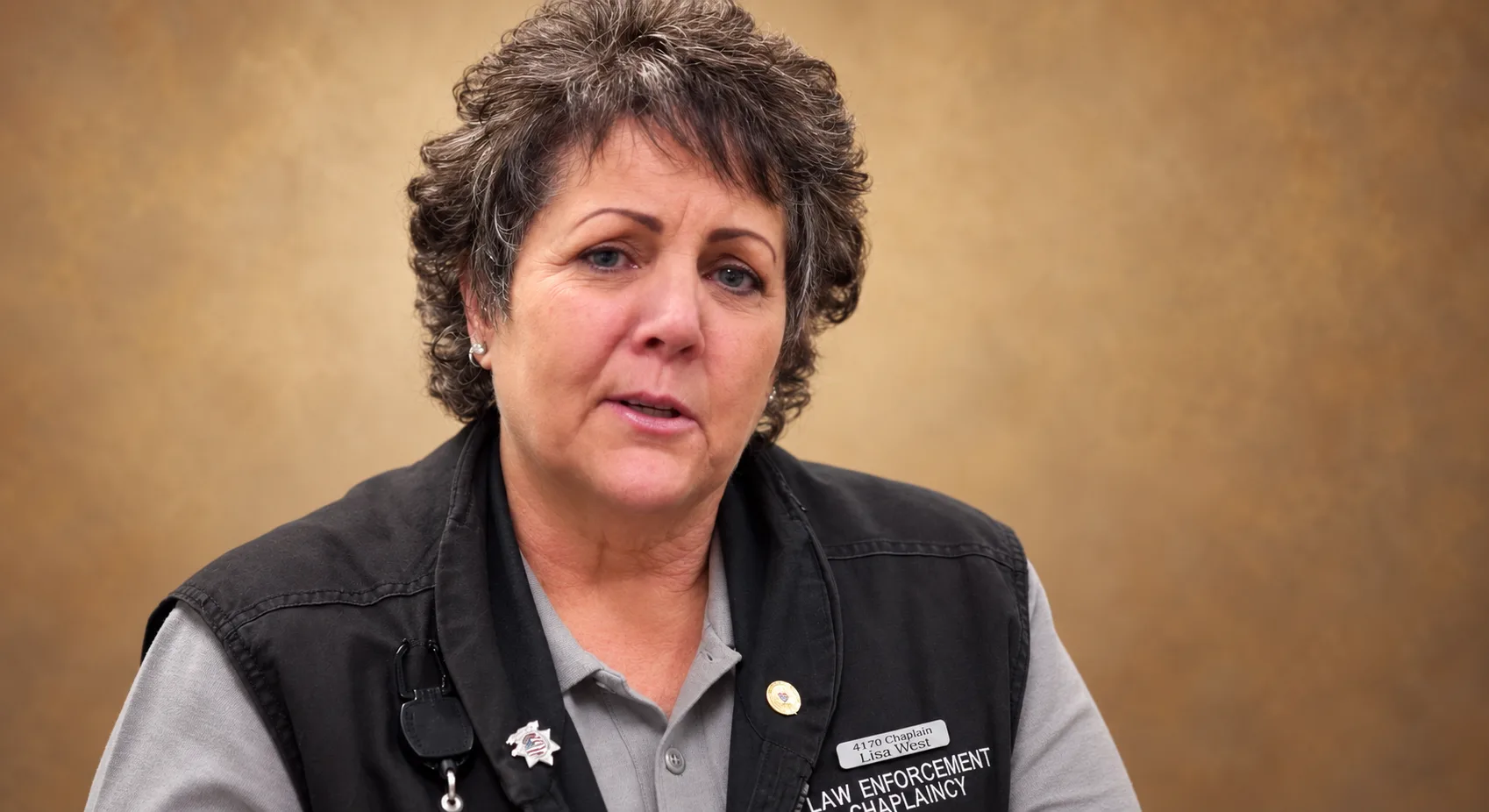
Chaplain Lisa West California Chaplain Corps · Chaplain & trainer
Lisa West began serving as a chaplain in 2014, with Senior Chaplain Mindi Russell as her mentor. Through the California Chaplain Corps, she supports officers and their families, as well as the administrative, medical and peer-support personnel around them. She also trains chaplains alongside Russell, helping prepare others to provide compassionate care throughout California.
Chaplain Jeffrey Wolfe: The Ministry of Presence and Practical Preparation Law enforcement chaplain and contributing writer
Jeff Wolfe is a working police chaplain whose written contributions to ChaplainUSA—most notably his cornerstone leadership in the Living Resource Guide program and his clear, careful guide to death notifications—turn hard-won field experience into practical, actionable tools for first-responder chaplains everywhere.
Sworn as a chaplain with the Indianapolis Metropolitan Police Department (IMPD) in 2015, Wolfe became IMPD's chaplain training coordinator in 2017. In that role, he designed and launched the department's first eleven-week Chaplain Academy, followed by a rigorous four-to-six-month field training program. He also serves as an airport chaplain with the Indianapolis International Airport Interfaith Chaplaincy Program and holds a commission as a Chaplain (1LT) in the Indiana Guard Reserve.
Fr. Jeff is an ordained priest and Franciscan friar in the Old Catholic tradition, serving as Vicar General and National Director of the OCCI Office of Chaplains, as well as co-pastor of St. John XXIII Catholic Church in Indianapolis. He has completed all twelve of the ICPC Basic Chaplain Credential courses, holds the Crisis and Trauma Specialist (CTS) certification, and serves as Director of the First Responder Chaplain Division within the Spiritual Care Association.
Building Relationships and Community Trust Wolfe views chaplains as foundational community builders who must proactively establish connections long before a crisis occurs.
They're the peace brokers in the community. They're the ones that are out there on the slow days... stopping the storefronts and meeting, going to group meetings... And they build those relationships with community leaders, their community builders. They bring people together and doing that, they learn of the resources that are available that can be brought to bear when a law enforcement agency or a firefighter agency... has a need in a time of disaster. Fr. Jeffrey Wolfe, OSFocfrom Police Chaplain Project. For Wolfe, these connections cannot remain abstract or stored only on a generic departmental list; they must be personally cultivated and maintained by the chaplain.
An agency's resource list... is good. But then there's yours. And yours, you know, is up to date. You've talked with each of these people that you've written down resources. And that's important because when the chief asks you, 'Hey, chap, I need this and this and this, do you know who I can call?' 'Absolutely. How soon can they get here? Twenty four hours, chief.' Fr. Jeffrey Wolfe, OSFocfrom Police Chaplain Project. The Living Resource Guide and First-Responder Care Understanding the unique culture of first responders is critical when vetting mental health and support resources. Through his primary work on the Living Resource Guide program on ChaplainUSA, Wolfe stresses that a chaplain’s duty is to ensure first responders receive effective, culturally competent care.
Case in point, you may have a list of ten social workers that the agency has approved for working with first responders. That doesn't tell me that social worker has experience understanding the first responder world... If I'm not sure that therapist or that social worker is going to make a connection with that first responder and that first responder feels comfortable, the chances of me getting that first responder into a second session just dropped. Suicide is still number one killer of law enforcement and firefighters, followed by line of duty death. We've got to start thinking outside the box. Fr. Jeffrey Wolfe, OSFocfrom Police Chaplain Project. To guarantee reliability during major infrastructure failures or rural deployments, Wolfe advocates maintaining physical, low-tech documentation over relying solely on digital devices.
A living resource binder is one step of thinking outside the box... Have it on a paper binder—low tech, pencil, mark it out... What happens if your battery dies? You need to still provide that information to the family or the officer. Having it written down, old school works. It's why the military still does paper along with computers... You have to be the human resource manager who can operate under any circumstances. No technology. No cell phone. No problem. Fr. Jeffrey Wolfe, OSFocfrom Police Chaplain Project. Active Listening and Unbroken Attention Beyond administrative readiness, Wolfe’s philosophy centers on active listening and showing genuine respect during moments of profound grief.
Things have sped up and there's value in slowing down and stopping and having a conversation with someone because you can learn so much... How did you make that family feel when you left? That's the only thing they remember. Fr. Jeffrey Wolfe, OSFocfrom Police Chaplain Project. He cautions fellow chaplains against allowing modern technology to create distance between themselves and the people they serve.
You also don't want to be a person that's sitting in front of a family on your phone. That's disrespectful... It's not giving your full attention to the family... Handwriting something on a piece of paper and handing it to somebody, that's a living document. It's old school, but we know old school works. Fr. Jeffrey Wolfe, OSFocfrom Police Chaplain Project. Through his writing on the ministry of presence, evidence-based chaplaincy, and his foundational contributions to the Living Resource Guide , Fr. Jeff Wolfe helps fellow chaplains perform the hardest parts of first-responder ministry with greater skill, foresight, and care.
Rick Bulman Pierce County Sheriff’s Office chaplain · Critical-incident care
Rick Bulman served as a chaplain with the Pierce County Sheriff’s Office in Washington. He offered an opening prayer before the Washington State House of Representatives and was photographed supporting people at the scene of the 2009 Graham, Washington, murder-suicide in which five children and their father died. Those public moments fit the quieter work he describes: staying present where violence has left people shocked and disoriented.
Bulman carries a memorial bracelet bearing the names of Washington officers killed in 2009: four Lakewood officers, another officer and a Pierce County sheriff’s deputy he knew. The bracelet is a visible record of losses that also shape his approach to traumatic scenes.
He describes the effect of horror as something like silt settling inside a person. His way of keeping it from hardening is to talk—usually with fellow chaplains, officers and other trusted people—and to let them see how an experience affected him. “It’s extremely important for chaplains and law enforcement officers to be transparent.” Verbalizing fear, grief or shock removes some of its control.
“I sense that it’s extremely important for chaplains and law enforcement officers to be transparent. And with that comes being vulnerable, which is not something that law enforcement officers like to do.” Rick BulmanFrom the Police Chaplain Project interview He is equally direct about critical-incident debriefing. Professional guidance calls for it within 72 hours, and Bulman has seen why. A good debriefing gives participants a structured place to speak about the same event, compare what they experienced and release pressure before silence turns it inward. He remembers watching men physically exhale at the end of those conversations.
“I’ve seen men have a sigh of relief once they complete the debriefing [following a critical incident]. It really is helpful and effective, because it’s a place where you come to talk together about the event and experience. It lets you release the pressure.” Rick BulmanFrom the Police Chaplain Project interview His ability to recognize post-traumatic stress comes partly from his own experience after Vietnam—an experience he avoided examining for years because he did not believe it had affected him. Experience, in his account, does not make a chaplain invulnerable. It makes honest processing more urgent.
In his Police Chaplain Project interview On Processing Horrific Scenes , Bulman discusses cumulative trauma, critical-incident debriefing, his delayed recognition of post-traumatic stress after Vietnam, and why a chaplain’s own vulnerability can give officers permission to speak.
Bulman’s service rests on a hard-won idea: what is carried in silence grows heavier. By naming what war, violence and loss leave behind, he made room for officers and chaplains to breathe again—and showed that vulnerability can be one of a responder’s forms of courage.
Bill Gralnick Rabbi · Interfaith organizer · Author · Chaplaincy builder
Rabbi William A. “Bill” Gralnick was born and raised in Brooklyn. He earned bachelor’s and master’s degrees from George Washington University and later received an honorary doctorate from Florida Atlantic University. Across 33 years with the American Jewish Committee, culminating as Southeast regional director, he built relationships among religious and civic communities across the South. His 2006 retirement was recognized in the Congressional Record.
His first posting was in Atlanta, where the archbishop introduced him to bishops across six states. In Miami, another letter of introduction widened the work into Catholic–evangelical and Catholic–Jewish–evangelical dialogue; the archbishop appointed him to the welcoming committee for the Pope’s visit. Listening, Gralnick says, is where learning occurs. It became the skill that let him work across traditions that did not always trust one another.
“I’ve also always been a very good listener. Probably in part because my mother was a sincere believer that little picture should be seen and not heard. Right. When you listen, you learn a tremendous amount rather than when you’re talking, when you’re learning nothing.” Bill GralnickFrom the Police Chaplain Project interview In a second career with the Palm Beach County Sheriff’s Office, Gralnick built a chaplaincy intended to reflect both the department and the county. It grew from three evangelical chaplains to 37 members. They included Catholic and Greek Orthodox priests, rabbis from Judaism’s three major denominations, evangelical pastors and an imam. He calls that broad representation his crowning achievement.
“And the first thing that I did was tell the sheriff, we’re going to have a chaplaincy that represents the faith experiences, not only of the police department, the sheriff’s department, but of the county. And long story short, I started—we had, I think, three chaplains, all of whom were evangelical—and I left, we had thirty-seven chaplains. We had Roman Catholic priests. Bill GralnickFrom the Police Chaplain Project interview His structured Christian–Jewish dialogue groups continued for nearly 30 years. He also brought Jewish teachers and students to Mass and Sunday school, and Catholic students to Shabbat services and synagogue classes. Years later, people still stopped him to say those encounters changed their lives.
Gralnick has also written hundreds of newspaper columns—some 800 by public accounts—and a trilogy of memoirs beginning with The War of the Itchy Balls and Other Tales from Brooklyn . The humor in those titles sits beside a career spent confronting the Holocaust, prejudice and the work of becoming a better human being.
In his Police Chaplain Project interview with Phillip LeConte, recorded August 6, 2020, Gralnick discusses Holocaust education after the eyewitness generation, the listening that makes interfaith dialogue possible, and the deliberate work of building a multifaith sheriff’s chaplaincy.
Gralnick’s life has been a long practice of widening the table: from Brooklyn to the American South, from Holocaust education to dialogue, from three chaplains of one tradition to thirty-seven representing many. The result is measured in the people who still stop him years later to say the encounter changed them.
Interviews & sources Interview Bill Gralnick - Interview with Phillip LeConte 8-6-20 Public record Congressional Record recognition Archive update October 8, 2026 Virginia Howell Crisis chaplain · Field responder · Trainer
Virginia Howell spent years serving the Houston area as a crisis chaplain, program coordinator, and trainer—helping build the volunteer chaplaincy that stands beside Harris County deputies, grieving families, and disaster survivors in their most vulnerable moments.
As program coordinator and trainer for Crisis Chaplaincy of Harris County—a non-profit founded in April 2014 that grew out of her congregation at Highlands United Methodist Church—Howell helped design and teach the intensive 16-hour introductory curriculum. She trained volunteers to minister in hospitals, fire and EMS stations, jails, and alongside crime victims, grounding the work in a commitment to serve "not just by words but also by good deeds."
In the field, Howell worked closely with the Harris County Sheriff’s Office, riding along with deputies during high-risk calls. Responding without department-issued body armor, she brought a cool head and steady judgment to volatile scenes—knowing when to stay back and when to step in. At home, her family shared in that dedication: she practiced on the shooting range with deputies, earning the quiet respect of her oldest son, while her daughter waited up to hear the stories at the end of each shift.
While her work encompassed operational training and emergency response, the heart of her service was human connection in the wake of trauma.
"I had no idea, really, what being a police chaplain was all about," Howell reflects. "When you’re exposed to people who are in traumatic situations for a long period of time and you see what they go through, it does start to change you. It starts to change your worldview, how you look at society... Watching people go through really traumatic things, especially children—I don’t usually get really affected by stuff at work, things that I see. However, when it becomes animal abuse or child abuse or something I see as being innocent, that’s when it really bothers me." Virginia Howellfrom Police Chaplain Project. That quiet resolve was tested on a backup call for a severe child abuse case involving two young boys, ages eleven and five. Upon arrival, Howell saw the younger boy covered in blood from a brutal beating by his mother. As EMS worked to stabilize the boys and their mother sat handcuffed in a patrol car, Howell went into "mama mode," comforting the children and offering to ride beside them in the ambulance to Texas Children’s Hospital.
"It was at that point that I started tearing up," she recalls. "I just said, ‘Little guy, your mom’s got an illness. She’s got an illness up here and she needs help. It wasn’t anything that you did.’" Virginia Howellfrom Police Chaplain Project. For Howell, that moment captures the essential, compassionate bridge chaplains provide alongside law enforcement. "Whether it be a sexual assault, a child abuse, a victim of crime, the officers and the deputies are there to control the scene," she says. "They’re there for the legal aspect of it. We’re the warm, fuzzy people. We’re the ones that are there for the victim—what they’re going through, what are their emotions, how do we calm them down."
Robert George LeConte Police officer and detective · Junior Police Academy co-founder
Robert George LeConte was a police officer and detective with the Danville, Illinois Police Department and a co-founder of the Junior Police Academy.
Phillip LeConte and his father Robert LeConte. LeConte served with the Danville Police Department, rising to detective and working in plain clothes on criminal investigations. Department and court records place him on major cases in the late 1970s, including a 1976 homicide investigation and a 1978 shooting-death case.
In 1992, Bob and Phillip founded the Junior Police Academy. Phillip has written that he and Kelly were, in a sense, the program's first cadets — "no t-shirts, but plenty regiment" — raised in the shadow of shift work, in a home where the demands of the job were simply part of life. "I can't say that it was always easy," Phillip wrote. "It wasn't. Still, I would not trade those experiences."
The development of the program was a forerunner to ChaplainUSA — the work of bringing officers and young people together laid the foundation for the police chaplain program that followed.
His civic instincts extended past the badge. In 2000, the year he died, he arranged water relief for flooded areas of South Carolina — the kind of thing he just did.
That fundamental virtue Dad furnished Kelly and I — namely a rock-solid, uncomplicated anchor upon which we could always rely. Phillip LeConte Phillip has said that since their father's death in 2000, he and Kelly have found solace in working with police officers across the country, because it keeps them close to what their father gave them. More than three decades on, the Junior Police Academy measures its impact in a generation of graduating cadets — citizens who understand their civic responsibilities because a Danville detective and his son believed officers and kids belonged in the same room. As Phillip wrote, "The essential quality of what happens next is part of the living legacy of Robert LeConte, our father."