
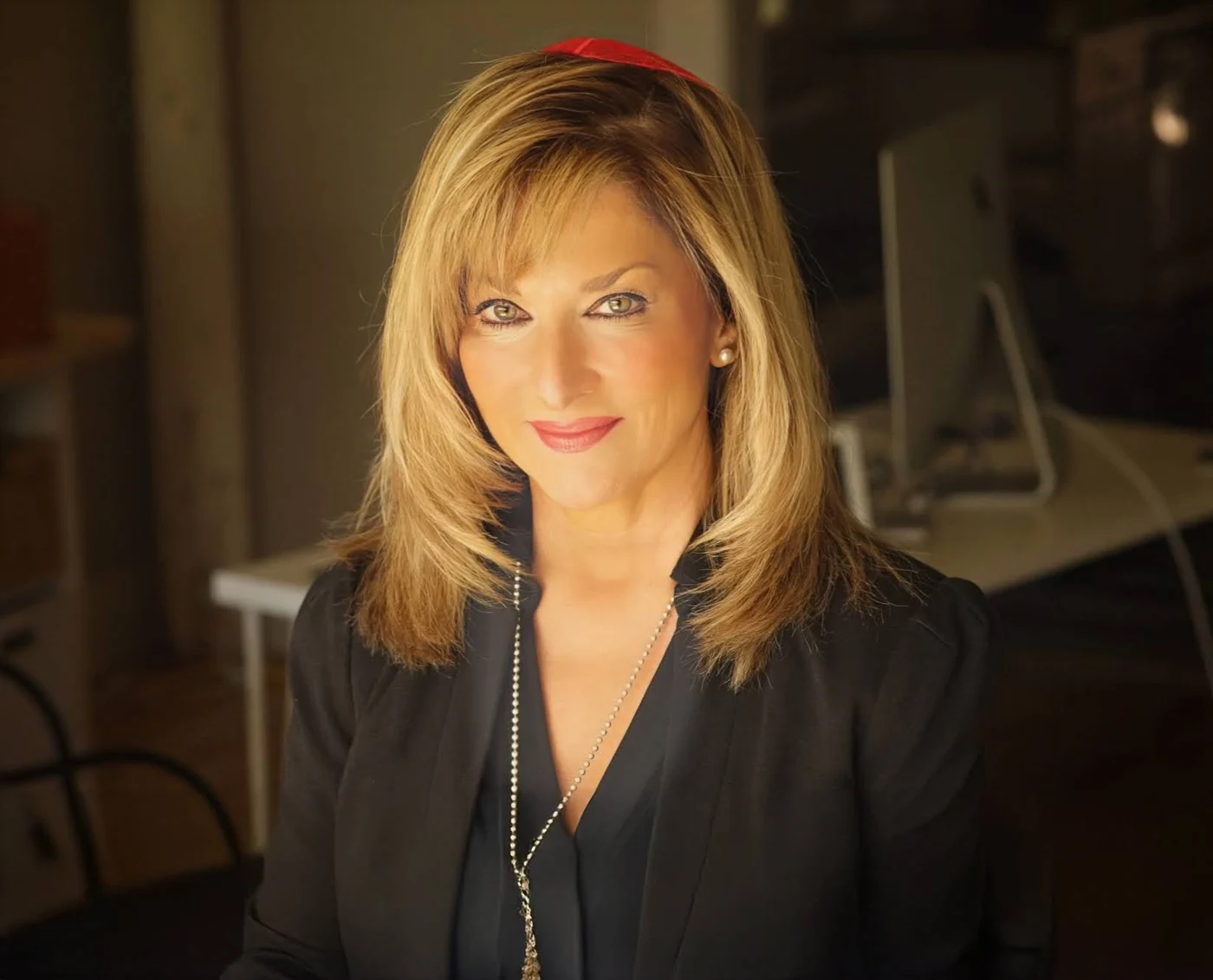
Rabbi-Cantor Marie Betcher
Rabbi · Cantor · Senior police chaplain
Marie Betcher grew up in Las Vegas and learned piano as a girl. She earned a bachelor’s degree in vocal performance from Indiana University and a master’s from Florida State, then built a concert and opera career that took her to Carnegie Hall, the Kennedy Center, Great Britain and Sicily, where she won the Bellini International Opera Competition. In her forties, after two decades in music, she changed direction. Seven years of seminary led to cantorial ordination from Hebrew Union College–Jewish Institute of Religion in 1999 and rabbinic ordination in 2011.
Each stage of that life became part of her chaplaincy. As a cantor, she learned to carry prayer through music and once sang a quiet prayer of healing into a suffering person’s ear. Rabbinic study gave her a deep grounding in scripture, ethics and the conviction that human lives are interconnected. She describes that path through the Jewish phrase Derech Eretz —the path of the world—and reminds people in despair of a simple truth: No one knows where tomorrow’s path may lead.
“We call it Derech Eretz in Judaism, the path of the world — the kind of path that God is going to lead you down. I would not have believed it if you had told me that I would go from opera singer to cantor to rabbi to chaplain — but all of them built upon each other.”
Betcher served Cedar Park police and fire and the Austin Police Department, eventually becoming APD senior chaplain. Public accounts identify her as the first female rabbi to serve as senior chaplain of a United States police department. She also served Congregation Shir Ami in Cedar Park and held leadership or volunteer roles with the American Conference of Cantors, Swan Songs, Service Dogs, Inc. and Interfaith Action of Central Texas. Her husband, Jonathan, a former police officer, has described the uncommon combination of vocation, scholarship and performance she carried into the role.
Her first death notification involved the mother of a 29-year-old Afghanistan veteran who had taken his own life. After the officers left, Betcher sat beside the mother, held her hand and, with permission, said the Lord’s Prayer with her. Conversation about her son brought tears; a question about the tiny Chihuahua in her arms brought a brief smile. Betcher recorded the encounter in her diary, an account that shows how a first notification can change the chaplain too.
Her understanding of that closeness also comes from two years of service with the Chevra Kadisha , the Jewish Holy Society that prepares the dead for burial. She eventually stopped because she became so connected to each person she cared for. For a little while, the chaplain enters another person’s grief and does not simply leave the experience at the door.
“For the little time we are with someone, we become one with that person. We cry with them. We suffer with them. And we carry some of that experience with us when we walk out the door.”
In her Police Chaplain Project interviews The Meaning of Derech Eretz and My First Death Notification , Betcher discusses the unpredictable path of vocation, the physical and spiritual intimacy of crisis care, the first notification that marked her, and the emotional cost of carrying another person’s suffering. Betcher’s life joined the concert hall, the sanctuary and the crisis scene without treating any one of them as a detour. Music taught her to listen, study gave language to faith, and chaplaincy brought both into the room where words are hardest to find.