
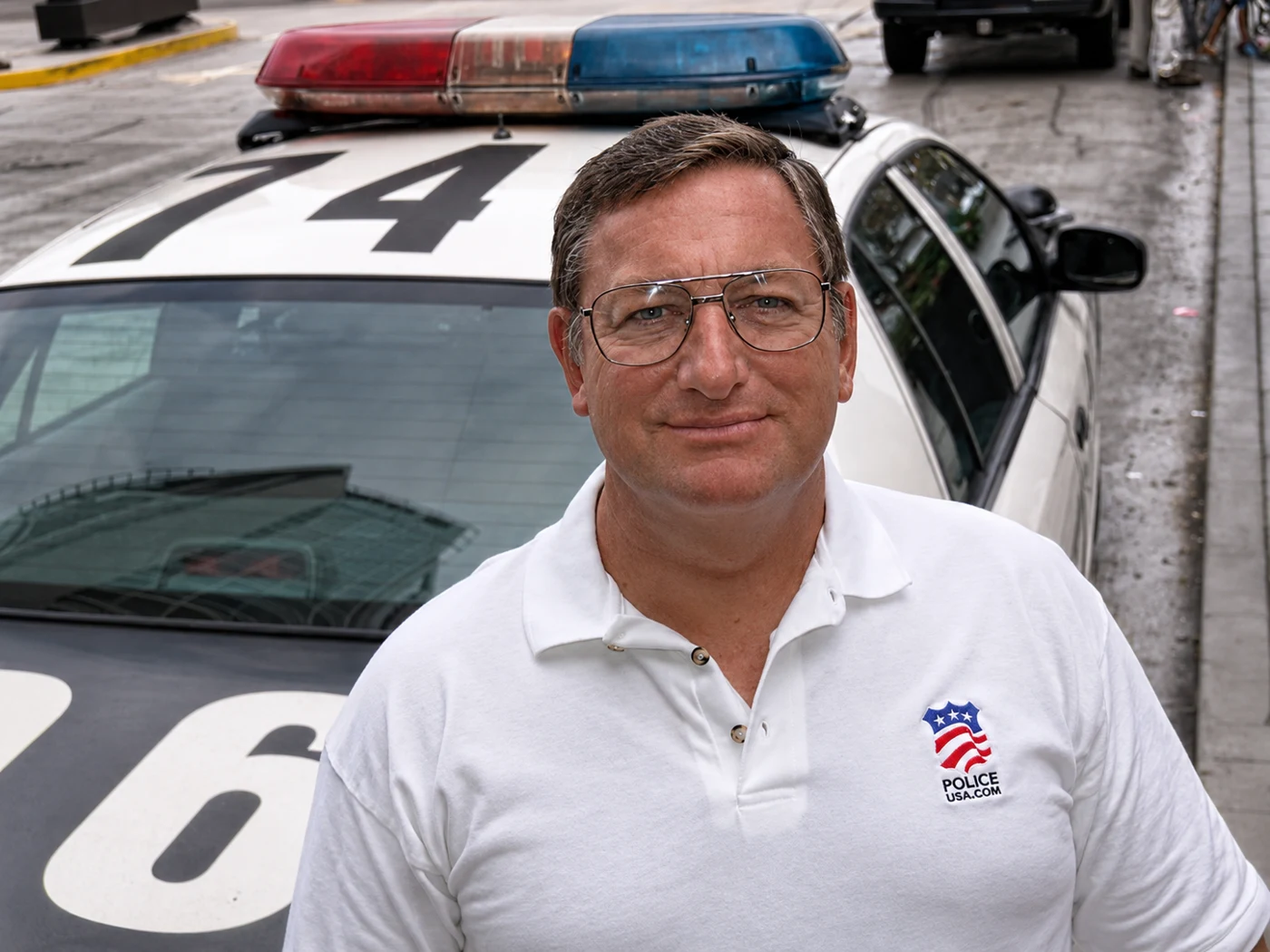
John Cooley
Retired LAPD sergeant · Police-funeral specialist
John Cooley is a retired Los Angeles Police Department sergeant who made a second career out of a solemn necessity: guiding law enforcement agencies through the complex emotional and philosophical dynamics of police funerals. Though not a member of the clergy, Cooley spent the final decade of his 30-year LAPD tenure coordinating department memorial services, honor guards, peer support, and chaplains programs. Across his career, he directly coordinated more than 80 funerals and memorial services—including those for 18 LAPD officers who died by suicide.
During his time on the force, Cooley was appointed officer in charge of the department’s Employee Assistance Unit. In that role, he gained an unusually detailed understanding of the practical, ceremonial, and emotional decisions confronting a department, an agency, and a family during their most vulnerable moments.
Following his retirement from the LAPD in 2001, Cooley extended his expertise nationwide. Partnering with chaplainusa.org and Policefunerals.com as a consultant and instructor, he began training police leadership across the country on funeral protocols, crisis preparation, and grief management.
Cooley’s work is rooted in the belief that an agency cannot wait until tragedy occurs to figure out how to grieve. Most law enforcement agencies operate under the dangerous assumption that a catastrophic loss will not happen on their watch, leaving them completely vulnerable when a crisis strikes.
“More than half of line of duty deaths occur in agencies that have never had a death before, or it’s been so long ago that no one was on the job when it did occur. And so they’re not prepared for it. They don’t have a cadre. They don’t have a protocol. It’s the unthinkable for them because it’s not going to happen to them. And then it does.”
For Cooley, managing a police funeral is not merely about executing military precision or marching in formation—it is about protecting the grieving family and honoring the deceased in a way that provides true solace. While ceremonies almost always look polished to the public eye, improper planning behind the scenes can leave lasting emotional scars on the people left behind.
“I’ve never heard of a line of duty funeral not being done right, but I’ve talked to many agency funeral coordinators and learned that it wasn’t done best. And that’s, I think, is what our goal is—to make sure that every funeral is managed the best that it can be. There are so many little things that can come back and cause so much chaos behind the scenes, with the potential to really hurt the family.”
Cooley strongly cautions agencies against adopting an “us versus them” posture when organizing a memorial service. He views an officer’s funeral as an essential community event rather than a closed departmental ceremony. He urges police leaders to establish strong relationships with civic, religious, and community leaders long before a crisis occurs, ensuring that the community feels invited to share in the honor and mourning.
“I think that people are waiting to be invited to participate. It’s not an obligation. It’s a privilege for them to participate, and they would be very excited about being asked to come and participate as an integral member of the whole planning process.”
Across a career defined by service to grieving families and fellow officers, Cooley’s legacy rests on a foundational belief: ceremony begins long before the procession, and a department’s true strength lies in the human relationships built before loss arrives.