
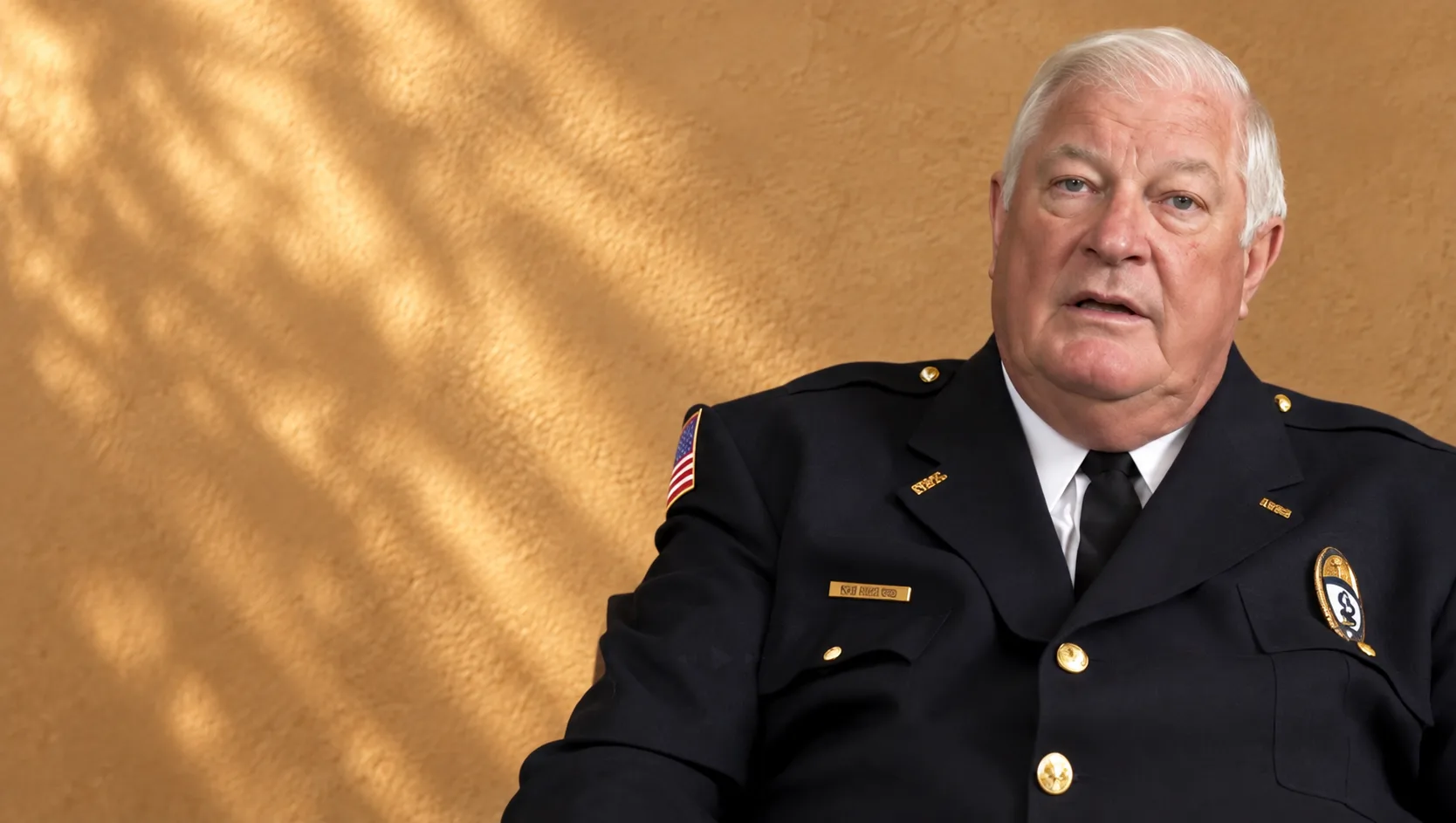
Chaplain Ken Ashlock
Pastor · Police chaplain · In service since 1962
Ken Ashlock began serving as a law-enforcement chaplain in 1962, when the work was still unfamiliar to much of the public. People understood military, hospital and jail chaplains, he recalled, but few knew that chaplains also worked beside officers and their families. Regional conferences—particularly the multi-state Region 7 network serving Texas, Oklahoma, Arkansas and neighboring states—helped define the field. So did the practical help chaplains gave to people in crisis.
Ashlock also served as pastor of New Liberty Baptist Church in Garland, Texas. Public records place him at the funerals of Texas law-enforcement officers, including Senior Trooper Richard “Dickie” Cottle and Garland Police Officer Keith Prinz, and as the author of a booklet on the charismatic movement. The International Conference of Police Chaplains’ South Central Region named the Ken Ashlock Award in his honor. It is a durable recognition of the standards he helped establish.
Of the changes Ashlock describes, the one he considers biggest is the acceleration of violence. Early in his service, he recalled, an officer might complete an entire career without drawing a weapon in self-defense. Severe violence has since become more common, while communications and the demands placed on officers have changed around it. Ashlock says an estimated 75 to 85 percent of people involved in fatal crashes, suicides, shootings and similar emergencies did not have a minister or church home. A chaplain could be the person available to meet that need.
“For a person who’s lost a loved one, there may be very few people in the world who know about their loss, but God does. And to them it’s the greatest loss they ever experienced. And so we’re the people business.”
His own introduction to the ministry was immediate and difficult. On his first day he accompanied an officer on an assignment involving someone who had threatened a detective’s life. At disaster scenes, Ashlock learned to narrow his attention from a day, to an hour, to one event and one person at a time. “One day at a time? It’s not even one hour at a time. It’s one event at a time.”
“Someone says, ‘One day at a time.’ And I mentioned that to one of the first responders. He said, ‘They stopped — one day at a time? It’s not even one hour at a time. It’s one event at a time’ — where you’re helping an individual, or helping another first responder, or another chaplain.”
That perspective shapes the way he counsels officers nearing burnout. Repeated exposure to deception, suffering and violence can bury the original purpose that brought them into police work. Ashlock urges them to rest, take stock and remember the lives they may have helped without ever knowing it. Effective chaplaincy, he says, depends on knowing when to be tender and when to be tough.
In his Police Chaplain Project interview How the World Has Changed Since First Becoming a Chaplain , Ashlock discusses the professionalization of police chaplaincy, the rising intensity of violence, endurance at disaster scenes, officer burnout and the trust earned by remaining with officers through the work.
From 1962 forward, Ashlock helped give an unfamiliar calling a public shape. His interview keeps returning from the scale of a disaster to the person immediately in front of him. A loss may be known to very few people, he says, yet to the person living through it, it is the greatest loss they have experienced.