
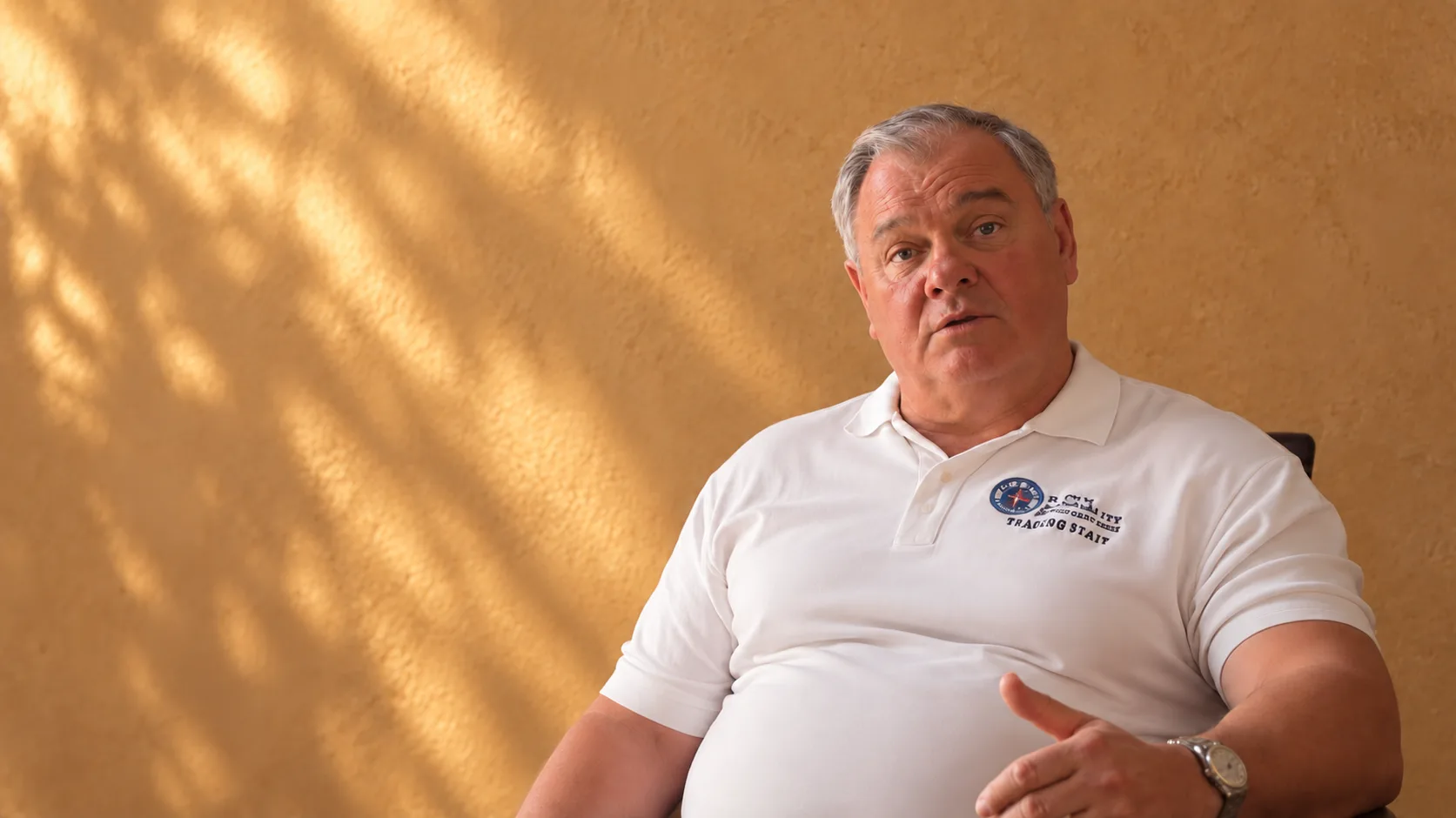
Chaplain Jack Poe: The Definitive Biography
Longtime chaplain, Oklahoma City Police Department
For more than twenty-six years, Chaplain Jack Poe served as the voice of comfort, stability, and spiritual strength for the Oklahoma City Police Department. A pioneering figure in law enforcement chaplaincy, Poe redefined emergency crisis management and first-responder care through his leadership during the April 19, 1995 bombing of the Alfred P. Murrah Federal Building—one of the deadliest acts of domestic terrorism in American history.
Known for his calm authority and deep pastoral insight, Poe’s command during moments of catastrophic trauma established modern standards for crisis intervention, debriefing, and tactical chaplaincy.
Early Life, Education, and Pastoral Ministry
Jack Poe brought a strong academic and theological foundation to his decades of service in public safety. He earned a Bachelor of Arts in Sociology from the University of Central Oklahoma, followed by a Bachelor of Divinity (B.D.) from Southwestern Baptist Theological Seminary in Fort Worth, Texas, and a Doctor of Ministry (D.M.) from Phillips University in Enid, Oklahoma.
His combination of sociological training and clinical theology equipped him to understand both the systemic stress placed on first responders and the deeply personal nature of human grief.
Over his 26-year career as the chief chaplain for the Oklahoma City Police Department, Poe moved beyond traditional clergy roles, embedding himself alongside officers during routine shifts, critical incidents, and high-stress operations.
The Oklahoma City Bombing: 21 Days on Site
On the morning of April 19, 1995, when a truck bomb destroyed the Alfred P. Murrah Federal Building, Poe and his wife, Phyllis, immediately deployed to the scene. They remained at Ground Zero for twenty-one consecutive days, overseeing emotional support, spiritual care, and tactical debriefing for search-and-rescue teams, firefighters, police officers, and federal agents working inside the rubble.
Poe quickly recognized that the sheer scale of destruction was unlike anything first responders or local clergy had ever encountered:
I don't know that you can ever prepare yourself for the amount of carnage that we were going to experience in that building. We had Vietnam veterans who told us they never saw the carnage there that they saw in the building. I don't know that we could ever have prepared ourselves for the sights and the sounds and the smells of what was going on in such a horrific explosion that took place in the heart of Oklahoma City.
As medical triage centers were established around the perimeter, Poe realized that the nature of the explosion left almost no casualties to treat on-site—turning the mission almost immediately into a grueling recovery operation.
Our police and fire chaplains began to just kind of be there to monitor and see what was going on with the rescue community... A lot of good counseling that you thought might go on early didn't go on, because the early part of what we did was simply to support them, to be there, to listen to them, to carry water to them. A lot of great ministry took place after we realized it was going to become not a rescue, but a recovery operation.
Decisive Command and Tactical Discipline
As hundreds of well-meaning ministers from across the country flooded into Oklahoma City hoping to help, Poe demonstrated firm, uncompromising command to protect both the integrity of the rescue site and the mental health of the responders.
Recognizing the biological hazards and psychological dangers of the site, Poe established strict credentialing protocols. He required non-first-responder clergy to undergo specialized disaster response training through the National Organization for Victim Assistance (NOVA) before entering the hot zone, enforcing the rule without exception:
We had 255 ministers on site that we had record of... It was a management problem. So we went to the people that were issuing credentials and we said to them, unless one of three people come down here with another clergy person to say issue them a permit, there's no other clergy person allowed to be issued a permit to get on site. It made some of them angry... We actually got on site and pulled tags and escorted clergy off the site because if they were there and didn't know what they were doing, they began to interfere with the recovery operation.
His decisive command left a lasting impression on fellow chaplains across the nation. Reflecting on Poe's leadership during the disaster, Chaplain Andy Toopes noted:
Jack just can take command of a situation like nobody else. The Oklahoma City bombing—perfect example of that. When people were trying to get in and trying to help, thinking they were helping, Jack knew how many chaplains he needed, where they needed to be, and just politely excused the other ones and told them to go home—or not so politely at times.
Trauma Memories and the Impact on Clergy
Poe was among the first in law enforcement chaplaincy to articulate the long-term psychological impact of critical incident stress on untrained clergy. He emphasized that untrained ministers lacked the psychological "inoculation" required to process traumatic sensory inputs—sight, sound, and smell—which can trigger state-dependent trauma memories years later.
He recalled an encounter a year after the bombing with a local minister who had rushed to the scene uncredentialed:
A year later he came to my office... He said, 'In our faith community, we christen babies... Last week, I went to a birthing. They birthed the baby, they handed the baby to me, and I couldn't take the baby.' I knew exactly what he did at the site, but I needed him to tell me. He said, 'I went down to where they were carrying babies out... and we carried baby parts over to the temporary morgue.' Now you're telling me that a year later you're having problems? Because when they handed him that baby that wasn't cleaned up, didn't smell like a baby that had just been birthed, it took him right back to that site. Those are state-dependent memories that he had no idea were a part of who he was. Local clergy don't have any clue how one of these events can change them spiritually, physically, emotionally.
National Impact, Honors, and Ongoing Legacy
Jack Poe’s leadership at Oklahoma City established a blueprint for public-safety chaplaincy during mass-casualty events. In September 2001, following the attacks on the World Trade Center, Poe traveled to New York City to provide crisis counseling and chaplaincy support for rescue personnel working at Ground Zero.
In 2010, Poe was inducted into the Oklahoma Law Enforcement Memorial Hall of Fame in recognition of his decades of dedicated service to first responders. He also serves as a member of the Conscience Committee for the Oklahoma City National Memorial & Museum, helping preserve the legacy and lessons of April 19, 1995.
His voice remains a vital touchstone during national commemorations. On the 30th anniversary of the Oklahoma City bombing in 2025, his reflections were featured nationally by StoryCorps and NPR.
Jack and his wife, Phyllis, reside in the Oklahoma City area. They have two children, three grandchildren, and two great-granddaughters—a family that has anchored a lifetime dedicated to standing alongside those who serve.